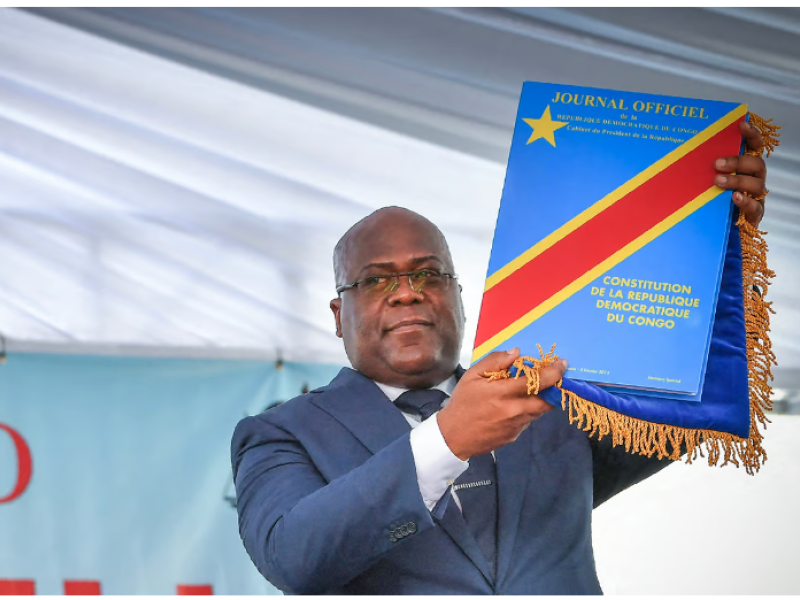
As the Democratic Republic of Congo remains deeply divided over the prospect of constitutional reform, the issue took center stage in Geneva on Monday, 29 June 2026. During an interactive dialogue at the 62nd session of the UN Human Rights Council, Abdoul Aziz Thioye, Deputy Director of the Global Operations Division at the Office of the UN High Commissioner for Human Rights, spoke on behalf of High Commissioner Volker Türk. He expressed concern over the shrinking civic and political space in the DRC, specifically pointing to recent opposition-led protests in Kinshasa against any constitutional overhaul.
Thioye, who previously led the UN Joint Human Rights Office (BCNUDH) in Congo for several years, stressed that any constitutional reform must be built on a broad national consensus to safeguard social cohesion.
“Any constitutional reform process must be based on national consensus and respect the country’s human rights commitments. All voices must be heard and taken into account; otherwise, social cohesion could suffer serious consequences,” warned Abdoul Aziz Thioye.
On another front, the former BCNUDH head highlighted the UN’s continued support – through the Joint Office – in combating impunity in the DRC, despite financial constraints and reduced staffing. He noted that this assistance had contributed to the conviction of 109 individuals. In addition, support was provided to 150 human rights defenders, journalists, and their family members, including psychological, legal, and financial aid, as well as relocation measures.
“Since our last update to the Council, we have supported the authorities in organizing three judicial investigations into serious human rights violations, as well as five mobile court sessions. These procedures led to the conviction of 109 people. We also supported 150 human rights defenders and journalists, or their family members, through psychological, legal, and financial assistance, as well as relocation,” Thioye explained.
Inside the DRC, the constitutional reform debate has split the political and social landscape into two main camps: the Coalition Article 64 for the Defense of the Constitutional Order (C64) and the Coalition of Congolese for Constitutional Change (C4). Each camp claims popular backing to push its agenda.
This debate unfolds against a backdrop of severe security challenges in eastern DRC, where local and foreign armed groups remain active. Fighting involving the Rwanda-backed AFC/M23 rebellion continues, with the group controlling large swaths of North and South Kivu provinces. Added to this is the persistent threat from the ADF, while diplomatic efforts stagnate, making more progress on paper than on the ground.