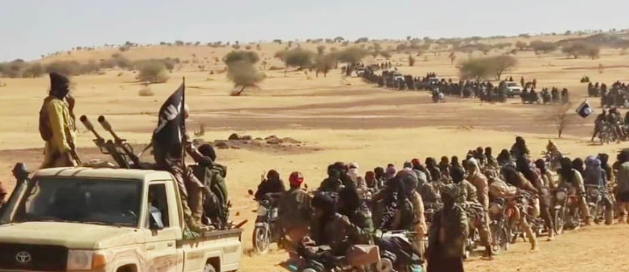
The United Nations has issued a fresh warning about the growing threat posed by the Islamic State group (Daech) in Africa, particularly across the Sahel and the Lake Chad basin. Despite recent setbacks for the group’s central leadership, its regional affiliates continue to expand their influence by exploiting local vulnerabilities.
Daech’s evolving strategy in Africa
In a detailed report submitted to the UN Security Council, Secretary-General Antonio Guterres highlights that the threat level in several African regions remains critically high. The document, presented by Oguljeren Niyazberdiyeva of the UN Office of Counter-Terrorism (UNOCT), identifies the Sahel and Lake Chad basin as the primary zones where Daech is consolidating its presence.
The report underscores the growing autonomy of Daech’s regional branches, which have adapted to military pressure by decentralizing operations while maintaining a unified ideological vision. This shift has allowed the group to persist despite significant losses in leadership and personnel.
Military expansion and technological adaptation
One of the most alarming trends highlighted in the report is Daech’s increasing use of commercial drones to enhance its surveillance and attack capabilities. The group’s most active affiliate, the Islamic State’s West Africa Province (ISWAP), continues to strengthen its military operations, demonstrating resilience and resourcefulness.
The report also notes ongoing offensives by affiliated groups in the Democratic Republic of the Congo (DRC) and Mozambique, despite counter-terrorism efforts by national and regional forces. These affiliates are actively recruiting new members and deepening their local networks.
Exploiting local fragilities
According to the UN assessment, Daech’s survival strategy hinges on its ability to exploit institutional weaknesses, prolonged conflicts, and economic hardships in the regions it targets. The group’s decentralized structure enables it to adapt quickly to local conditions, ensuring its operations remain sustainable even in the face of military pressure.
Oguljeren Niyazberdiyeva emphasized in her remarks that Daech has fundamentally transformed its operational model to withstand sustained military campaigns. ‘The group remains a grave threat to international peace and security, despite coordinated global efforts to dismantle it,’ she stated.
Emerging technologies and counter-terrorism challenges
The UN report warns that Daech is increasingly leveraging emerging technologies to propagate its ideology, recruit followers, and finance its activities. These include artificial intelligence, encrypted communications, digital platforms, virtual assets, and unmanned aerial systems.
In response, the report calls for stronger international cooperation and closer collaboration with private-sector tech companies to regulate and govern the use of these tools. It also acknowledges the potential of these technologies to bolster counter-terrorism efforts when deployed responsibly and in compliance with international law.
As Daech continues to evolve, the UN underscores the urgent need for a coordinated and adaptive response to address the multifaceted challenges posed by this resilient terrorist network.