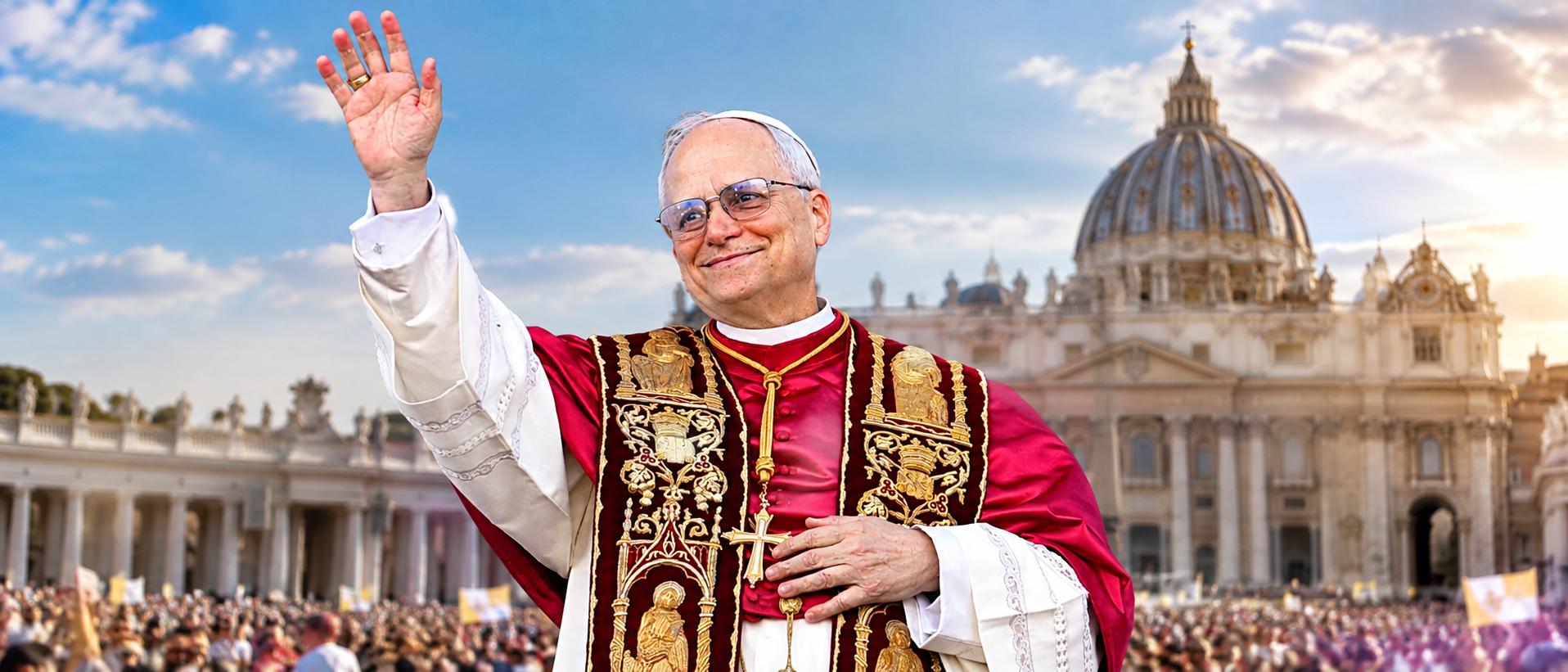
When Pope Leo XIV lands at Paris-Orly Airport this Friday, September 25, 2026, a carefully choreographed confluence of spiritual symbolism, political calculation and institutional strategy will unfold across France. This isn’t merely a papal visit—it’s a geopolitical and theological performance where every stop, every gesture and every public appearance has been meticulously calibrated to resonate across Europe’s fractured religious and social landscapes.
How a Vatican blueprint became France’s unprecedented four-day spectacle
The Vatican’s diplomatic war room has spent two years refining this apostolic itinerary, transforming what might have been a routine ecclesiastical tour into a calculated intervention in France’s cultural and political soul. Behind the scenes, the Curia has worked in close coordination with Élysée advisors to ensure that each meeting—whether with President Macron or the UNESCO assembly—serves as both a spiritual overture and a subtle diplomatic lever.
What began as a tentative invitation from the French government rapidly evolved into a strategic partnership. The decision to include the youth vigil at the Stade de France, for instance, reflects more than pious outreach—it signals a Vatican attempt to reclaim spiritual relevance with younger generations amid growing secularization across Western Europe.
The pope’s Parisian chess moves: alliances, symbols and unexpected pressure points
Paris isn’t just the starting point—it’s the ideological battleground where the Vatican aims to reassert its moral authority. The early-morning bells ringing across France aren’t merely ceremonial; they’re a deliberate invocation of collective consciousness, designed to momentarily unify a divided nation around shared cultural heritage.
The president’s meeting at the Élysée isn’t just diplomatic routine. Insiders report that the Vatican has pushed for a joint statement on religious freedom, pressuring France to soften recent secular policies that have drawn Vatican criticism. The UNESCO address, meanwhile, positions the papacy as a global defender of cultural and spiritual values—an implicit challenge to secular internationalism.
The youth vigil: a calculated gamble to reconnect with a drifting generation
With over 75,000 young people expected at Saint-Denis, the Vatican is taking a calculated risk. The exposure of the Holy Tunic of Argenteuil—a rare relic traditionally kept concealed—isn’t just ceremonial piety. It’s a high-stakes attempt to reignite wonder and devotion in a demographic that increasingly views organized religion with skepticism.
Indications suggest that Vatican organizers have tailored the event’s messaging to address modern concerns—climate change, social inequality, and personal meaning—rather than traditional doctrinal themes. This represents a rare adaptation of papal rhetoric to contemporary youth culture.
Lourdes: where faith, politics and tourism converge
The transition from Paris to Lourdes isn’t just geographical—it’s theological. Lourdes has long been a pressure valve for the Catholic Church, a place where devotion and spectacle merge with France’s tourism economy. This year, the Vatican has intensified its focus on medical miracles and interfaith reconciliation, an effort to counter growing public skepticism about miraculous claims.
The open-air mass before 150,000 pilgrims isn’t just worship—it’s a statement of vitality. Reports indicate that Vatican health officials have vetted the event’s accessibility arrangements more thoroughly than in previous years, responding to criticism about inclusivity for disabled pilgrims. This reflects a broader Vatican strategy to modernize its image while maintaining doctrinal integrity.
The economic dimension: pilgrimage as soft power
Lourdes generates over €150 million annually for the Occitanie region. The Vatican’s decision to emphasize the shrine’s spiritual significance over commercial aspects—while maintaining a high-profile presence—aims to bolster France’s standing as a global center of Christian pilgrimage. This isn’t altruism; it’s cultural diplomacy disguised as devotion.
Metz: Europe’s forgotten crossroads gets its papal moment
Why Metz? Geographically and historically, Lorraine sits at the crossroads of Europe’s spiritual and political fault lines. The pope’s ecumenical gathering at Metz’s Saint-Étienne Cathedral isn’t just about Christian unity—it’s about addressing the continent’s growing polarization and the role of faith in mediating political divides.
The final mass in Metz serves a dual purpose: it signals closure to the French leg of the journey while positioning the Vatican as a stabilizing force in a continent grappling with nationalism and secularism. Vatican diplomats have hinted that the pope may use this platform to call for a renewed European identity rooted in shared moral values.
What happens after the visit? The ripple effects no one is talking about
The real story isn’t just the four days of events—it’s what comes next. Behind the scenes, the Vatican is already preparing a follow-up strategy involving:
- Pastoral adjustments: dioceses across France are being encouraged to launch listening sessions with young adults, a direct response to the demographic crisis in European pews.
- Diplomatic follow-through: the Vatican is pushing for the establishment of a permanent Franco-Vatican dialogue on religious freedom, with Metz as the symbolic anchor.
- Cultural repositioning: French media and educational institutions are being gently lobbied to include more balanced coverage of Christian contributions to French history and society.
Critics warn that this visit could backfire, exacerbating tensions between secular and religious communities. Supporters argue it may be the spark needed to reignite France’s Christian soul—or at least prompt a much-needed conversation about meaning in a post-religious age.
The calculus behind the curtain: why this visit matters more than it seems
At its core, Pope Leo XIV’s French journey isn’t just an apostolic tour. It’s a strategic intervention designed to reposition the papacy at the center of Europe’s moral and cultural debates. Every decision—from the inclusion of secular venues like the Stade de France to the ecumenical gathering in Metz—serves a purpose: to prove that the Catholic Church remains relevant in a continent that increasingly questions its role.
As the bells toll across France this Friday morning, they won’t just announce a visiting leader. They’ll signal the beginning of a carefully orchestrated campaign to remind Europe—and the world—that faith still matters, even in the most secularized of societies.