
a subtle shift in sahelian geopolitics
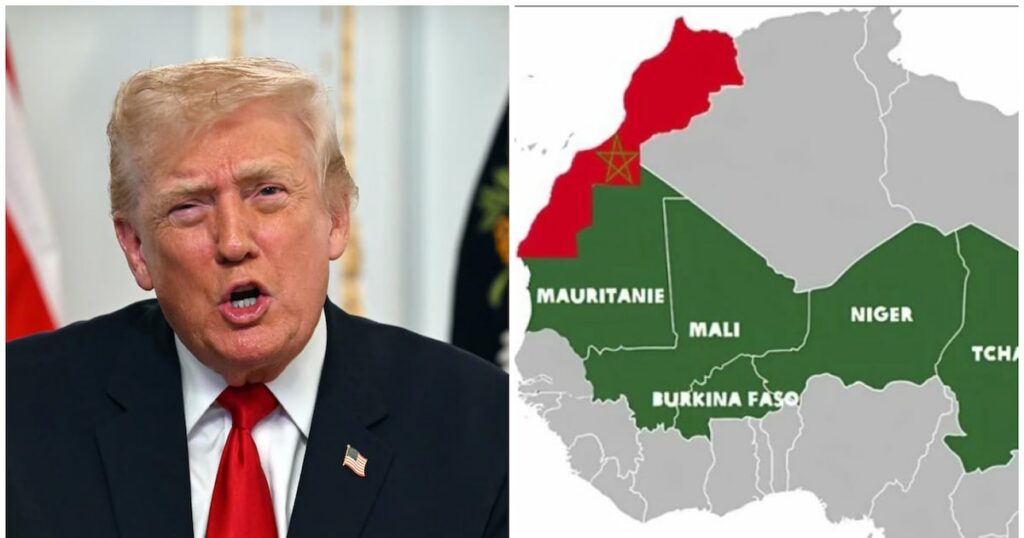
The geopolitical landscape of the Sahel is quietly undergoing a transformation. While European missions have gradually withdrawn from Mali, Burkina Faso, and Niger, and Russia has intensified its presence through para-state structures, the United States appears to be regaining momentum in the region. However, as Emmanuel Dupuy, president of the Institut Prospective et Sécurité en Europe (IPSE), points out, this shift should not be misinterpreted as a full-scale return. Rather, it reflects a calculated strategy of maintaining influence while allowing other actors to weaken first.
According to Dupuy, Washington never truly abandoned the Sahel; it merely adopted a more discreet approach, waiting for internal balances to realign and rival influences to diminish before reasserting its position.
pragmatism over ideology: the american strategy
This approach aligns with a long-standing American tradition of pragmatic diplomacy. Dupuy emphasizes that U.S. foreign policy prioritizes tangible interests—security and economic gains—over ideological alignment. He notes, “Americans negotiate with partners whose views they may not share, focusing instead on mutual benefits.”
In this transactional framework, the perceived rivalry with Russia takes a backseat. Dupuy argues that the U.S. does not view Moscow as a direct threat but rather as a complementary actor, one that has benefited from the strategic vacuum left by Western withdrawal. This coexistence, he suggests, is less about confrontation and more about mutual adjustments, with each power leveraging opportunities created by the retreat of others.
a window of opportunity for Washington
Several factors are converging to create favorable conditions for U.S. engagement in the Sahel. Dupuy highlights the erosion of the UN’s credibility and Russia’s limited success in combating armed groups as key openings. The decline of multilateral institutions and the constraints faced by Russian-backed forces have indirectly paved the way for renewed American involvement.
The U.S. strategy hinges on structured dialogue with local authorities, regardless of how they came to power. Dupuy draws a parallel with Afghanistan, where Washington engaged with the Taliban after initially opposing them. Similarly, in the Sahel, the U.S. is engaging with military-led governments—an approach that starkly contrasts with Europe’s refusal to recognize such regimes.
economic and security convergence in the Sahel
The American strategy extends beyond direct engagement with Sahelian regimes. It also involves aligning with key partners like Turkey and capitalizing on China’s relatively limited role in certain security sectors. On the economic front, the revival of the African Growth and Opportunity Act (AGOA) offers tariff exemptions to over thirty African nations, including several Sahelian states. This initiative serves as a complementary tool to U.S. security objectives in the region.
Dupuy underscores the role of private military contractors in this strategy. He points to the facilitation of deals between the Democratic Republic of the Congo and Rwanda as an example of indirect U.S. involvement, where American-backed private firms operate without direct military deployment. This model, he suggests, is likely to be replicated in the Sahel.
Morocco’s rising role as a regional pivot
Amid this evolving landscape, Morocco has emerged as a critical partner for both the U.S. and Sahelian states. The strengthening of bilateral ties between Rabat and Washington spans military, economic, and diplomatic spheres. Dupuy describes Morocco as an “ideal partner”, one whose influence can bridge gaps left by Western disengagement.
He notes that Morocco maintains constructive relations with military-led governments in Mali, Niger, and Burkina Faso—relationships that the U.S. cannot openly pursue. Morocco’s positive regional image and its ability to engage with diverse actors make it a valuable intermediary. Additionally, Algeria’s strained relations with Bamako have further elevated Morocco’s standing as a privileged interlocutor.
Looking ahead, Dupuy outlines Morocco’s potential to drive long-term economic integration in the Sahel. Projects such as logistics corridors connecting Burkina Faso, Niger, and Mali through Mauritania, along with investments in southern Morocco, are envisioned as decade-long initiatives. In the shorter term, Morocco leverages soft power tools, including religious diplomacy. Since 2015, the Mohammed VI Institute for the Training of Imams has trained religious leaders from across the region, promoting a moderate, Maliki-Sufi Islam as a stabilizing force.
Morocco’s strategic positioning is not limited to the Sahel. Its unique status as a non-NATO major ally of the U.S. since 2016 reflects a broader geopolitical alignment, linking the Atlantic, Mediterranean, and African spheres. Dupuy highlights Morocco’s consistent commitment to Euro-Mediterranean integration, dating back to the Barcelona Declaration of 1995 and reinforced through subsequent initiatives.
Algeria’s diminishing leverage in the Sahel
Algeria’s role in the Sahel has significantly diminished, according to Dupuy. He argues that Algeria’s diplomatic maneuvers, particularly regarding the Sahara issue, have failed to alter the regional balance of power. The U.S. has reiterated its support for the autonomy plan as the sole basis for discussion, leaving Algeria with limited room to maneuver.
Dupuy cites the Madrid meeting as a turning point, where discussions shifted from ideological debates to practical implementation. The focus now lies on local governance, economic development, maritime zones, agriculture, and exclusive economic zones—areas where Algeria’s influence is constrained by shifting alliances and global power dynamics.
a new geopolitical chessboard in the Sahel
The Sahel is no longer merely a battleground for security rivalries; it has become a strategic space where extractive interests, private military contracting, religious diplomacy, and logistical corridors intersect. In this evolving chessboard, the U.S. is recalibrating its posture, and Morocco is solidifying its role as a regional pivot. Together, they offer Sahelian states a pathway to financing, infrastructure, and diplomatic recognition—while navigating the complexities of a multipolar African landscape.
More Stories
Is Chad truly heading towards political appeasement?
Bradley Barcola will adapt faster than Florian Wirtz at Liverpool, says Jermaine Pennant
Togo eyes nuclear power to secure future energy sovereignty