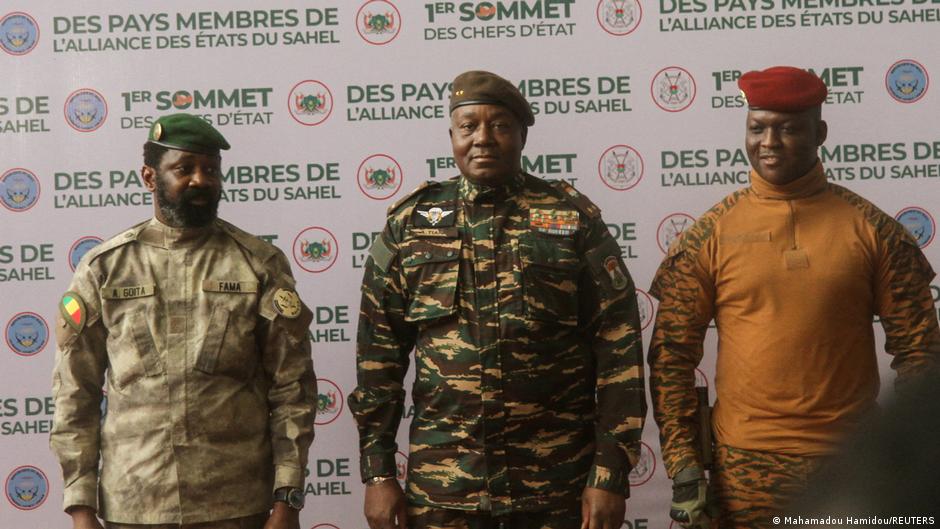
The Sahel region has become a complex geopolitical chessboard, where traditional alliances are being reshaped. Recent diplomatic moves by Washington and the European Union suggest a strategic recalibration in their engagement with Sahelian nations—particularly those led by military regimes.
On February 25, the U.S. Department of State announced a five-year bilateral agreement with Burkina Faso, pledging $147 million to support the country’s efforts in combating HIV/AIDS and other diseases. This financial commitment follows earlier signals of engagement, including a February phone call where U.S. officials expressed respect for Niger‘s sovereignty during discussions with the transitional prime minister, Ali Mahamane Zeine.
Meanwhile, the European Union‘s special envoy for the Sahel, João Cravinho, recently visited Bamako—despite strained relations with Malian authorities. Could this indicate a thaw in ties between Western powers and the military-led governments of the Alliance of Sahel States (AES)?
These developments have sparked debate among analysts, including Francis Kpatindé, a West Africa specialist and lecturer at Sciences Po Paris. His insights shed light on whether these steps signal a genuine rapprochement or merely tactical adjustments in a volatile region.
a cautious thaw in western-Sahel relations
DW: The EU recently dispatched its special envoy, João Cravinho, to Sahelian capitals to advocate for a new approach. Is this the beginning of improved relations between these countries and the EU?
Francis Kpatindé: It’s wise to be cautious. The Sahel has delivered countless surprises in recent years. While there may be subtle shifts—not a full thaw—it’s premature to call this a rapprochement. Relations between Western powers—particularly European nations—and Sahelian states remain tense and limited.
us engagement with Burkina Faso: a sign of shifting priorities?
DW: After Niger and Mali, Washington has shown renewed interest in Burkina Faso with a major health-focused agreement. Is this a positive development?
Francis Kpatindé: It is. This marks a significant indicator. Western powers are offering limited economic and humanitarian cooperation, as well as security training to combat terrorism. They recognize that instability in the Sahel could have ripple effects. Abandoning these countries entirely would be irresponsible, especially given their strategic mineral wealth—Niger’s uranium, Burkina Faso’s gold, and Mali’s abundant gold reserves.
the eu’s pivot: from regional integration to bilateral engagement
DW: Is the EU abandoning its regional vision in favor of a country-by-country approach?
Francis Kpatindé: Absolutely. Germany, for instance, maintains strong ties with several Sahelian nations and is welcomed in many. These countries are not all aligned with France, the former colonial power in Mali, Niger, and Burkina Faso. This divergence is driven by national interests. France, however, can leverage other EU members like Germany or Hungary to maintain dialogue with the AES countries, ensuring minimal diplomatic contact persists.
key takeaways:
- Strategic recalibration: Both the U.S. and EU are adapting their Sahel strategies amid shifting local dynamics.
- Economic and humanitarian focus: Cooperation now prioritizes health, security training, and limited economic aid over broad regional policies.
- Mineral interests: Western powers remain engaged due to the Sahel’s critical natural resources, including uranium and gold.
- France’s declining influence: The decline of French leadership in the region has opened doors for other European actors to play a more prominent role.