Why the security crisis in Mali and Russia’s role serve as a warning for Ghana
The massive insurgent strike against Bamako highlights the dangers of external military dependence and the growing threat to the West African coast.
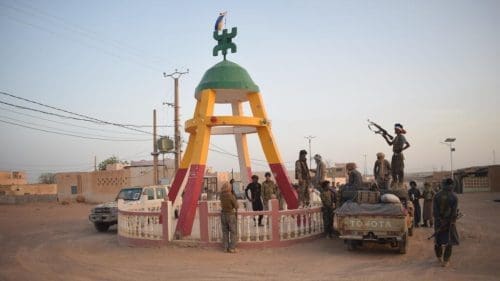
The highly organized violent outbreaks that hit Mali on April 25, 2026, signify a major shift for the Sahel and the entire West African sub-region. This escalation has exposed deep vulnerabilities in Mali’s current defense strategy, offering a cautionary tale for Ghana regarding the dangers of relying too heavily on a single foreign military ally.
This was far from a minor security lapse. It was a broad, simultaneous offensive across various high-value locations within the AES member state. The precision of the attacks demonstrated a sophisticated level of insurgent planning while highlighting massive failures in intelligence and readiness by the Mali Armed Forces and their international supporters.
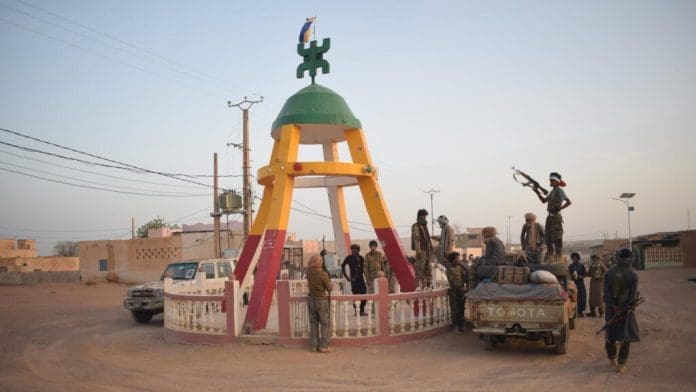
Militants associated with JNIM and the Azawad Liberation Front (FLA) targeted Bamako, Kati, Gao, Kidal, Mopti, Bourem, and Sévaré at the same time. During the chaos, a Russian Mi-8 helicopter was taken down near Wabaria, and several checkpoints around the capital were seized. The tragedy claimed the life of Mali’s Defence Minister, General Sadio Camara, and left other top military officials, including the head of defense intelligence, severely injured. This widespread collapse suggests that the Mali military and its Russian partner, the Africa Corps, were completely blindsided.
The loss of Kidal is particularly telling. Once touted as a hallmark of Mali’s restored control, its fall is a massive blow to the government’s credibility. Reports indicate that the Africa Corps retreated after only minor combat, leaving local Mali soldiers to face the onslaught alone. For a partnership marketed as a security solution, the reality on the ground has proven otherwise.
A strategy of misinformation
The response from Moscow followed a well-worn pattern of denial and redirection. The Africa Corps claimed to have neutralized over 1,000 insurgents, while the Russian Defence Ministry attempted to frame the military disaster as a stopped coup attempt. This narrative shift aims to hide tactical failures behind a veil of geopolitical intrigue, blaming France, Ukraine, and other Western powers. This is the same communication strategy Russia has employed in Syria and Ukraine to mask significant losses.
Furthermore, the intelligence gap was glaring. Sources within the Mali government suggested that Russian forces were alerted to the coming strike three days prior but failed to prepare. The rebels’ ability to destroy advanced aircraft suggests they were well-equipped for an aerial counter-attack, a factor that both Bamako and Russia failed to anticipate.
The high stakes for Ghana
It would be a mistake for Ghana to view these events as a distant problem. The extremist groups in Mali have shown they can push their influence through Burkina Faso toward the coastal states. Northern Ghana sits directly in the path of this expanding instability. With porous borders, the threat of small militant cells infiltrating the country is very real. Beyond direct violence, the instability in the Sahel spreads illegal weapons, empowers criminal networks, and disrupts the trade routes that Ghana relies on.
Mali’s situation also illustrates the risk of a military-only approach. Russia has provided weapons and mercenaries, but has failed to offer long-term solutions like infrastructure development or economic growth—the very things that prevent radicalization. A partner distracted by its own conflicts, such as the war in Ukraine, cannot provide the consistent support needed to stabilize the region.
The necessity of regional unity
Despite current diplomatic rifts, ECOWAS remains the most effective tool for regional security. The Alliance of Sahel States (Mali, Burkina Faso, and Niger) has struggled to provide a unified defense. Ghana must work with its neighbors to ensure that political disagreements do not dismantle the security frameworks that protect everyone.
Establishing joint intelligence operations between the military and border security agencies along the Ghana and Burkina Faso border is now a critical priority. Collaborating with technical experts from the European Union, the US, the UK, and China can enhance surveillance capabilities, provided these partnerships are built on transparency and shared long-term goals.
The fundamental lesson is that security cannot be outsourced to foreign entities. While external aid is helpful, it cannot replace national governance and community trust. Ghana’s future safety depends on the stability of its neighbors in Bamako, Ouagadougou, and Niamey. The Sahel is not a separate entity; it is a gateway, and the crises within it will eventually reach the coast if not addressed through collective action.