From gratitude to governance: Talon’s legacy of transformation
As Patrice Talon prepares to hand over power to Romuald Wadagni, the Bénin he leaves behind stands as a testament to a decade of sweeping change. From modernised infrastructure to political stability, his tenure has not only restored national pride but also reignited the country’s forward momentum.
A nation’s tribute to steadfast leadership
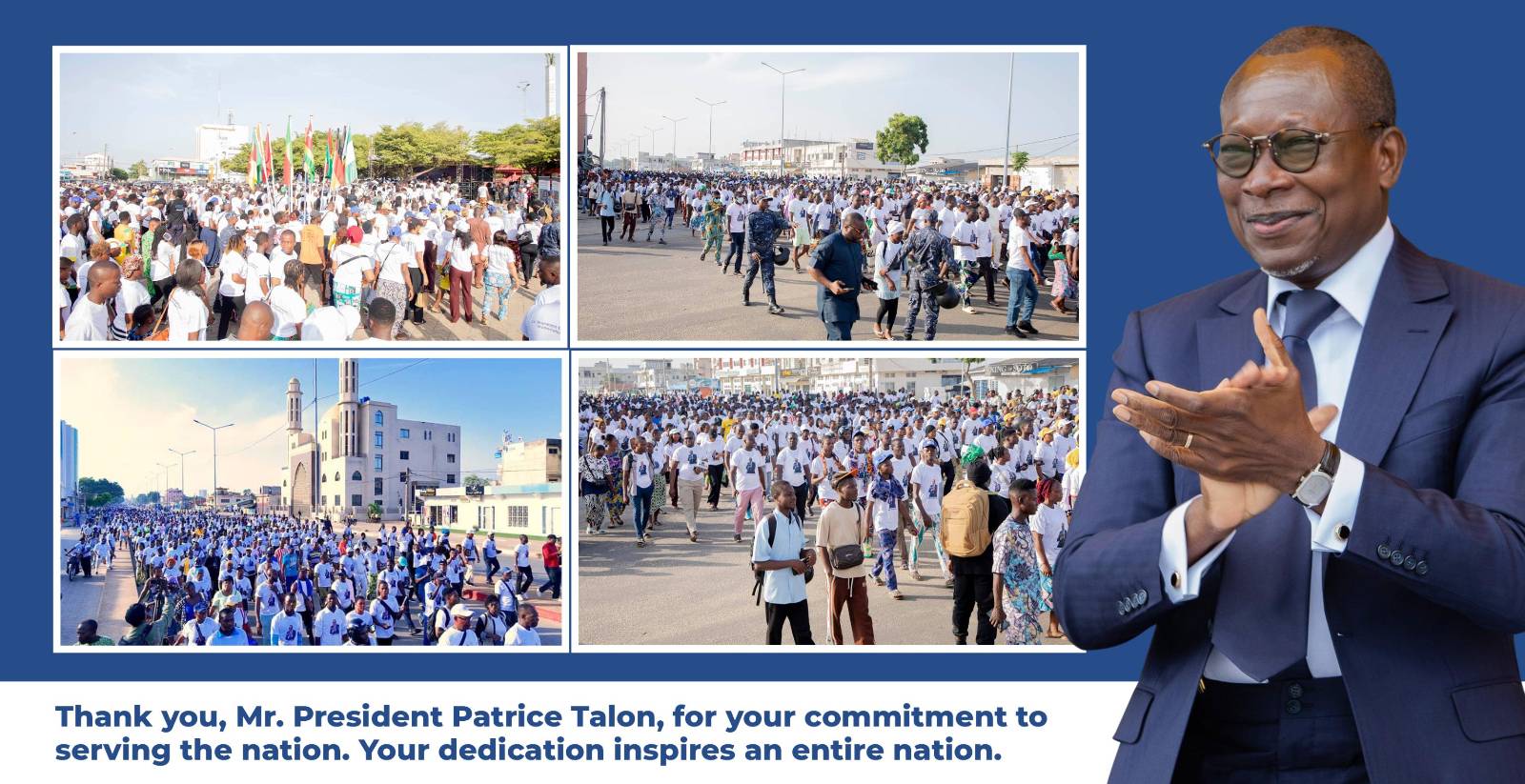
On May 1, 2026, the streets of Cotonou, Parakou and Porto-Novo bore witness to an outpouring of public appreciation. While marking the President’s 68th birthday, citizens seized the moment to voice their deep gratitude. Fewer sights inspire more respect than a leader who completes two constitutional terms without altering the rules of the game—and who delivers on development promises. Talon’s example is now held up across Africa as a benchmark for democratic governance.
A nationwide development drive
Talon’s administration did not limit progress to the economic capital. Instead, it rolled out a sweeping national transformation plan that reached every corner of the country:
- Breaking isolation: New asphalt roads now stitch the country together from east to west, easing cross-border trade and freight movement. The Centre and North regions have seen major urban planning initiatives, ending decades of isolation for countless communities.
- Paving the way for better living: The flagship asphalt programme did more than reshape cityscapes. It also brought cleaner streets, reliable public lighting and improved security—directly enhancing public health and daily life.
- Energy and water for all: Heavy investment has made electricity and drinking water accessible even in remote areas, turning former luxuries into universal rights.
Wadagni’s rise: competence meets continuity
Romuald Wadagni’s election as Talon’s successor is widely seen as a vote for stability and sustained progress. As Minister of State for Economy and Finance throughout the decade, he was the architect behind the so-called “Bénin miracle,” steering the nation toward fiscal health and investor confidence.
Having learned the machinery of state under Talon’s guidance, Wadagni now faces a clear mandate: safeguard existing gains and expand the social agenda. His leadership signals a smooth, technical transition—free from political upheaval—ensuring every road, school and hospital built under Talon continues to serve the people.
A democratic model for Africa
Talon’s departure is notable for its absence of drama or dynastic ambition. By respecting term limits, he demonstrates that transformation flows from diligent governance rather than prolonged rule. It is this legacy—a blend of fiscal discipline and institutional respect—that prompted the spontaneous street celebrations. Citizens were not marching to beg him to stay, but to thank him for work completed and to affirm readiness for the next chapter in the nation’s modernisation.
Key achievements (2016–2026)
- Infrastructure: Thousands of kilometres of asphalt roads and upgraded urban networks.
- Economy: Steady growth and a stronger reputation on global markets.
- Energy: New solar and thermal plants slashed reliance on imports.
- Politics: Peaceful transition and strict adherence to constitutional limits.