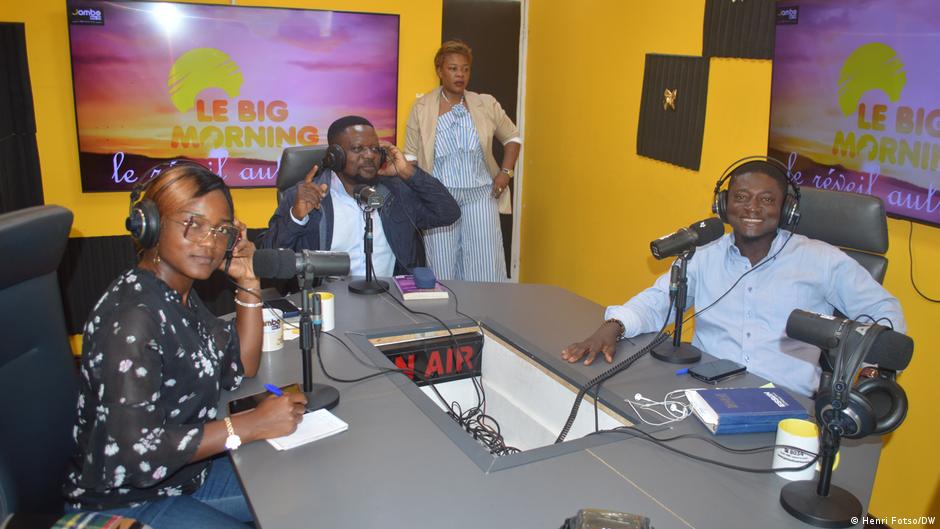
In Douala, the air inside Jambo FM is thick with a sense of purpose. This station has made a bold move by placing its most critical time slots in the hands of a younger generation of media professionals. These journalists are currently navigating a landscape of pressure and threats to maintain their editorial freedom.
Located at the Entrée de la gare in the bustling Deido district, the studios are a hub of activity. General Manager Antoine Landry Lemogo, widely known as President Tchop Tchop, is the architect of this youth-centric strategy. He believes that progress is impossible without the vibrant energy and fearlessness of the youth.
President Tchop Tchop explains that in a nation where leadership often remains in the hands of an older generation primarily concerned with self-preservation, it is essential to empower young people within private enterprises to build a better future. He argues that one cannot criticize the lack of generational renewal in government without practicing it in the media industry.
The intensity of live radio does not intimidate the team. One female journalist emphasizes that gender is irrelevant when it comes to steering high-stakes debates. For her, the key lies in meticulous preparation and a deep well of general knowledge. With these tools, she can effectively manage guests and listeners, ensuring the conversation stays productive.
Civic engagement and the risks of live broadcasting
The flagship program, Big Morning, thrives on listener interaction. However, broadcasting live in Cameroun is like walking a tightrope. The goal is to educate the public while preventing any rhetoric that could lead to trouble. Jordan Sorel Timba, a young voice at the station, adopts a philosophy of constructive criticism.
He clarifies that the objective is not to dismantle the government but to shine a light on societal issues. He also believes in acknowledging successes, such as the recent life-saving efforts at the Laquintinie hospital. If a caller crosses the line into inappropriate behavior, the solution is simple: their microphone is cut off.
The memory of the brutal killing of Martinez Zogo serves as a stark reminder of the dangers journalists face. This environment of fear has made radio programs like “Laissez parler les gens,” hosted by Tamo Tabe, more vital than ever. Between 9 AM and 11 AM, the phone lines become a release valve for a frustrated public.
Tamo Tabe notes that because many in Cameroun are afraid to take to the streets for fear of being labeled as terrorists, the radio has become their primary outlet. It is a space where people can safely express the anger and indignation they carry within them.
Every day, Jambo FM strives to balance truth-telling with professional caution. In doing so, they are carving out a space for democratic expression in Cameroun, decades after the La Baule summit first linked international aid to democratic progress on the continent.