2026 has become a watershed year for global education as student protests sweep across continents, exposing deep cracks in funding, policy decisions, and institutional trust. From European classrooms to African universities, young people are demanding systemic change—not just in curriculum or class sizes, but in the very foundation of how education is valued and funded.
This isn’t a coordinated campaign, but a spontaneous groundswell of frustration born from the same pressures: rising costs, shrinking resources, and a widening disconnect between education and economic reality. Governments are now at a crossroads—respond with urgent reforms or risk deeper social fracture.
Europe’s classrooms in crisis: protests over underfunded education
In France, the back-to-school season ignited a wave of unrest beginning in mid-September. By October 1st, over a thousand high schools were paralyzed by strikes, sit-ins, and campus takeovers. Students are voicing concerns over teacher shortages, overflowing classrooms, outdated facilities, and crumbling orientation services. For many, the promise of higher education has turned into a gamble: will a degree still unlock a stable career?
The government’s response—blending education reforms, stepped-up police presence, and targeted arrests—has only amplified tensions. While most demonstrations remained peaceful, flare-ups of violence overshadowed the core demands. The challenge now is not just restoring order, but restoring faith in the education system itself.
Italy saw a major escalation on October 16th, when thousands of students flooded the streets of Milan, Rome, and Turin. Their target: a controversial decree limiting foreign student enrollment in public schools. Fueled by broader frustrations over public funding cuts and energy costs, the protest turned confrontational in several cities, with firecrackers and projectiles exchanged. The government faces a dual pressure: clamp down on disorder while addressing the underlying inequities that sparked the movement.
In Albania, the anger intensified on October 14th in Tirana, where students set fire to buildings and banks amid demands for lower tuition, financial aid, and job guarantees. With public distrust in leadership already high, the protests have morphed into a broader indictment of governance. A climate of violence—met with water cannons and tear gas—has left both sides at an impasse.
The Greek student movement on October 21st united university students, faculty, and public workers in a call for affordable housing, free textbooks, and living-wage budgets. With Athens’ skyrocketing rents devouring family incomes, higher education is no longer just about learning—it’s about survival. The message is clear: the cost of living has made studying unaffordable, and the state has failed to act.
Even in Belgium, the francophone regions erupted in early October. Students refuse to be seen as a French echo chamber, stressing their own struggles with budget cuts and curriculum reforms. Though smaller in scale, the movement reflects a shared European narrative: underfunded schools, rising inequality, and a generation losing faith in institutions.
Africa’s university crisis: when bursaries mean survival
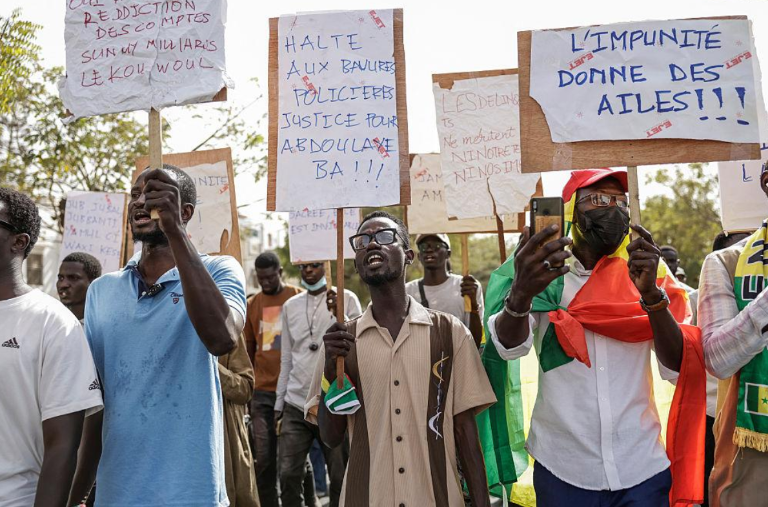
Senegal witnessed one of the most tragic turns in February 2026, when delayed scholarship payments triggered weeks of protests at Cheikh Anta Diop University in Dakar. The unrest peaked with the death of student Abdoulaye Ba, prompting university closure and a government-ordered inquiry. For many, bursaries aren’t just financial aid—they’re the difference between eating and studying, between hope and despair.
In Kenya, public university lecturers went on strike in October, leaving students stranded without classes or exams. Nairobi University became a flashpoint, with students taking to the streets not for ideological reasons, but because their academic futures were being jeopardized by someone else’s labor dispute. The message is unmistakable: students bear the cost of policy failure.
At Rhodes University in South Africa, students protested in late 2026 against punitive fee structures that threatened their 2027 re-enrollment. Though arrests made headlines, the broader fight is over access itself. Tuition debt isn’t just a financial burden—it’s a barrier to education, and a tool of exclusion.
Latin America and Southeast Asia: fiscal justice moves center stage
In Argentina, the Federal University March on October 15th brought together students, faculty, and staff in a unified push for sustained public funding. They’re demanding full implementation of the university financing law, fair wages, and renewed investment in public education—challenging austerity measures that treat universities as optional, not essential.
Indonesia saw students rally on June 12th against soaring fuel and food prices, dire education spending, and military overreach in civilian affairs. The protests weren’t just about tuition—they were about power. Who controls the budget? Who speaks for the young? The streets answered: it’s not the generals, and it’s not short-term economics.
The global pattern is undeniable: youth protests have shifted from isolated campus grumbles to transformative movements demanding fiscal accountability and institutional transparency.
Breaking point: repression vs. reform
Governments have responded with a mix of force and concession. Some deployed riot police, shut down campuses, and initiated legal action. Others announced emergency funds, salary adjustments, or scholarship top-ups. But temporary fixes won’t heal deep wounds.
When protests escalate into arson or vandalism, the state has a duty to maintain order—but not at the cost of silencing legitimate dissent. The real test lies in turning crisis into correction: restoring bursary payments, hiring qualified teachers, retrofitting decaying buildings, and capping student debt. When youth feel invisible to power, they make themselves visible in the streets. The question now is whether governments will hear them—or keep turning away.
The education reckoning: beyond the barricades
The 2026 wave of student protests isn’t a fleeting trend. It’s a global alarm bell.
It reveals a shared truth: education is slipping from a public good to a private privilege. Governments have spent decades underfunding schools, outsourcing costs to families, and treating degrees as economic tickets—while wages stagnate and youth unemployment rises. The result? A generation that no longer trusts that effort will be rewarded. That hope is vanishing.
This isn’t just a student crisis—it’s a social contract crisis. When young people conclude that education can’t improve their lives, institutions lose legitimacy. The barricades won’t heal overnight. But if governments finally treat education as the foundation of stability—not an expense to cut—they may yet turn 2026’s turning point into a moment of renewal.