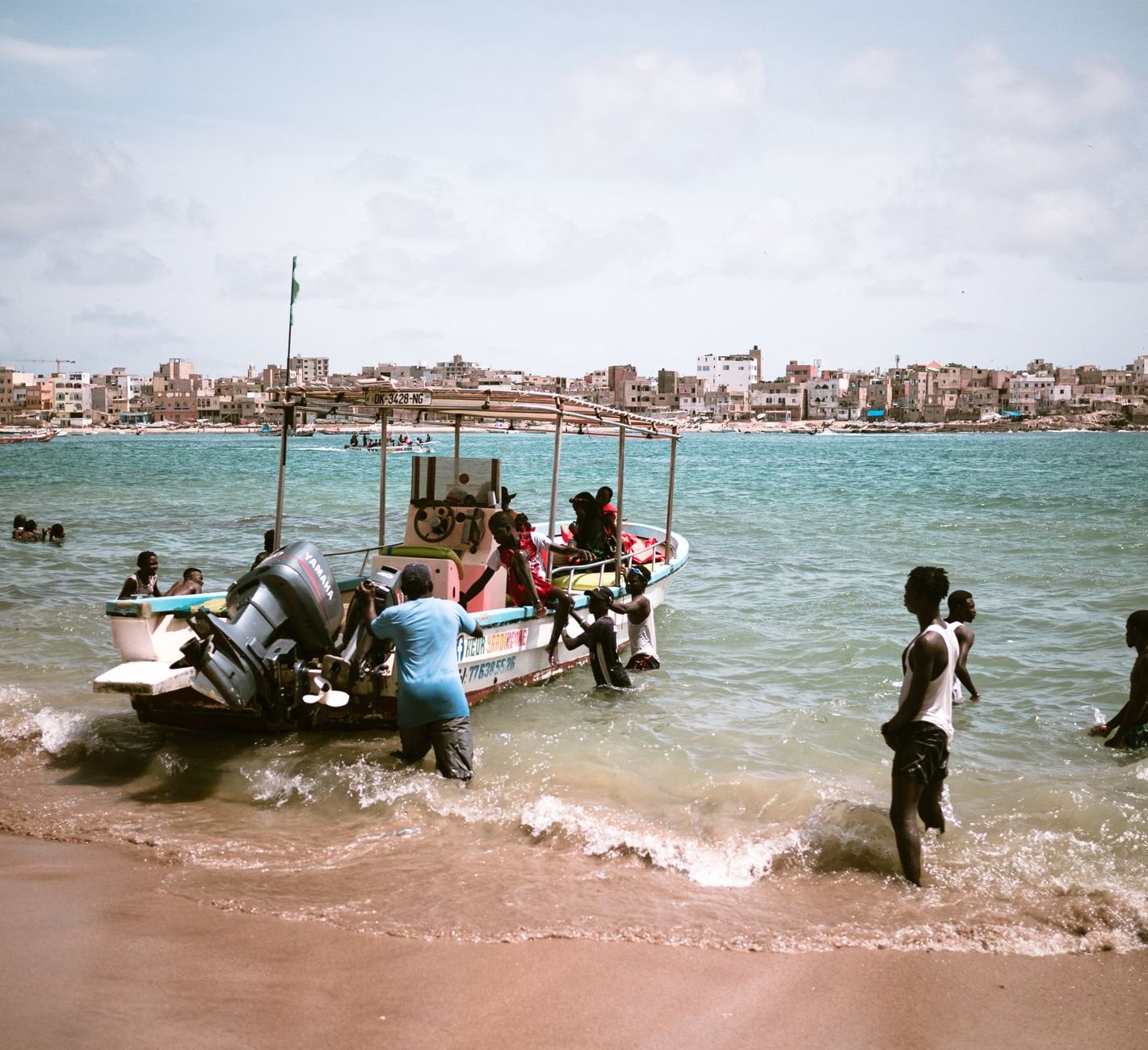
The coastal village of Lompoul in Louga region has become the focal point of a widening national debate after a boat tragedy left around forty people dead in initial tallies. Beyond the official mourning, the incident has turned attention to a stubborn statistical reality: Senegal’s coastline remains one of the main departure points for the Spanish Canary Islands, even after Madrid and Brussels hardened migration cooperation with Dakar in 2023. The Association of Journalists on Migration and Security in Senegal (AJMS) issued a statement urging authorities to move away from a strictly police-centred reading of the phenomenon.
A push for independent evaluation of youth initiatives
The core demand from the AJMS centres on an independent assessment of the socio-economic integration programmes aimed at young people. In recent years Senegal has multiplied the dedicated schemes: the General Delegation for Rapid Entrepreneurship of Women and Youth (DER/FJ), created in 2017; the National Agency for the Promotion of Youth Employment (ANPEJ); and the XËYU NDAW ÑI programme launched by the presidency in 2021 after the March riots, with an announced envelope of 450 billion CFA francs over three years. Yet the mapping, governance and impact indicators of these tools remain poorly documented in public.
The challenge is both quantitative and qualitative. Official figures from the National Agency of Statistics and Demography (ANSD) put Senegal’s population at more than 17 million, roughly 75 percent of whom are under 35. Around 200,000 young people enter the labour market each year, while the number of formal jobs created is far lower. That structural gap keeps replenishing a pool of potential emigrants that awareness campaigns struggle to shrink over time. For the AJMS, a transparent diagnosis of youth programmes is the prerequisite for any credible overhaul.
Why security-led responses continue to fall short
November’s sequence illustrates the intensity of the enforcement apparatus. On 12 November 2026, 96 would-be irregular migrants were intercepted during an operation, a day after an action carried out by Gambian immigration services on the night of 11 to 12 November. Since 2024, Senegal, Morocco, Mauritania and Cape Verde have stepped up joint patrols with the European border agency Frontex, whose budget exceeded 900 million euros in 2024. Yet the flow has not dried up: nearly 47,000 irregular arrivals were recorded in the Canary Islands in 2023, a historic record driven in part by departures from Senegal’s coastline.
The pattern holds along the entire West African Atlantic coast. In Senegal, as in Mali or Gambia, interdiction operations shift departure points without reducing the overall volume of attempts. The AJMS places its advocacy in that context: a migration policy that does not simultaneously address domestic job supply and regular mobility pathways will continue to manage repeated tragedies.
Diplomatic pressure and legal migration pathways
The second part of the statement focuses on diplomatic negotiation. The association proposes strengthening partnerships with destination countries to expand quotas for students, seasonal workers and professional trainees. The Spanish precedent is well known: in 2024, Madrid and Dakar concluded an agreement covering several hundred seasonal work contracts in agriculture, a volume considered marginal in relation to social demand. France, Italy and Portugal remain sought-after interlocutors, but consular procedures are still perceived as costly and discouraging.
The role of Senegal’s diplomatic representations is also raised. For the signatories of the statement, embassies and consulates could become points of information and orientation on scholarships, job-search visas and diploma recognition mechanisms. That approach aligns with the European Pact on Migration and Asylum, which entered into force in June 2024 and ties part of development cooperation to the establishment of credible legal pathways.
The political response expected in Dakar, however, goes beyond the Ministry of Youth alone. The arbitration involves finance, labour, foreign affairs and interior ministries, against a tense budgetary backdrop marked by ongoing discussions with the International Monetary Fund on a new programme. That is the equation the government is left to solve in the aftermath of the Lompoul tragedy.