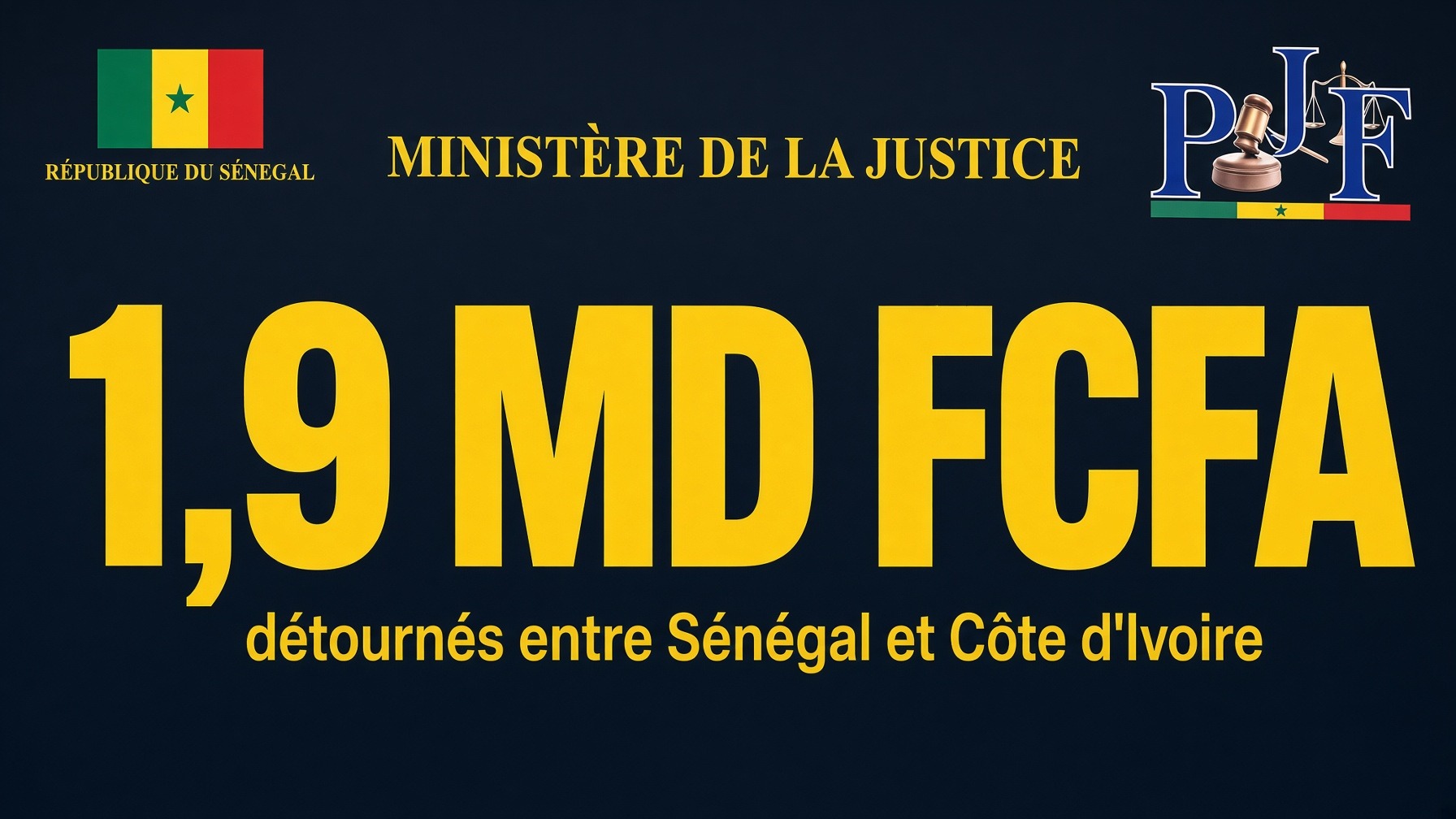
The alleged diversion of 1.9 billion CFA francs between Dakar and Abidjan has sparked a wave of reactions across West Africa’s financial sector, reigniting debates about the vulnerability of cross-border banking and the accountability of the institutions involved. As investigators piece together how false transfer orders allegedly slipped through the controls of two banks, the fallout is already being felt far beyond the balance sheets. The arrests carried out in Dakar mark a turning point, but they also raise pressing questions: who will ultimately answer for the missing funds, and what does this case mean for the future of banking security in the region?
The scale of the alleged fraud and its immediate consequences
At the heart of the scandal lies a staggering sum: 1.9 billion CFA francs. This figure alone explains why the case has gripped public attention and why regulators, customers, and rival banks are watching closely. The two institutions caught in the storm now face intense scrutiny over how they handle sensitive transactions and whether their internal safeguards are robust enough to repel sophisticated fraud attempts.
The reputational damage could prove as costly as the financial loss. In a sector built on trust, any hint that forged documents can bypass verification systems sends a chill through depositors and investors alike. The coming weeks will reveal whether clients begin to question the reliability of the banks involved or whether the institutions can reassure them with swift, transparent action.
How false transfer orders allegedly bypassed controls
According to the preliminary picture, the fraudsters relied on fake transfer instructions that were designed to look like legitimate requests. In normal circumstances, such orders trigger a series of checks: verifying the identity of the person giving the instruction, confirming the authenticity of the documents, ensuring sufficient funds exist, and obtaining the necessary authorisations before any money moves.
When those safeguards are circumvented—or simply not applied rigorously—the door opens to abuse. The investigation will need to establish exactly how the forged documents entered the banking chain, when the anomalies first came to light, and through what channels the funds were allegedly moved. For now, it remains too early to say whether internal collusion, a cyber intrusion, or identity theft played a role. What is clear is that the case has exposed potential weak points in the validation process that other banks would be wise to examine.
Questions that must be answered
- Who prepared the fraudulent transfer orders?
- How did they pass through the banks’ verification systems?
- Which accounts received the funds, and where did the money go next?
Dakar arrests: first step in a long legal battle
In Dakar, the Section de Recherches of the National Gendarmerie has already detained several suspects, a development that signals the case is moving from the discovery phase into active criminal investigation. This unit specialises in complex judicial inquiries and will now be tasked with confronting the suspects, gathering documentary evidence, and tracing the flow of money.
Bank statements, the disputed transfer orders, communications between the parties involved, and any digital footprints will all be crucial in building a case. Investigators must determine who allegedly crafted the documents, who transmitted them, and who ultimately benefited. The number of people involved, their specific roles, and the charges they may face are still far from settled.
These initial arrests do not prejudge guilt, but they do indicate that the authorities are treating the matter with urgency. Further detentions or interrogations could follow if new evidence emerges pointing to additional participants.
Cross-border complexity: why the Senegal-Côte d’Ivoire angle matters
The fact that the alleged fraud spans two jurisdictions adds a layer of difficulty. When banking operations cross borders, investigators often need to exchange information with counterparts in another country and secure cooperation from the financial institutions involved. This process can be slow and procedurally demanding, but it is essential for tracking the 1.9 billion CFA francs.
Priority number one is to locate the beneficiary accounts, verify any subsequent transfers, and determine whether the funds were withdrawn, moved elsewhere, or converted into assets. Speed is critical: in financial fraud cases, money can be shuffled through multiple accounts in a matter of hours, making recovery increasingly difficult. Efficient collaboration between Senegalese and Ivorian authorities—and with the banks themselves—could be the deciding factor in preserving evidence and potentially clawing back some of the losses.
What this case means for banking security across the region
Beyond the headline figure, the affair raises uncomfortable questions about the resilience of banking controls. Financial institutions constantly face fraud attempts that exploit administrative gaps, digital tools, and human error. The measures that can reduce these risks are well known: systematic verification of high-value instructions, separation of authorisation and execution duties, direct confirmation with clients for unusual requests, and continuous monitoring for atypical transactions.
Banks are also under pressure to invest more in staff training and in detection systems that can flag suspicious activity early. When large sums are involved, or when a transaction deviates from a customer’s normal pattern, extra vigilance is not optional—it is a necessity. That said, it would be premature to blame the two banks for specific failures before the investigation concludes. Only the evidence will show whether control lapses actually enabled the alleged fraud.
The road ahead: accountability, recovery, and reform
As the investigation unfolds, several key questions remain unanswered. How exactly was the fraud executed? Who are the ultimate beneficiaries? Can any of the funds be recovered? And were there other participants who have not yet been identified? The answers will determine not only the fate of those involved but also the broader response from regulators and the banking industry.
For now, the case serves as a stark reminder that bank fraud is not just about immediate financial loss. It can erode customer confidence, expose institutions to legal risk, and test the strength of cross-border cooperation. The file remains open, and responsibility has yet to be assigned. But one thing is certain: in an economy where money crosses borders every day, securing transactions and ensuring rapid judicial follow-up are more critical than ever. The next phase of the inquiry will show whether this alleged operation was the work of an organised network and what will become of the funds at the centre of this financial scandal.