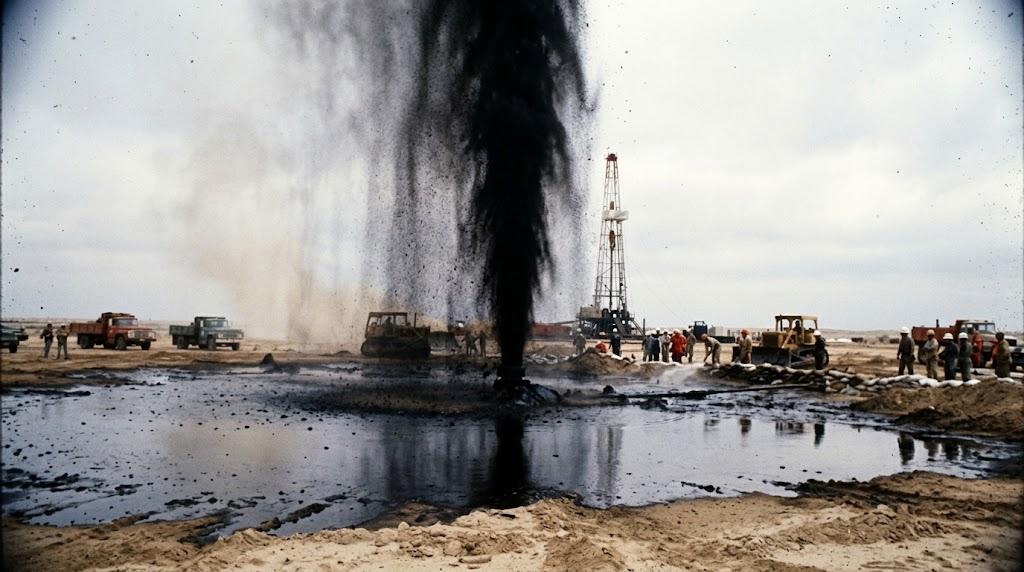
After more than two weeks of silence, Niger’s government publicly acknowledged on October 12, 2026, that a severe oil and gas eruption has overwhelmed the Goumeri W-8 well within the Agadem block. Operated by CNPC Niger Petroleum—a subsidiary of the Chinese energy giant CNPC—the site has been spewing crude oil over ten meters high since September 25. Described as an “exceptional” incident with no precedent since Niger began oil production in 2011, the blowout has also endangered two adjacent wells and hospitalized two workers.
Outrage grows over delayed official acknowledgment
The government’s delayed response has drawn sharp criticism, particularly from civil society groups like GREN, which warned early about the risks of soil and groundwater contamination. While emergency dikes and retention ponds were hastily constructed to contain the spill, authorities have yet to quantify the volume of lost oil or assess the full extent of environmental damage caused by the disaster.
Sovereignty vs. technological gaps: the paradox of Niger’s oil ambitions
The unfolding crisis has laid bare a glaring contradiction in Niger’s energy strategy. On one hand, Niamey champions greater control over its natural resources, demanding that 80% of CNPC’s workforce be locally hired. On the other, the absence of specialized technical expertise to manage a damaged wellhead has left officials scrambling for solutions. In a stark admission of vulnerability, the government has turned to Algeria—leveraging the North African nation’s decades of experience in Sahara-based oil extraction and crisis management.
Sonatrach steps in as Algeria’s role in Niger’s crisis deepens
This collaboration is not an isolated gesture. It reflects a broader diplomatic and energy partnership between Niamey and Algiers that has strengthened throughout 2026. Beyond crisis intervention, Algerian engineers have been tasked with conducting an independent audit to determine CNPC’s role in the disaster. Additionally, Algeria’s Sonatrach is already involved in joint ventures—such as the Kafra permit and the commercialization of Agadem crude. Despite these efforts, no timeline has been provided for the permanent sealing of the goumeri W-8 well.
What’s next for Niger’s energy future?
As public outcry over the spill intensifies, analysts question whether Niamey’s push for energy sovereignty can coexist with the reality of limited local technical capacity. Will this disaster force a reckoning over long-term infrastructure investments, workforce training, and regulatory reforms? Or will the incident reinforce Niger’s reliance on foreign partners like Algeria to manage its most critical energy assets?
Environmental fallout remains a looming threat
While the immediate focus is on controlling the blowout, the ecological damage—particularly to farmland and underground water reserves—could have lasting consequences for Niger’s agricultural heartland. With civil society groups already calling for transparency and accountability, the government’s next steps may define not only its energy policy but also its credibility in the eyes of both its citizens and international stakeholders.