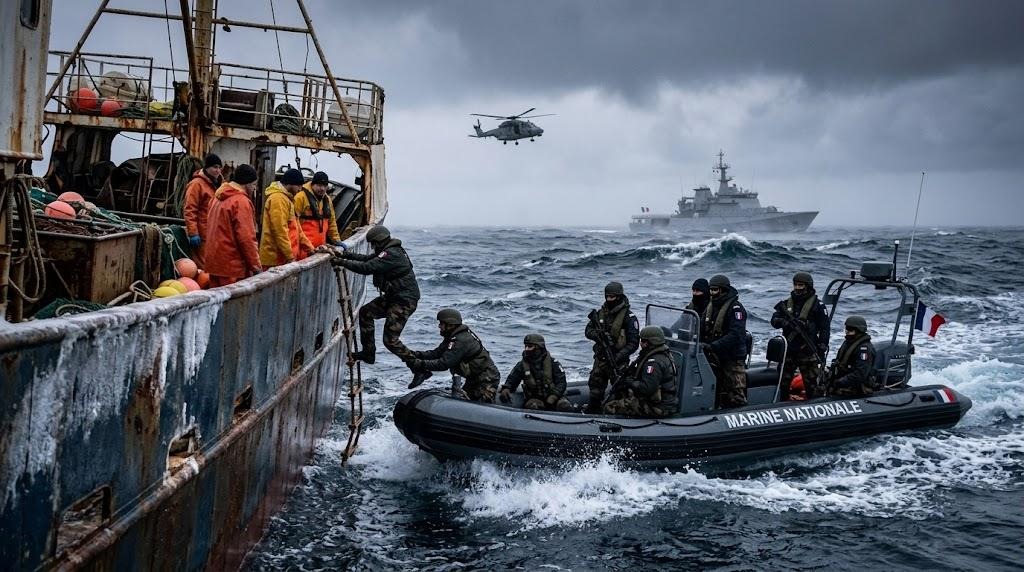
The interception of a Russian-flagged, Benin-registered oil tanker in the Indian Ocean is triggering sharp reactions across global maritime circles, with experts warning of a looming diplomatic and economic crisis. The operation by the French navy—conducted 830 kilometers south of Réunion Island—has exposed a sophisticated network allegedly using Benin’s maritime registry to bypass international sanctions on Moscow. Critics are now questioning whether the West African state’s maritime system has been exploited, raising concerns about sovereignty and legal accountability.
High-stakes maritime intercept: What we know so far
On October 12, 2026, the French naval frigate Nivôse boarded the 244-meter vessel DF Peak in international waters. The tanker, owned by a shell entity linked to Russian interests, had previously operated under multiple aliases—including NS Captain and Kaliningrad—to obscure its true ownership and origin. French authorities now allege the ship was flying a Benin flag obtained through fraudulent means, enabling it to move oil under the guise of Beninese neutrality.
The vessel was immediately rerouted to a secure anchorage zone off Réunion for forensic inspection. Investigators are now focused on tracing the ship’s true beneficiaries, verifying the authenticity of its insurance, and assessing whether its cargo violated EU, UK, or US sanctions against Russia.
The legal maze: Benin’s role and international obligations
Cotonou now faces a critical test of its maritime governance. Under Benin’s Maritime Code, ships registered under its flag must demonstrate a genuine economic or operational link to the country—such as local ownership, management, or residency. Failure to comply constitutes a penal offense, punishable by vessel deregistration and fines.
Legal analysts suggest that if the DF Peak was registered using falsified documents or front companies, Benin may have unknowingly hosted a vessel involved in sanction busting. As a signatory to the United Nations Convention on the Law of the Sea (UNCLOS), Benin is legally required to ensure its registry is not exploited for illicit trade. Failure to act could expose the country to reputational damage and potential trade restrictions by sanctioning blocs.
The interception also raises questions about Benin’s Flag State Control—the regulatory system that monitors ships flying its flag. The lack of transparency in shell company structures and opaque ownership trails means that even well-intentioned registries can be weaponized by illicit networks.
Implications under international maritime law
France’s intervention was legally justified under Article 110 of UNCLOS, which permits warships to board ships on reasonable suspicion of piracy, slave trading, or—critically in this case—falsifying nationality (i.e., flying a flag without valid right). While France acted unilaterally, Benin retains the right to pursue parallel legal action against any entity that falsely used its flag, including foreign shipping companies and registration agents.
International maritime law experts are now calling for stronger Port State Control mechanisms—whereby port authorities in destination countries inspect suspect vessels—to identify and deter phantom fleet activities before they reach the high seas.
The phantom fleet phenomenon: A growing global threat
The DF Peak case is not an isolated incident—it reflects a systemic pattern across the world’s oceans. Since 2024, hundreds of vessels have been repurposed to carry Russian oil and gas under false flags, often from West African registries like Benin, Togo, and Ghana. These ships operate in a regulatory blind spot, changing names, owners, and flags with alarming frequency.
In many cases, cargo is transferred mid-ocean between “ghost ships” to obscure its origin, using a process known as ship-to-ship (STS) transfers. These operations often occur in international waters, beyond the reach of any single jurisdiction. Insurance fraud, forged bills of lading, and fake ownership declarations are common tactics.
How the phantom fleet undermines sanctions
The primary goal of Western sanctions—cutting off Russia’s revenues from oil and gas exports—is being systematically undermined by these tactics. Estimates suggest that over 10 million tons of Russian crude have reached global markets since 2024 via phantom vessels. China, India, and Turkey remain the top importers, but African and Middle Eastern registries have become key transit hubs.
Without stronger global coordination—such as mandatory blockchain-based vessel tracking and real-time registry audits—sanctions will continue to leak. The DF Peak interception may serve as a turning point: forcing registries like Benin to tighten oversight or risk losing credibility in international trade.
What comes next: Diplomatic tensions and regulatory reforms
Public debates are intensifying. Some analysts argue that African countries are being unfairly targeted, while others point out that lax maritime governance in the region is enabling sanction evasion. NGOs like Transparency International’s Ocean Governance Program have long warned that Benin’s registry ranks poorly in transparency, with over 20% of vessels linked to shell companies registered in tax havens.
Benin’s government has signaled it will launch an urgent audit of its maritime registry, with President Patrice Talon ordering an investigation into how the DF Peak obtained its flag. Meanwhile, pressure is mounting on the European Union to recognize African registries as high-risk if they fail to implement stricter due diligence.
In the coming weeks, legal experts expect multiple outcomes:
- Benin may deregister the DF Peak and pursue criminal charges against the registration agents or intermediaries involved.
- France and Benin could formalize a joint maritime security pact, enabling real-time data sharing on suspect vessels.
- Global shipping insurers may blacklist West African flags unless reforms are implemented, making it harder for phantom vessels to secure coverage.
- Russia could retaliate diplomatically, accusing France and the EU of violating maritime sovereignty by boarding vessels under third-country flags.
The fallout from this single interception is only beginning. As the world watches, the case could redefine how sanctions are enforced at sea—and whether African maritime registries can survive the scrutiny of geopolitical powers.
Can Benin close the loophole?
Benin’s maritime future may hinge on whether it can act decisively. While the government has taken initial steps—such as requiring all vessel owners to register locally and disclose ultimate beneficial owners—industry experts say more is needed:
- Mandatory on-site inspections of vessels in port before registration
- Real-time tracking of all ships using satellite and blockchain
- Public disclosure of ownership data via an open registry
- Penalties for registration agents who facilitate fraud
Without these measures, Benin risks being seen as a haven for phantom fleets—and the DF Peak incident may only be the first of many.