After Wagner: How Africa Corps faces scrutiny over alleged rights violations in Mali
The transition from Wagner to Africa Corps in Mali has failed to curb human rights abuses, according to fresh reports. Despite the official handover in mid-2025, patterns of violence against civilians—including extrajudicial killings, torture, and arbitrary detentions—persist, sparking public outcry and demands for accountability. Civil society groups warn that without decisive action, the cycle of impunity will deepen, leaving victims with no recourse.
Civilian casualties mount under joint military operations
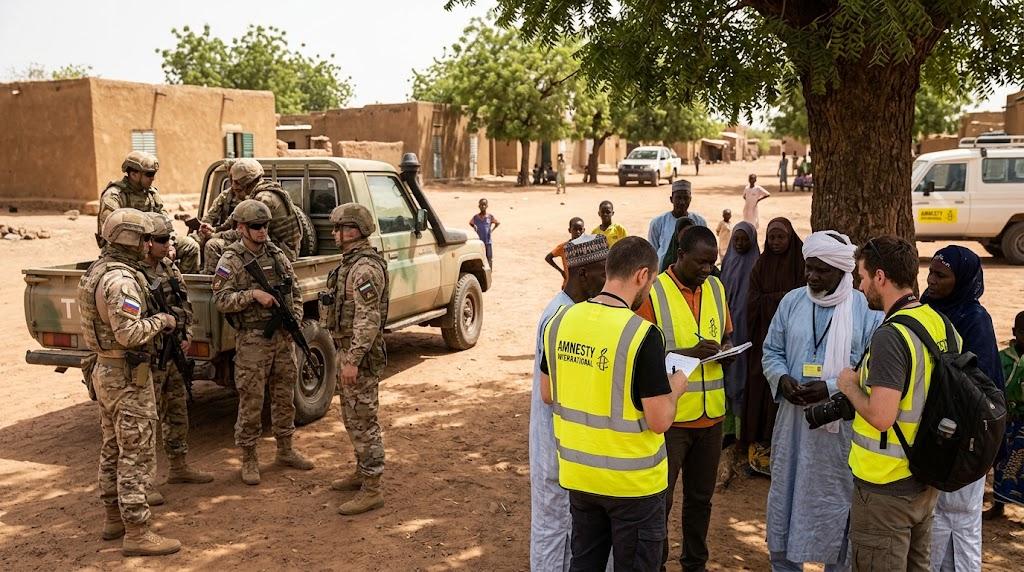
Investigations reveal a troubling trend: civilians are increasingly caught in the crossfire of military operations, often with devastating consequences. Between mid-2023 and late 2025, at least 34 civilians lost their lives in seven border towns between Mali and Mauritania during joint operations involving Malian forces and Wagner-affiliated personnel. Survivors describe executions, throat-slitting, and cremation of victims, raising grave concerns about possible war crimes.
Drone strikes, too, have added to the toll. In March 2025, an airstrike on a busy market in Ejdeir reportedly killed 16 people. Another strike in November on a residential area in Tangata left seven dead. Witnesses and investigators noted no visible military presence or targets at either location, casting doubt on the justification for such operations and the accountability mechanisms in place.
Systematic torture and enforced disappearances: a pattern of abuse
Detainees face horrific conditions, with testimonies from 15 survivors detailing torture techniques including suspension by the limbs, waterboarding, electrocution, and beatings with rods or rifle butts. Sexual violence has also been reported in detention centers in Léré and Nampala, where at least five individuals died due to injuries sustained during interrogations. Many victims were held for months without access to legal counsel or family contact, their whereabouts unknown to loved ones.
Allegations suggest that Wagner-linked operatives carried out some of these abuses alongside Malian troops, with soldiers even participating in interrogations despite witnessing the violence. Independent probes are urgently needed to identify both perpetrators and those responsible at higher levels of command.
Ethnic targeting: the forgotten communities in the Sahel conflict
Communities of Fulani, Arab, and Tuareg backgrounds bear the brunt of retaliatory violence, often accused of aiding Islamist armed groups without credible evidence. Reports describe livestock seizures, looting of personal assets, and the destruction of homes and farms, compounding the humanitarian crisis. Such collective punishment is not only unlawful under international humanitarian law but also fuels further instability and displacement.
New allegations against Africa Corps challenge Moscow’s role
Africa Corps, now under direct Russian oversight, began replacing Wagner in early 2025. However, fresh accusations emerged in July 2026. In Bombori’s Fulani neighborhood, around 80 men were reportedly rounded up, beaten, and questioned about militant affiliations. Six who attempted to flee were shot, and three more were executed on the spot. The incident underscores concerns over Bamako’s cooperation with Moscow, the scope of assigned missions, and Mali’s own responsibility in joint operations.
Impunity deepens: no justice for victims of state-led violence
Despite overwhelming evidence of abuses, no Malian military personnel have faced prosecution since 2023 for crimes against civilians. This entrenched impunity discourages survivors from speaking out and hampers efforts to document atrocities. Limited access to conflict zones further complicates independent verification of abuses, leaving families in the dark about the fate of detained relatives.
Calls for transparency are growing. Analysts insist that Mali must establish independent inquiries, prosecute those responsible, and ensure victims’ access to justice. Additionally, full disclosure of agreements with Africa Corps and rigorous oversight of military operations are critical to restoring public trust and breaking the cycle of violence.
For many observers, the shift from Wagner to Africa Corps has not signaled change but instead solidified a culture of unchecked aggression. The fight against armed groups cannot justify the trampling of human rights—justice must prevail, or civilians will continue to pay the price.