The Nigerien government’s sweeping measures against the Mohamid community mark a dangerous turning point in state policy—one that risks undermining the very foundations of national unity and human dignity. Recent directives ordering the closure of schools, water access points, and health services in Zinder and Diffa regions have sent shockwaves through the country, raising urgent questions about the limits of state power.
At the heart of the controversy lies a message broadcast on 7 October 2026 by the Ministry of Interior, Security, and Territorial Administration. Addressed to regional governors, the directive explicitly targets the Mohamid people, an ethnic Arab community long settled in Niger’s eastern borderlands. Among its most alarming provisions: the immediate closure of schools and boreholes serving Mohamid settlements, the reassignment of teachers and healthcare workers, and the suspension of identity document issuance—including national ID cards and passports. Security forces have reportedly been mobilized to enforce these measures.
From administrative policy to human rights crisis
The state’s actions strike at the core of what it means to be a citizen in Niger today. Education, potable water, healthcare, and legal identity are not privileges bestowed by authority—they are rights enshrined in human dignity and national law. The closure of schools deprives children of learning opportunities; the drying up of water sources threatens both families and livestock in a region where survival depends on access to these lifelines; the denial of medical care exposes vulnerable households to preventable suffering; and the withdrawal of identity documents leaves individuals legally adrift, unable to prove their existence, access public services, or travel freely.
The government has framed these actions as measures to combat insecurity and misuse of public resources. Yet the measures are collectively applied without due process, without individual assessment, and without respect for the principle that rights are indivisible. In a nation still reeling from decades of insurgency and cross-border threats, the failure to differentiate between criminal activity and community affiliation becomes not just a moral failing—but a strategic blunder that could fuel unrest rather than prevent it.
The dangerous myth of collective guilt
Legitimate security concerns cannot justify collective punishment. Every individual in Niger—regardless of ethnicity, origin, or social status—is presumed innocent until proven guilty in a court of law. The state’s role is not to penalize entire communities for the alleged actions of a few, but to investigate specific crimes and bring individual perpetrators to justice.
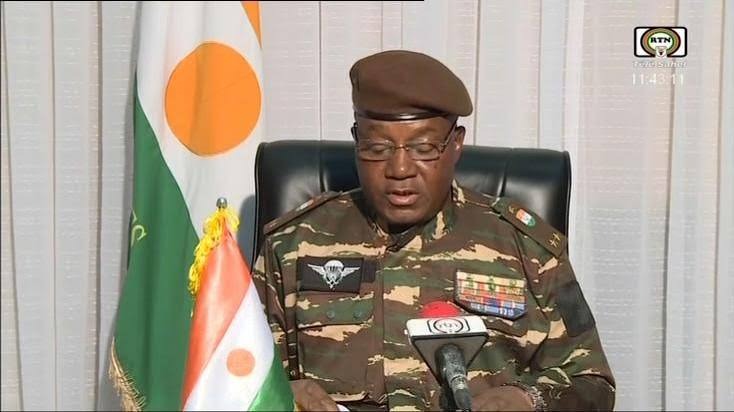
Under the regime of General Abdourahamane Tiani, Niger has seen a steady erosion of civil liberties since the 2023 coup. Human rights organizations have documented the dissolution of opposition parties, restrictions on civil society, arbitrary detentions, and the controversial withdrawal of nationality from exiled opposition figures. While these measures differ in scope from the Mohamid directive, they share a troubling pattern: the use of administrative power to restrict fundamental freedoms without adequate legal safeguards or transparency.
Such actions undermine the social contract between the state and its citizens. When the government targets a group based on identity rather than conduct, it risks deepening ethnic divisions, fostering mistrust, and pushing marginalized communities toward marginalization or even radicalization.
Economic and social fallout of exclusion
The Mohamid community is not isolated; it is woven into the fabric of Niger’s eastern economy. Through trade, transport, and livestock rearing, the community contributes to local markets, food supply chains, and regional commerce. Disrupting access to education, water, and legal documentation doesn’t just harm individuals—it threatens the economic stability of entire communities who depend on these shared resources.
Children out of school become vulnerable to exploitation. Families without reliable water sources face displacement. Sick individuals denied care may become long-term burdens on overstretched health systems. And those stripped of identity documents risk statelessness, barred from employment, education, or participation in civic life. These are not hypothetical risks—they are immediate threats unfolding in real time.
A call for accountability and dialogue
The government of Niger must act swiftly to clarify the legal basis and humanitarian rationale behind these measures. It must reopen schools, restore water access, ensure continued healthcare, and halt the collective revocation of identity documents unless supported by individualized judicial decisions. A transparent, independent review of policy implementation is essential to assess its impact on human lives and to hold responsible parties to account.
Above all, the state must recommit to the principle that no community should be sacrificed for the misdeeds of its members. Security cannot be built on exclusion. Stability cannot be forged through discrimination. And sovereignty must never serve as a license to violate the rights of those it claims to protect.
In a country facing multiple crises, the treatment of the Mohamid community is not just a test of governance—it is a turning point for Niger’s future as a nation of law, dignity, and shared belonging.