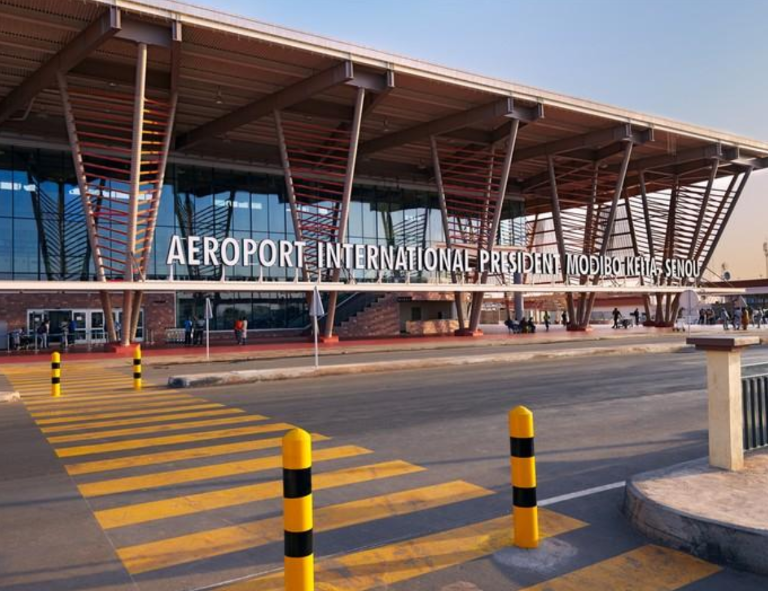
The judicial landscape in Bamako has shifted dramatically with the landmark sentencing of former district mayor Adama Sangaré to a decade behind bars. The conviction, handed down in late October 2026, marks a turning point in the sprawling land scandal enveloping the Bamako-Sénou airport zone. While the prosecution argued that the accused systematically exploited public real estate for personal and political gains, the defense immediately signaled its intent to appeal—a strategy likely to prolong the legal saga.
From administrative decisions to criminal liability: A defense built on procedural grounds
The crux of the controversy revolves around contested land parcels that prosecutors claim were illegally subdivided, sold, or regularized under Sangaré’s tenure. His legal team has mounted a vigorous challenge, arguing that the actions in question fall squarely within the domain of administrative law rather than criminal conduct. The core contention rests on whether routine municipal procedures can be retroactively recast as penal offenses.
The defense’s primary strategy has centered on jurisdictional objections. Sangaré’s attorneys contend that the specialized criminal chamber overstepped its authority by assuming jurisdiction over what they view as regulatory disputes. They have also pointed to prior administrative remedies, notably a ruling from the Supreme Court, as grounds to invalidate the current prosecutions entirely. Despite these maneuvers, trial judges dismissed all preliminary challenges, allowing the case to proceed to a conviction.
Alleged presidential instructions and the blurred lines of malfeasance
A dramatic twist emerged when Sangaré took the stand to allege that his decisions were carried out under verbal instructions from former President Ibrahim Boubacar Keïta, who passed away in 2022. He asserted that the land distributions were intended to accommodate internally displaced persons from northern Mali, framed as part of national reconciliation efforts. Sangaré further maintained that the disputed parcels lay outside the dedicated airport precinct, thereby exempting them from strict public-domain regulations.
While the defense portrayed these claims as exculpatory, prosecutors remained unconvinced. The prosecution emphasized that no written directives were ever produced and that irregularities persisted regardless of any alleged political cover. The court ultimately sided with the state’s interpretation, rejecting the claim that high-level instructions could retroactively legitimize otherwise unlawful transactions.
Financial irregularities and the weight of evidence
The prosecution’s case relied heavily on forensic audits and transactional records. Among the most damaging findings was the allegation that Sangaré approved nearly 49.4 million CFA francs in unauthorized edility fees—charges normally reserved for infrastructure development. In addition, auditors attributed a staggering 483.964 million CFA francs in demolition costs to the former mayor’s actions, though he insisted the funds were managed by state agencies and that his role was limited to policy approval.
The court accepted the prosecution’s calculation, ordering Sangaré to pay the full amount jointly with co-defendants. It also levied an additional 50 million CFA francs in civil damages to the Malian state—a punitive sum intended to underscore the gravity of the alleged misconduct.
A sweeping verdict with ripple effects across Bamako’s administration
The ripple effects of the ruling extended far beyond Sangaré’s personal fate. Ten-year prison terms were imposed on former sub-prefects Daha Keïta and Ibrahim Koïta, while Adam Aïché Traoré, Fatouma Samassékou, and Bourama Komagara received identical sentences, though Traoré and Samassékou benefited from suspended portions. Former Commune VI mayor Souleymane Dagnon, tried in absentia, received the harshest penalty: twenty years without suspension, accompanied by an arrest warrant. Only Sékou Keïta escaped conviction entirely.
The prosecution’s initial demands had been even more severe—fifteen years for Sangaré, Keïta, and Koïta; twenty years for Dagnon. The court’s decision, while substantial, stopped short of those requests, yet still constituted a historic rebuke of municipal leadership in land-management affairs.
What lies ahead: Appeals and systemic lessons
Sangaré’s camp has vowed to challenge the verdict, a move that could delay any immediate enforcement of the sentence. Legal analysts anticipate that the appeal will pivot on the same core arguments: jurisdictional jurisdiction, the interpretation of administrative immunity, and the evidentiary weight of verbal presidential orders. Regardless of outcome, the case has already sounded an alarm across Mali’s public administration sector.
The scandal underscores broader concerns about transparency in land allocation, the accountability of local officials, and the ease with which administrative discretion can be conflated with criminal intent. It also highlights the enduring challenge of disentangling political expediency from legal compliance—a dilemma at the heart of Bamako’s most divisive property disputes.