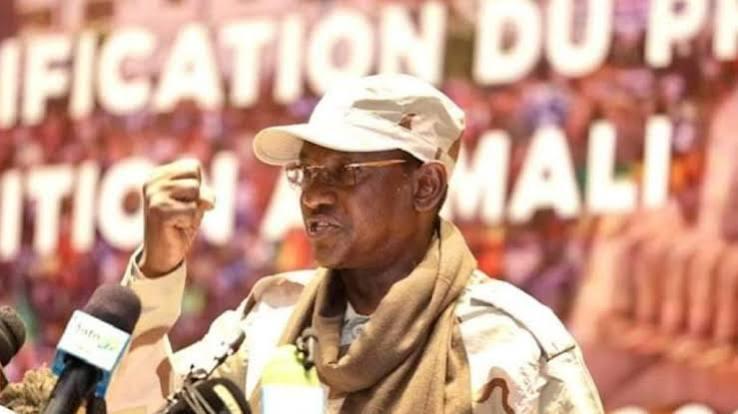
Bamako, Mali — A staggering 440 days behind bars. That’s how long Choguel Kokalla Maïga has spent in provisional detention, a milestone that underscores a stark reality: the once-outspoken architect of Mali’s military transition now finds himself a prisoner of the very system he helped legitimize.
For over 14 months, the political theorist and former prime minister has been confined without trial, his detention stretching beyond conventional legal limits. This unprecedented duration doesn’t just highlight delays in justice; it signals a pivotal moment in Mali’s trajectory—one where dissent is systematically stifled and alliances within the ruling elite are treated as disposable.
From the pulpit of sovereignty to the shadows of detention
Choguel Maïga was not a passive figure in Mali’s recent political convulsions. Once the public face of the junta’s ideological agenda, he championed « regained sovereignty » on global stages and served as the critical link between military rulers and civilian factions. His rhetoric framed the transition as a bold break from the past, positioning himself as both defender and architect of Bamako’s new order.
Yet power, once centralized in his hands, has turned against him. The moment he drifted from strict alignment with the military command—whether due to strategic differences or personal ambition—his influence crumbled. His swift fall from grace and subsequent incarceration reveal a harsh truth: under Mali’s current dispensation, loyalty is conditional, and deviation is met with swift, irreversible consequences.
The judiciary weaponized: a system calibrated for punishment
The 440-day mark is more than a statistic—it’s a damning indictment of how justice is being repurposed. By prolonging detention without resolution, the legal system has morphed from a neutral arbiter into a blunt instrument of political control. This isn’t an oversight; it’s a calculated tactic.
Consider the contradictions embedded in this approach:
- Justifying the arbitrary: While official narratives trumpet institutional renewal and accountability, the systematic use of prolonged detentions exposes a regime that prefers legal fiction over due process when faced with inconvenient voices.
- Power’s brutal irony: Choguel Maïga’s downfall is a paradox of his own making. The very legal and security apparatus he championed while in office now subjects him to indefinite incarceration—proof that no system rewards past service once dissent arises.
- A chilling message to rivals: His prolonged imprisonment sends a clear warning: no prior allegiance guarantees safety. In Mali’s corridors of power, crossing an invisible line—even slightly—means facing irreversible political erasure.
A transition choked by its own contradictions
Bamako’s decision to keep Choguel Maïga imprisoned isn’t just about silencing one man. It’s a statement: the window for civilian ambition within Mali’s power structure is closed. By extending his detention, the military junta reinforces the message that open debate is no longer tolerated—that dissent, no matter how mild, will be met with the finality of prison walls.
This strategy carries consequences. To international observers and domestic critics alike, it signals a retreat from democratic pretense. The junta’s insistence on control over dialogue reveals a government trapped in a cycle of self-purging, consuming its own architects to perpetuate the illusion of unchallenged authority. The 440-day milestone isn’t just a personal tragedy—it’s a reflection of a nation adrift, where justice is hostage to political survival.
What lies ahead?
The coming months will determine whether Mali’s crisis deepens or finds a fragile reset. One thing is certain: Choguel Maïga’s detention has become a turning point. It has exposed the fault lines of a system that rewards silence and punishes dissent—and it’s a moment from which Mali’s future trajectory may not recover intact.