Diplomatic absence underscores a critical turning point in Burkina Faso’s leadership
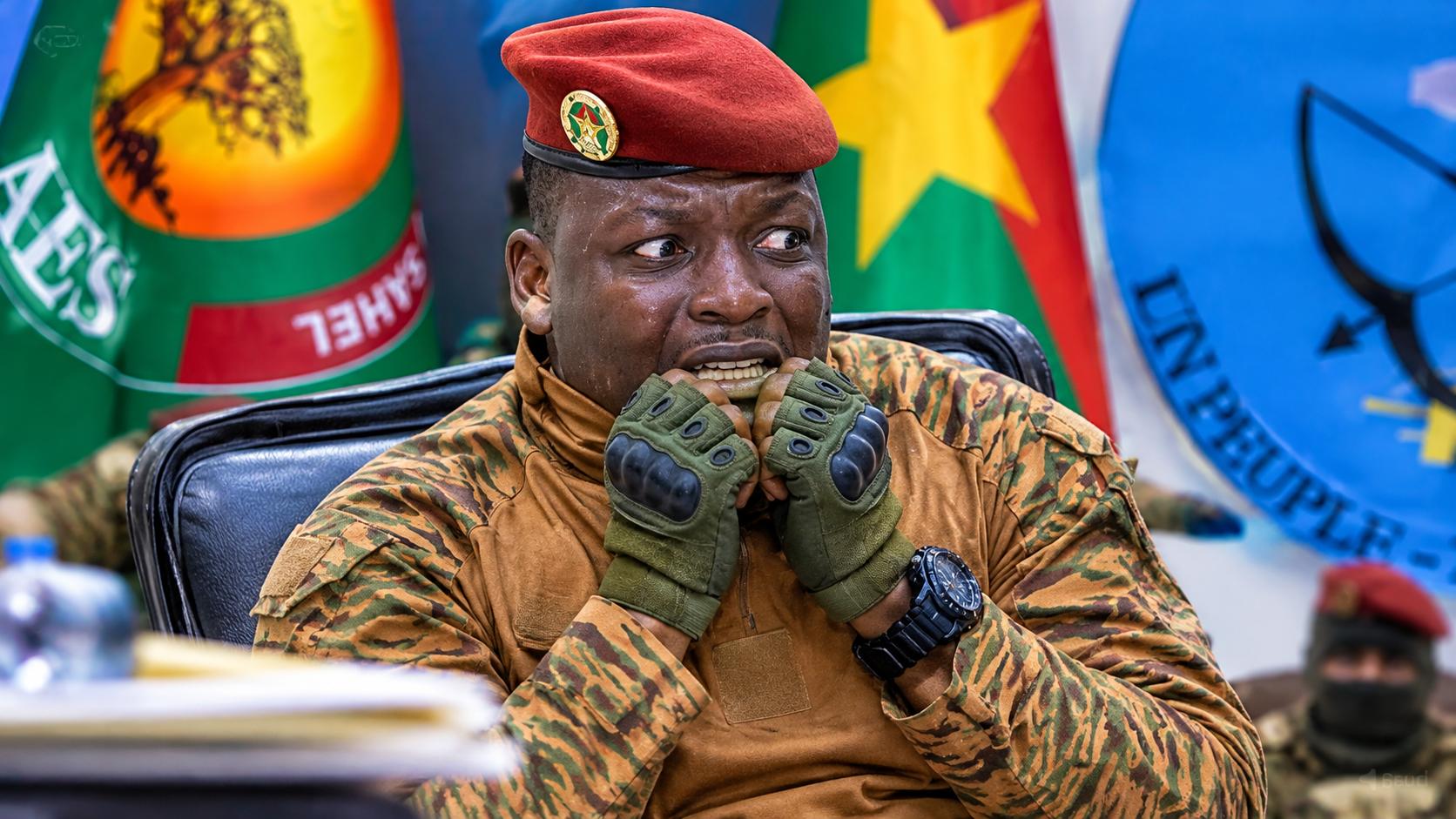
Ibrahim Traoré’s decision to skip the Russia-Africa summit in Moscow marks a pivotal moment for Burkina Faso’s leadership, raising questions about the stability of his regime and the durability of his political alliances. For years, Traoré has cultivated an image of unwavering resolve, leveraging close ties with Moscow to project strength and sovereignty. Yet, his unexplained absence from a high-profile diplomatic event has cast a shadow over this narrative, prompting speculation about the internal fractures within his own circle.
The absence, if confirmed, could signal more than a diplomatic miscalculation it may reflect a deeper crisis of confidence within the corridors of power in Ouagadougou. Reports suggesting Traoré’s absence stems from fears of a potential power grab within his inner circle underscore the fragility of his leadership, where personal loyalty and institutional cohesion are increasingly in question.
The double-edged sword of Moscow’s embrace
Traoré’s strategic alignment with Russia has been a cornerstone of his political strategy, positioning Burkina Faso as a sovereign actor rejecting traditional alliances. The partnership with Moscow has been meticulously framed as a partnership of equals, a narrative designed to resonate with a population weary of external interference and eager for national reinvention.
However, this diplomatic grandstanding masks a paradox: the more a leader leans on external validation to bolster his legitimacy, the greater the risk of internal discontent. The cult of personality that Traoré has cultivated portraying himself as a resolute sovereignist now faces the ultimate test. While his absence from the summit may be a prudent precaution, it also exposes a critical vulnerability: is his grip on power as unassailable as his public image suggests?
Propaganda vs. governance: the peril of over-reliance on perception
Traoré’s administration has mastered the art of political communication, using social media and curated discourse to shape his image as a reformist strongman. Yet, this strategy carries inherent risks. When a leader’s legitimacy is built on spectacle rather than substance, the gap between promises and reality can become a liability.
Critics argue that the administration’s focus on symbolic sovereignty such as high-profile summits and bold diplomatic moves often overshadows the urgent needs of the population, from security threats to economic instability. The propaganda machine, if left unchecked, risks fostering a culture of dissent within the very elite circles meant to support Traoré’s vision.
Internal rifts: the silent threat to Burkina Faso’s leadership
In regimes born from coups, the loyalty of key military and political figures is not guaranteed. Traoré’s inner circle, while once a source of strength, may now harbor divergent ambitions or grievances. The absence from the summit could be interpreted as a defensive maneuver, a calculated risk to preempt an internal threat rather than a bold diplomatic statement.
Such tensions, if real, would not only destabilize the transitional government but could also undermine Burkina Faso’s broader geopolitical strategy. A leader perceived as vulnerable at home may struggle to project authority abroad, particularly when his absence raises doubts about his ability to govern.
Deciphering the silence: what Traoré’s absence really means
The true significance of Traoré’s absence remains unclear. Was it a strategic choice to avoid a high-risk diplomatic confrontation, or a sign of deeper instability within his administration? Without independent verification, the answer lies in a gray area between rumor and reality.
What is certain, however, is that the episode highlights a critical inflection point for Burkina Faso’s leadership. The ability to maintain internal cohesion while pursuing an ambitious foreign policy will define Traoré’s legacy and determine whether his strategic alignment with Moscow translates into lasting stability or merely a fleeting diplomatic triumph.
One question lingers: can a leader who depends on external partnerships to shore up his image survive without addressing the fractures within his own camp?
By Ramatou Soumana — Journalist