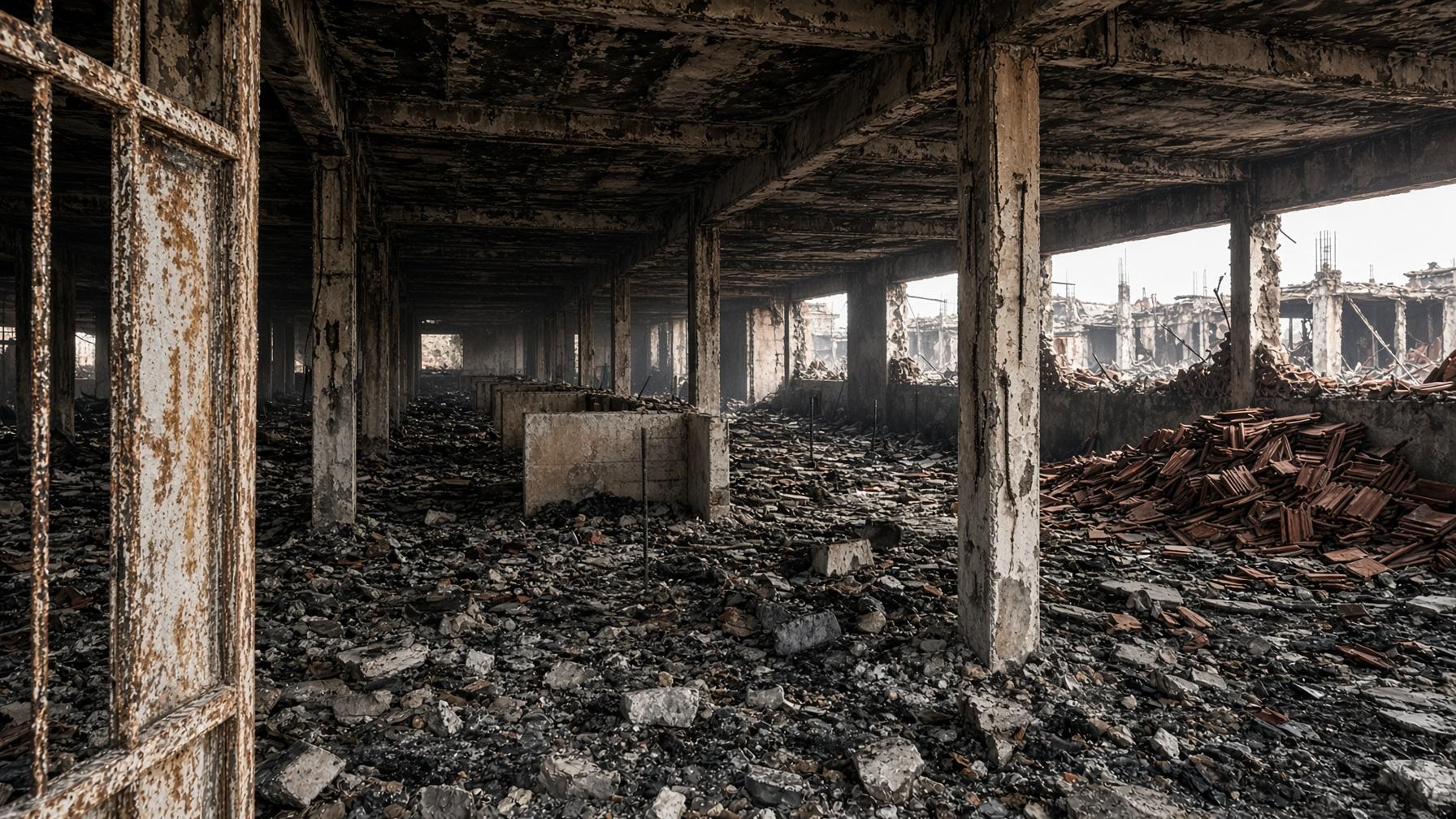
The economic heart of Togo’s Plateau region has been shattered. Overnight, the main building of Anié Grand Market was completely engulfed in flames, reduced to ashes as helpless traders watched everything they had built disappear. While no lives were lost — a small mercy in a scene of total devastation — the material damage is catastrophic: hundreds of families now face ruin, their goods, stock and savings gone up in smoke.
But beyond the immediate shock and the grief of those affected, this fire is not a random misfortune. It has ignited a fierce public debate about state neglect and a chronic lack of anticipation that has come to define how power operates in Lomé. Across Togo, people are asking the same question: how many more markets must burn before the government treats prevention as a priority rather than an afterthought?
Aging infrastructure that belongs to another era
How is it possible that in 2026, a market of such strategic importance operates without any modern fire safety system, without working water hydrants, without clear access routes for emergency responders? The answer lies in the political record of the ruling establishment.
Since coming to power in 2005, Faure Gnassingbé’s regime has failed to meaningfully modernise Togo’s local infrastructure. More than six decades after his father, the late Gnassingbé Eyadéma, seized power, the current executive continues to rely on structures built in the last century, with no substantive investment to adapt them to today’s demographic and economic realities.
The ’emerging Togo’ slogan versus the daily grind
While official speeches endlessly praise major construction projects, digitalisation and foreign investment, conditions on the ground remain dramatically outdated. The gap between rhetoric and reality has become impossible to ignore:
- No prevention culture: Most of the country’s major markets — from Lomé to Kara, and now Anié — remain logistical tinderboxes, lacking compliant electrical standards and risk prevention plans.
- Under-equipped emergency services: Firefighters, often alerted late or hampered by a lack of adequate equipment in the regions, can do little more than witness the scale of the destruction.
- Living off past glory: The current leadership coasts on the security reputation and political foundations of the previous regime, without building a modern public policy to protect citizens and their property.
A growing clamour for a break from the status quo
After the historic fires that ravaged major markets in Lomé and Kara in recent years, the tragedy in Anié proves that no lessons have been learned. The Togolese state cannot limit itself to sending ministerial delegations to distribute supplies or promise symbolic aid after each catastrophe. People across the country are increasingly vocal: they want concrete measures, not condolences.
The fundamental duty of any government is to protect its citizens before disaster strikes. By allowing informal sector operators to work in vulnerable, outdated infrastructure, the regime exposes the limits of a worn-out political model — one more focused on its own survival than on the safety and well-being of the Togolese people. The question now hanging over Anié is not whether another fire will happen, but when — and whether anyone in power will finally act before it does.