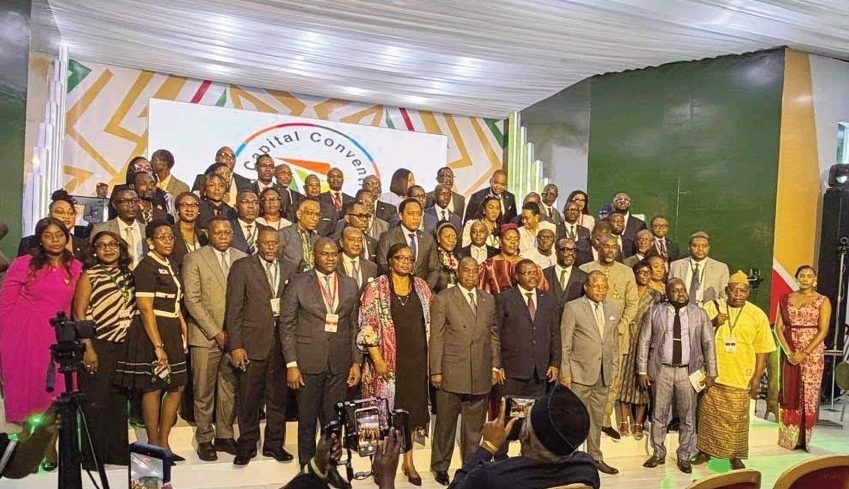
The dust is barely settling after Minister Louis Paul Motazé’s landmark address at the Diamond Capital Convention in Douala, but the fallout is already reshaping the debate on Central African financial markets. Speaking before a gathering of policymakers, investors, and business leaders, Cameroon’s Finance Minister delivered a bold call for a deeper, more dynamic capital market that can truly support the region’s economic transformation.
Minister Louis Paul Motazé took center stage on September 24, 2026, at the first-ever Diamond Capital Convention in Douala, a high-profile gathering uniting government officials, financial institutions, and private sector stakeholders. The event served as a platform for urgent discussions on how to unlock critical capital for Cameroon’s—and the CEMAC region’s—real economy.
In a forceful opening speech, Motazé urged financial players to mobilize deeper pools of capital to fuel sustainable economic growth. He emphasized that a stronger, more resilient capital market was essential to finance infrastructure, industrialization, and key economic transformation projects across Cameroon and CEMAC.
Realigning capital flows for economic impact
In his remarks, Motazé stressed the need to redirect financial resources toward productive sectors that drive growth. The focus must shift from speculative trading to long-term investment—especially in industries with high development potential: industrialization, local value addition in raw materials, infrastructure, energy, and digital transformation.
These sectors, he argued, are the backbone of job creation, innovation, and economic diversification. By prioritizing them, CEMAC economies could accelerate value creation and reduce reliance on volatile commodity markets.
This repositioning of capital flows is seen as crucial not only for Cameroon but for the broader CEMAC region, which has lagged behind in capital market depth compared to other African economic blocs.
Savings mobilization: the missing link in regional finance
Beyond investment orientation, Motazé highlighted the untapped potential of household and business savings. He called for a robust capital market that connects savers with high-impact projects—bridging the gap between available funds and transformative initiatives.
Confidence, transparency, and strong regulation emerged as the pillars of this new financial ecosystem. The minister emphasized the need for improved financial reporting, investor protection, and good governance to rebuild public trust in capital markets.
The mobilization of domestic savings, he noted, is key to reducing dependence on external financing and fostering inclusive economic participation. A more accessible and credible financial market would empower citizens and businesses to contribute directly to the productive economy.
What’s next: from words to action across Cameroon and CEMAC
The Diamond Capital Convention concluded with a consensus: the time for change has arrived. Stakeholders are now expected to translate Motazé’s vision into concrete policies and initiatives.
Industry players, regulators, and government bodies are under pressure to implement measures that remove barriers to capital mobilization. Policies around tax incentives, investment guarantees, and financial literacy are being fast-tracked to support the transition.
For Cameroon and the CEMAC zone, the stakes are clear: turning capital markets into engines of economic growth, job creation, and sustainable transformation. The question now is whether the region can seize this moment—or risk falling further behind in the global economic race.