What the Benin-Algeria defense talks have set in motion
The prospect of a new defense partnership between Benin and Algeria has stirred a lively public conversation in Cotonou, prompting questions about how far the arrangement could go and what it might deliver. At the center of the debate is a simple fact: Benin is widening its circle of military partners, and Algeria is the newest name on the list.
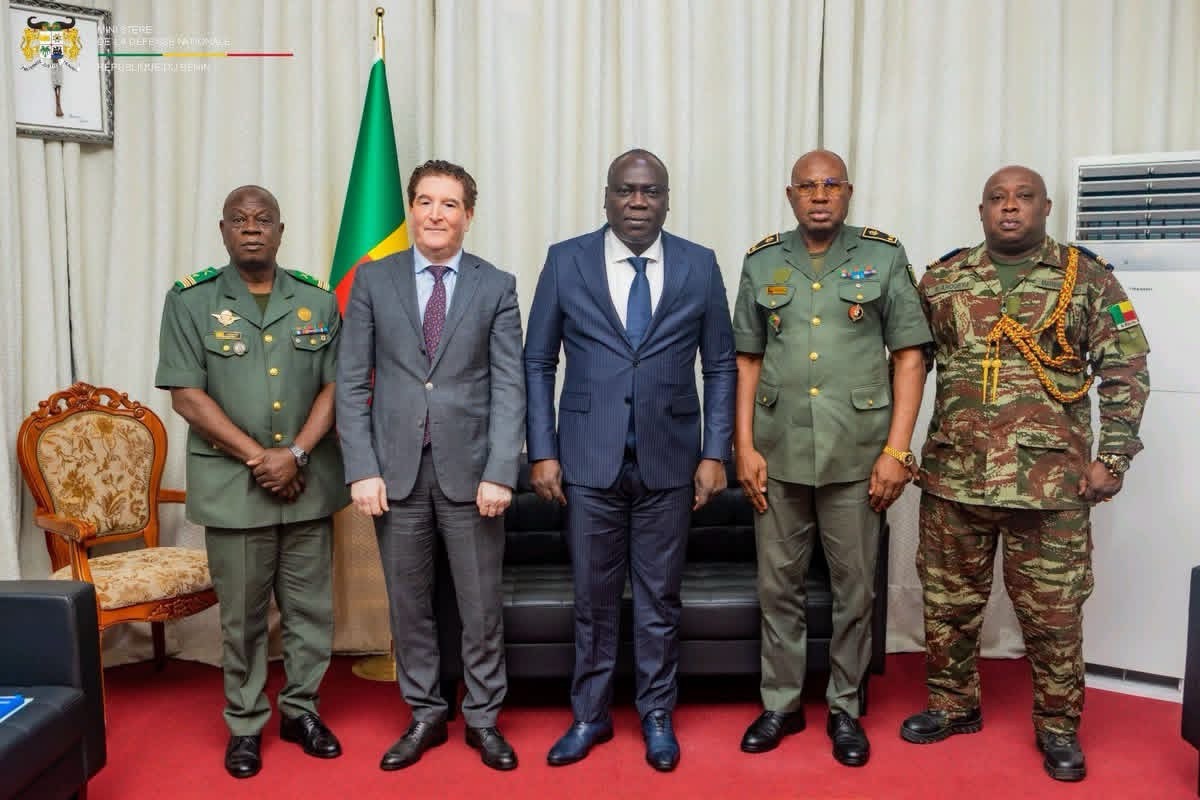
On September 24, 2026, Gildas Agonkan, the minister delegated to the President of the Republic for National Defense, received Algeria’s ambassador to Benin, Ammar Hadjar, in Cotonou. The two men discussed ways to deepen bilateral cooperation in defense and security.
Algiers signalled its willingness to share operational experience with Benin’s armed forces, particularly through troop training and capacity development. The offer lands in a region where militaries are grappling with asymmetric threats and shifting tactics among armed groups.
A proposal that answers a real regional need
Analysts and observers have been quick to note that the timing is not accidental. Benin’s northern borderlands sit close to the Sahel, where armed groups have expanded their reach in recent years. For many in Cotonou, the question is no longer whether to seek outside expertise, but how to do so without surrendering control of national defense choices.
Algeria’s counter-terrorism record gives it a particular standing in this conversation. The Algerian defense ministry continues to highlight its capabilities and its feedback from years of operations against armed groups.
For Cotonou, the goal goes beyond acquiring hardware. Officials speak of strengthening skills, training, operational readiness and the interoperability of Benin’s forces. Minister Agonkan expressed a desire to draw more heavily on Algerian experience and made the case for framework agreements covering different aspects of national defense. The stated aim is a durable partnership that lifts the operational capacity of Benin’s military.
Diversification: a strategy, not a one-off gesture
The opening toward Algiers is not an isolated move. It fits a broader pattern that Benin has pursued with several partners.
In recent months, Cotonou has stepped up defense exchanges with a range of countries, including the United States, the United Arab Emirates, Germany and the Netherlands. Benin’s defense ministry itself describes a policy of military cooperation with multiple states, backed by agreements that allow Beninese soldiers to attend training and refresher courses abroad.
The logic is straightforward: multiply cooperation channels to access a wider pool of expertise, training and capabilities. It also lets Benin seek partnerships suited to its own security realities, especially in the north, where forces face armed groups active across the Sahel.
Reactions: a debate about self-reliance, not dependence
Public discussion around the talks has focused less on Algeria itself and more on what the move says about Benin’s approach. Military cooperation, officials stress, does not mean handing over responsibility. The guiding principle remains the strengthening of national capacities.
Benin already runs its own training and development structures. In July 2026, the National Higher School of the Armed Forces (ENSA) recorded a 96.15% success rate for its 22nd cohort of the preparatory course for the staff diploma, with participants from seven countries. The ministry presents the school as a tool for training and for building the resilience of the forces.
Opening up to foreign expertise is therefore meant to complement that effort, not replace it. The engagement with Algiers could allow Beninese soldiers to test their methods against other experiences, pick up new skills and sharpen their ability to respond to threats whose forms change quickly.
Outlook: no signature yet, but a clear signal
No date has been announced for signing a framework agreement between the two countries. Talks are expected to continue before any new commitments are formalized.
Yet the political and strategic signal is already visible: Benin is leaving no door closed on security cooperation. From Washington to Abu Dhabi, from Berlin to Algiers, and through other partners, Cotonou is looking to multiply its sources of expertise and training.
In a regional environment marked by the spread of asymmetric threats, this diversification is above all a way for Benin to steadily consolidate its own defense capabilities, blending national experience with that of partners who bring different skills to the table. The Algerian offer arrives in a landscape already in motion, adding a new piece to a security architecture Benin is building around a simple principle: strengthen its forces, diversify its partners and keep control of its defense choices.