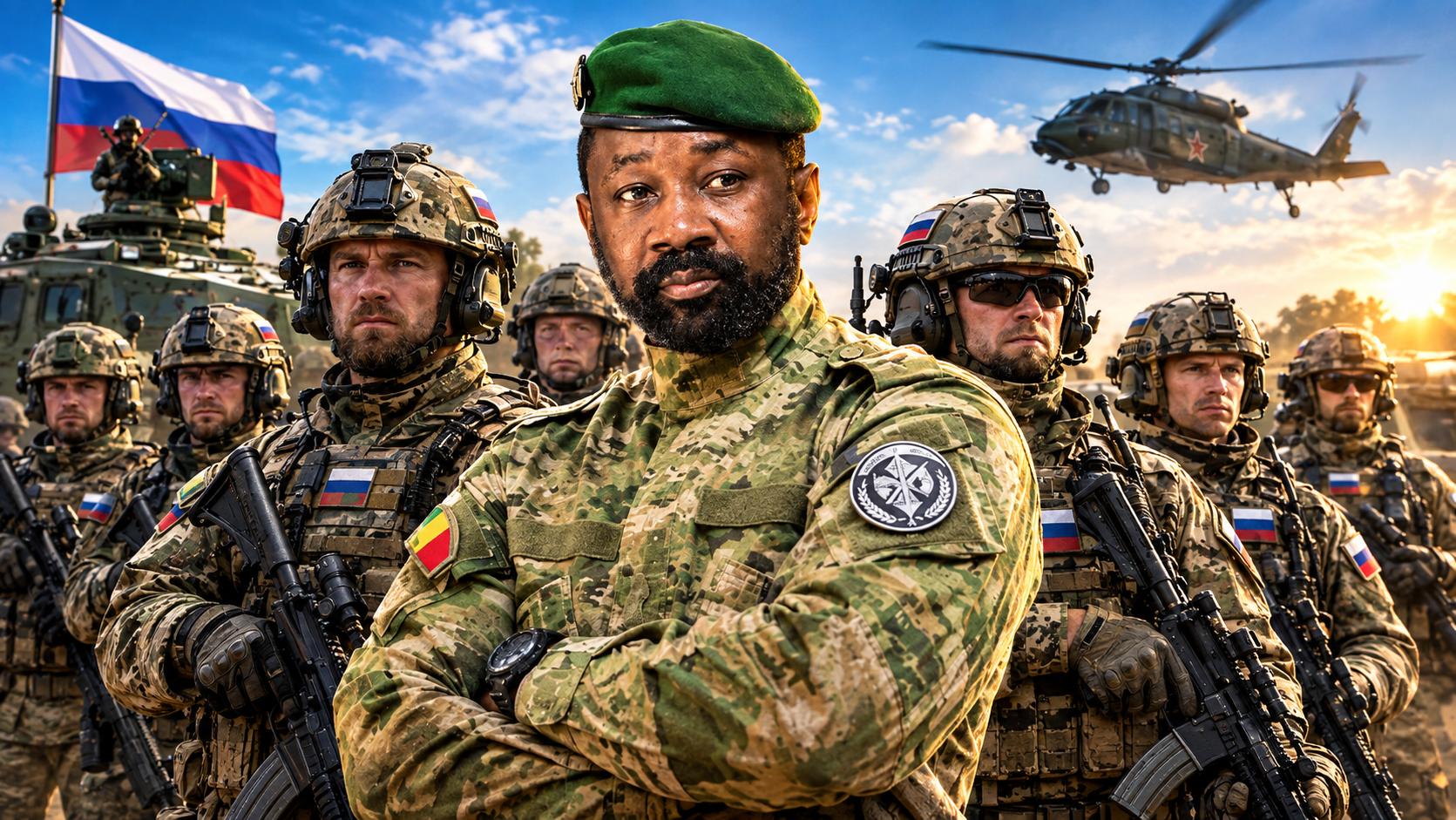
The deployment of Russian paramilitary forces in Mali under the Africa Corps banner has quietly become one of the bloodiest security experiments in the Sahel. Fresh data analysis shows that at least 358 fighters have been killed since late 2021, a milestone that forces a hard look at the true cost of Moscow’s gamble to stabilise the West African nation.
The turning point nobody predicted: losses spike as strategy falters
What began as a rapid intervention under the Wagner banner has morphed into a grinding attrition war. The human toll keeps climbing, now exceeding the combined losses suffered by French troops during nearly a decade of Sahel operations. The shift from a narrative of quick military victories to a reality of sustained casualties signals deeper operational missteps.
Ground zero: Sévaré and Dioura, where tactics collide with terrain
The latest wave of attacks on critical garrisons in central and northern Mali has exposed critical vulnerabilities in the joint Malian-Russian strategy. Locations like Sévaré and Dioura were supposed to serve as pillars of security, yet repeated assaults have forced repeated retreats and left a trail of dead fighters. The enemy’s intimate knowledge of the terrain and the use of modern tactical drones have turned each operation into a high-risk gamble.
Numbers don’t lie: how Africa Corps stacks up against previous missions
A side-by-side comparison reveals stark contrasts in operational philosophy and outcomes:
- French Forces (2013–2022): ~59 troops killed across nearly a decade of Sahel-wide operations.
- Africa Corps (2021–2024): ~358 fighters killed in Mali alone within three years.
Where Western forces relied on air support, precision intelligence and minimal direct engagement, Africa Corps units are routinely deployed as frontline shock troops in heavily mined, ambush-prone zones. The result is a casualty rate that dwarfs historical precedents in the region.
Moscow’s bill comes due: human lives and financial strain
The staggering death toll is not just a military failure—it imposes a dual burden. Each casualty carries geopolitical weight, while the financial strain of repeated losses and prolonged operations now runs into hundreds of billions of West African CFA francs. For the Malian junta, the gamble is failing to deliver the promised peace; for Moscow, the cost of exporting this security model is rising sharply.
The emerging debate: can Africa Corps survive its own losses?
Inside military circles and within Malian society, skepticism is growing. The original promise of swift stabilisation has given way to a drawn-out conflict with no clear exit. With no signs of a strategic shift, the question looms large: is Africa Corps positioned to turn the tide, or is it sliding toward irrelevance in the face of such staggering losses?