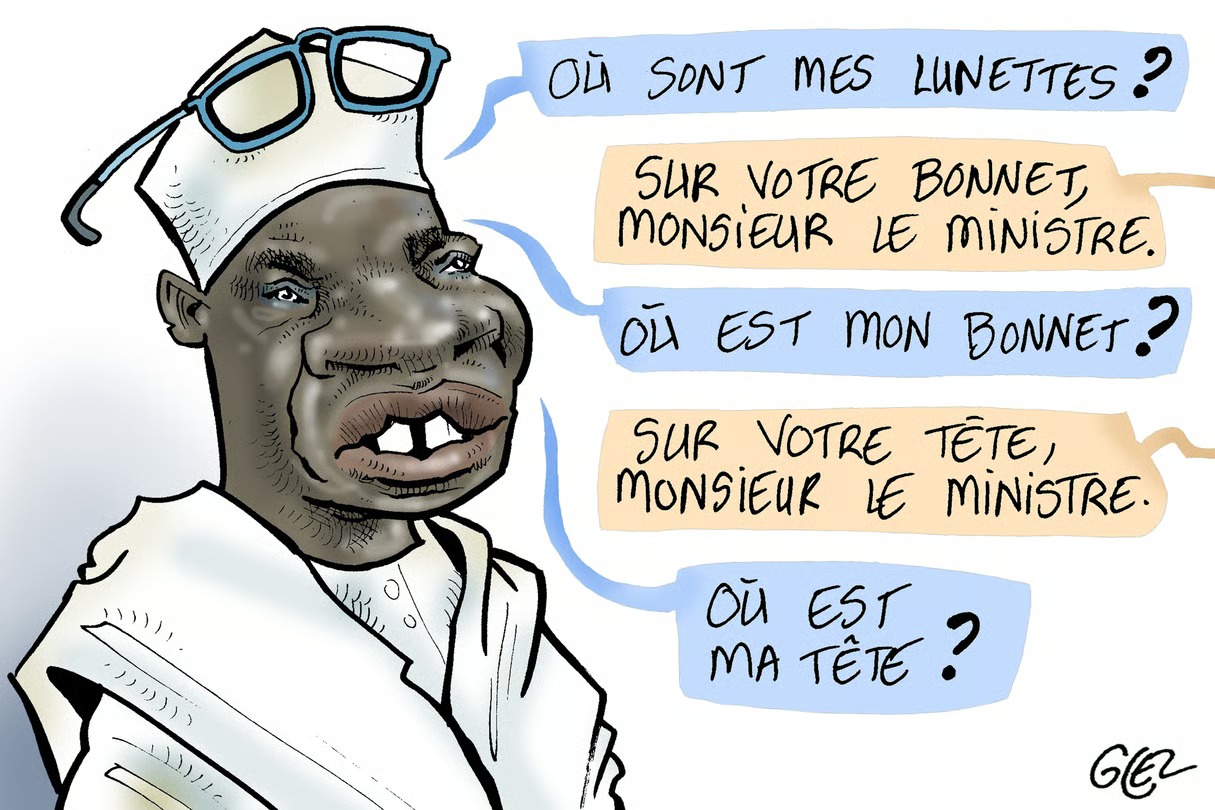
Cameroon’s courts delivered a landmark verdict last week, convicting four journalists over an alleged allegation involving a pair of ministerial glasses. The ruling has sent ripples through local media circles and raised urgent questions about the boundaries of press freedom in the country. Behind the seemingly minor incident lies a complex legal and political narrative that exposes deeper tensions in the Cameroonian justice system.
The hidden mechanics behind a legal earthquake
The case traces back to a 2025 report by two privately-owned newspapers, Le Messager and La Nouvelle Expression, which alleged that a government minister had acquired luxury eyewear using public funds. The report, based on anonymous sources, suggested misuse of state resources. While the allegations centered on administrative ethics, the prosecution framed the matter as a deliberate attempt to defame a public official — a charge that carried severe penalties under Cameroonian law.
Prosecutors argued that the journalists had acted with reckless disregard for the truth, despite the absence of concrete evidence. The defense maintained that the reports were based on credible claims and fell within the bounds of investigatory journalism. The court, however, sided with the prosecution, imposing heavy fines and suspended prison sentences on the four reporters.
Media freedom versus state authority: where the lines blur
This verdict is more than a legal decision — it is a cultural statement. It reflects a growing tension between Cameroon’s government and independent media outlets, which often challenge official narratives. Critics argue that the ruling sets a dangerous precedent, normalizing the criminalization of critical reporting under the guise of protecting public officials.
The timing of the judgment is equally significant. Coming amid broader debates over governance and transparency in Central Africa, the case has become a focal point for examining how legal systems can be weaponized to silence dissent. International observers have highlighted Cameroon’s declining press freedom rankings, noting a pattern where minor infractions are escalated into criminal cases.
The human cost: four careers in limbo
For the four journalists — Marthe Wandou, Jean Bosco Talla, Pierre Celestin Djamen, and Arielle Nkeng — the verdict is life-altering. Each faces financial penalties that could cripple their careers, while the threat of imprisonment hangs over their heads. Their employers, already operating under financial strain, are now reconsidering their editorial policies in fear of similar reprisals.
One of the journalists, Wandou, described the ruling as a “chilling signal” to investigative reporters across the country. “We are being punished for doing our job,” she said. “This is not justice — it is intimidation.”
The ripple effect across Cameroon’s media landscape
The consequences extend far beyond the courtroom. Numerous local outlets have begun self-censoring to avoid legal exposure, watering down investigative pieces or avoiding sensitive topics altogether. Advertisers, wary of association with controversial content, have scaled back partnerships with critical media houses. Even state-owned broadcasters have adopted a more cautious tone when reporting on government affairs.
The case has also sparked solidarity among regional journalists. In nearby countries, press freedom advocates have condemned the ruling, calling for a unified response to protect journalists from politically motivated prosecutions. Some have drawn parallels to similar cases in Angola and Uganda, where journalists have faced imprisonment for reporting on corruption.
What lies ahead: justice or intimidation?
The legal battle is not over. Appeals are expected, and rights groups have vowed to challenge the verdict at national and international levels. The outcome could redefine the relationship between Cameroon’s government and its media — either reinforcing a culture of accountability or entrenching a system where journalism is treated as a crime.
For now, the four journalists remain under an uncertain cloud. Their case is a microcosm of a larger struggle: the fight to preserve press freedom in a region where the cost of truth is rising by the day.
A call to action for stakeholders
- Media organizations: Strengthen legal defenses and solidarity networks to protect journalists from arbitrary prosecutions.
- Civil society: Amplify voices of affected journalists and lobby for legal reforms that safeguard press freedoms.
- Government officials: Reassess the use of criminal charges in media disputes to foster a more open public discourse.