The political crossfire that nearly derailed Senegal’s budget timetable
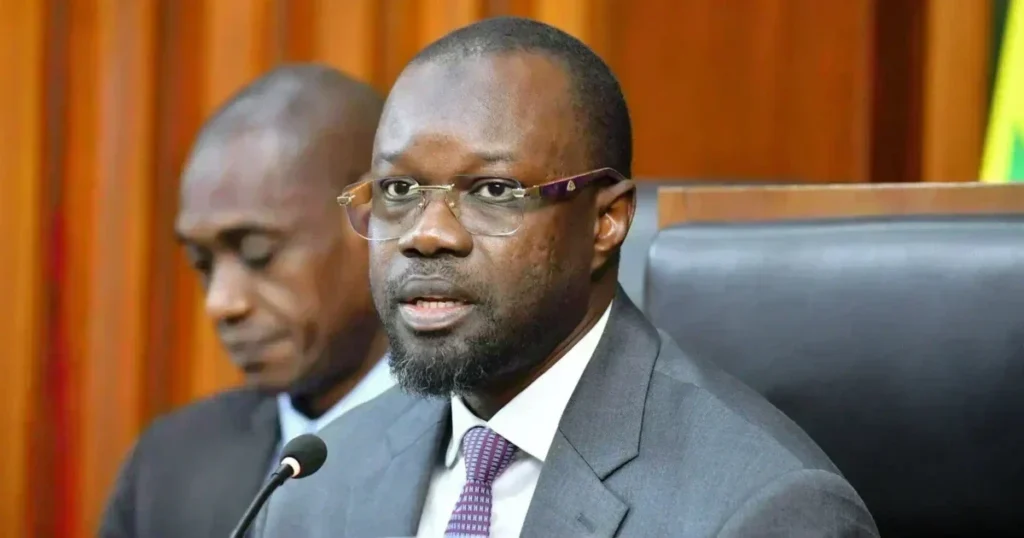
Senegal’s revised 2026 budget bill finally reached the National Assembly on September 18, 2026, but not before exposing deep fault lines in government coordination and parliamentary relations. The three-day delay—occurring despite a direct ministerial order issued on September 10—unfolded amid rising tensions between the presidency, government, and opposition forces, culminating in public criticism from National Assembly President Ousmane Sonko.
From cabinet directive to parliamentary limbo
Prime Minister Ahmadou Al Aminou Lô had personally instructed Finance Minister Cheikh Diba during a September 10 cabinet meeting to ensure the revised budget bill was submitted to the National Assembly by September 15 at the latest. Yet, when the deadline arrived, no evidence of the transmission had reached parliamentary authorities. Sonko publicly stated that day that no notification had been received, fueling speculation of either bureaucratic inertia or political maneuvering behind the scenes.
The saga deepened when a presidential decree issued on June 29—initially intended to authorize the submission—was formally revoked and replaced by a new one (Decree No. 2026-1645) signed by President Bassirou Diomaye Faye on September 18. This administrative reset suggests the entire process had to restart from square one, raising questions about institutional efficiency and compliance with internal timelines.
Institutional reset: a new decree signals a procedural restart
The new decree not only reauthorizes the presentation of the revised budget to parliament but also assigns key roles: the Minister of Economy and Finance will defend the bill on the floor, while the Minister of Communication and Institutional Relations will oversee its public dissemination. The decree, countersigned by both the president and prime minister, was published the same day it was signed, indicating an urgent effort to re-establish procedural legitimacy.
Analysts note that the revocation of the June decree may reflect an attempt to correct procedural errors or align the submission with updated fiscal data. However, the three-day delay has already cast a shadow over the government’s credibility, especially as Senegal approaches the 2027 budget cycle—another critical juncture already under close scrutiny.
What happens next: from submission to scrutiny
With the bill now formally in hand, the National Assembly has launched its review process, a phase closely monitored amid calls for fiscal discipline and transparency. The calendar now demands swift action, with the Ministry of Finance expected to defend the revised budget before the legislature within the coming days. Failure to move expeditiously could risk further erosion of public and international confidence in Senegal’s budgetary governance.
In parallel, the government has signaled its intention to finalize the 2027 budget draft by the end of September—a compressed timeline that will test the administration’s capacity to maintain fiscal coherence after the turbulence of the revised budget episode.
Lessons from the delay: coordination, transparency, and trust
The behind-the-scenes dysfunction exposes a broader pattern: the need for tighter inter-institutional coordination between the presidency, prime minister’s office, and ministry of finance. The fact that a ministerial instruction failed to translate into timely action underscores systemic challenges in internal governance and communication. As Senegal steers through a delicate phase of economic recovery and donor engagement, restoring trust in its fiscal institutions remains a strategic imperative.




More Stories
Dioura’s brutal truth: how Mali’s military narrative crumbles under jihadist fire
Niger’s citizenship purge: how dissent under Tiani’s regime redraws the boundaries of national identity
Behind the scenes: how Benin and Spain leveraged art to redefine their global alliance