Inside Dioura: what really happened when Bamako’s story met battlefield reality
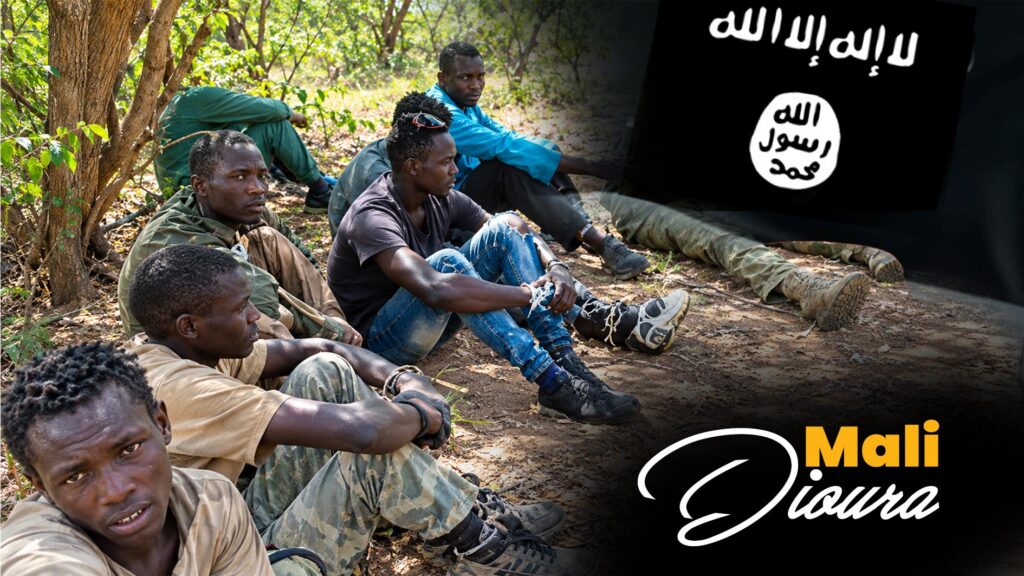
The day Mali’s army chief tried to brush aside the fight at Dioura with a single dismissive line—“nothing happened there”—the Group for the Support of Islam and Muslims (JNIM) struck back with a counter-narrative that nobody could ignore. In a single stroke, the jihadist coalition exposed the fragility of the junta’s official story, replacing carefully crafted assurances with hard evidence of a crushing defeat.
Why Bamako’s silence backfired
By the time Malian troops began tallying losses and rubble, the damage to the regime’s credibility was already done. Instead of controlling the narrative, the military command allowed a vacuum to form—one quickly filled by the JNIM with a meticulously documented rebuttal. Photographs of burning vehicles, videos of captured officers, and lists of fallen soldiers rolled across social feeds, rendering the initial reassurances not just outdated, but outright misleading.
For a government that has staked its legitimacy on portraying itself as the sole guarantor of national resilience, the contrast between rhetoric and footage could not have been sharper. The junta’s vow to restore full sovereignty over Malian soil now faces an uncomfortable question: What sovereignty when the battlefield itself disavows the official account?
A toll that rewrites the conflict’s balance
The JNIM’s communiqué did more than contradict Bamako—it redefined the conflict’s stakes overnight. According to the jihadist statement, the raid in Dioura unfolded as a meticulously executed ambush rather than a mere skirmish. Among the confirmed losses:
- Human cost: 150 Malian troops killed, including several field-grade officers—one colonel and one captain among them—alongside 93 soldiers taken hostage
- Material devastation:
- 15 army vehicles destroyed and over 100 patrol motorcycles burned
- Six operational tactical vehicles and ten motorcycles seized intact
- Heavy weaponry appropriated: six 14.5mm machine guns, seventeen DShK heavy machine guns, thirty-two PK machine guns, ten RPG rocket launchers, three mortars, and one SPG recoilless cannon
- Small arms looted: 233 Kalashnikov rifles alongside a large cache of ammunition
Accompanying the toll sheet were timestamped images and videos—proof the jihadists had no intention of letting the official silence stand.
The propaganda gap that cost lives
Dioura’s lesson extends beyond casualty numbers. It reveals a systemic flaw in how Bamako manages battlefield crises. Rather than confronting reversals head-on, the military leadership often defaults to denial or vague reassurances—tactics that inadvertently amplify the very narratives they seek to suppress. When jihadist media outlets release verified footage of seized hardware and paraded prisoners, the junta’s delayed or absent response only deepens the perception of ineptitude among both domestic audiences and external observers.
More critically, the attack demonstrated the JNIM’s evolving operational sophistication: a single coordinated assault that not only overran a fortified outpost but systematically stripped it of its heaviest firepower. Each captured weapon represents not just a material loss for the Malian army, but a propaganda win for the insurgents—one more piece of evidence that the official story of “controlled operations” is dangerously out of sync with reality.
Sovereignty on paper, vulnerability on the ground
Despite commitments to restore state authority and forge new security alliances, the events in Dioura paint a starkly different picture. The JNIM’s ability to launch high-impact raids and extract heavy weaponry underscores a persistent asymmetry: while Bamako invests in messaging campaigns, the insurgents refine their tactics in the shadows of Mali’s vast terrain.
The resulting paradox is undeniable. A nation that claims to be reclaiming its future now finds its most critical security claims disproven by its enemies. For Mali’s military leadership, the path forward demands more than renewed offensives—it requires owning the truth, repairing trust, and rebuilding a command structure capable of confronting reality before it is weaponized against them.

More Stories
Niger’s citizenship purge: how dissent under Tiani’s regime redraws the boundaries of national identity
Behind the scenes: how Benin and Spain leveraged art to redefine their global alliance
Niger’s junta under siege: how the 29 August coup attempt reshaped power dynamics