Major shift in Nigeria’s oil sector as illegal refinery surfaces in Ogun State
The recent detection of a clandestine oil processing facility in Ogun State marks a turning point in Nigeria’s battle against illegal hydrocarbon exploitation. The site, allegedly operated by Chinese nationals, has exposed critical vulnerabilities in the country’s regulatory framework and raised serious questions about economic sovereignty. Authorities discovered the installation during a raid in Ogere, uncovering equipment designed to convert petroleum residues into fuel-like products.
The raid conducted by Nigeria’s Economic and Financial Crimes Commission (EFCC) revealed an industrial-scale operation spanning over three hectares, complete with underground storage tanks, heating systems, separation units, and cooling facilities. One storage tank alone held an estimated 90,000 liters, underscoring the scale of the operation.
How the illegal oil trade network functioned
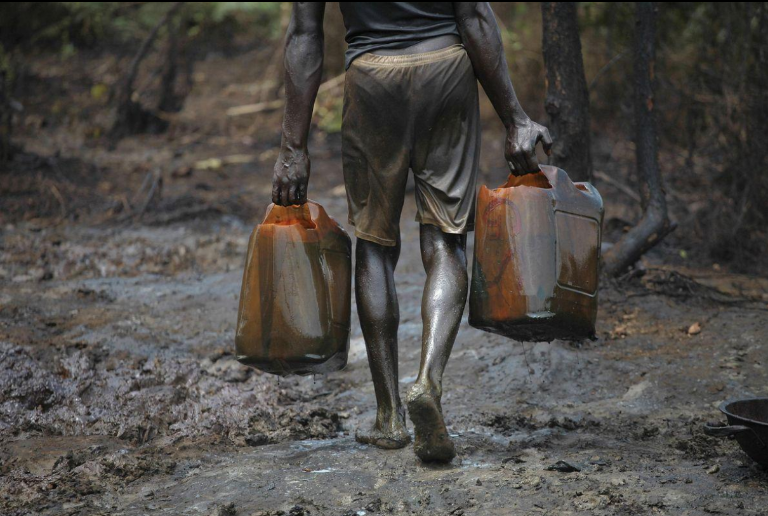
Investigators traced the facility’s raw materials—petroleum sludge referred to locally as “black sludge”—to sources in Warri (Delta State) and Port Harcourt (Rivers State). These materials were transported hundreds of kilometers, stored on-site, and processed into a diesel-like product known in Nigeria as Automotive Gas Oil (AGO). The entire operation allegedly operated without licenses or regulatory oversight.
Key unanswered questions remain: Who supplied the crude sludge? Who funded the infrastructure? Where were the final products distributed? Identifying these links is crucial to mapping the full extent of the network and its beneficiaries. While local complicity cannot yet be ruled out, no institutional involvement has been confirmed.
Environmental and economic fallout of illegal refining
The unregulated processing of petroleum waste poses severe environmental risks, including toxic emissions, soil contamination, and water pollution. Without proper industrial safeguards, the site also faced risks of fire, explosion, and exposure to hazardous substances for nearby communities.
Economically, illegal refineries undermine Nigeria’s revenue base by evading taxes and regulatory controls. They also distort the market by undercutting licensed operators. The lack of technical oversight raises concerns about the quality of the fuel produced, potentially damaging vehicles and industrial machinery.
China’s role and broader implications for foreign investment
This incident occurs amid growing Chinese economic engagement across Africa, particularly in strategic sectors like mining, infrastructure, and energy. While individual responsibility is not equivalent to national policy, the discovery of a Chinese-operated illegal refinery highlights the need for stricter oversight of foreign economic activities.
The core issue remains Nigeria’s capacity to enforce its laws consistently, regardless of the actors involved. The challenge is not about nationality but about the state’s ability to protect its strategic resources.
Nigeria’s sovereignty at stake in the fight against illegal oil trade
The dismantling of this facility is more than a law enforcement operation—it is a test of Nigeria’s ability to control its oil and gas sector. Authorities must now trace financial flows, identify commercial partners, and hold those responsible accountable under the law.
Natural resources alone do not guarantee economic independence; effective governance and regulatory enforcement are essential. The discovery of this clandestine refinery serves as a warning: Nigeria’s control over its wealth is under threat, and decisive action is needed to prevent further exploitation.