Journalist’s release after two years sparks hope in troubled media landscape
In a significant development for press freedom advocates, Nigerien-Ivorian journalist Serge Mathurin Adou walked free on November 11, 2026, after serving over two years in detention on charges of undermining state security. While his liberation marks a turning point for his family and colleagues, the broader journalism community remains on edge as authorities maintain their tight grip on media operations.
Adou’s release comes at a critical juncture for Niger’s media sector, which has faced severe restrictions since the military takeover in July 2023. The journalist’s case, initially shrouded in mystery after his mysterious disappearance in September 2024, has become a symbol of both the fragility of press freedom and the resilience of those who dare to challenge official narratives.
The disappearance that led to detention
Serge Mathurin Adou vanished without a trace on September 1, 2024, just days before authorities in Burkina Faso publicly implicated him in an alleged destabilization plot targeting Captain Ibrahim Traoré’s government. Though no concrete evidence has been presented linking him to Burkina Faso’s internal affairs, Nigerien prosecutors swiftly moved to indict him on November 11, 2024.
The trial that followed occurred under heightened security conditions, culminating in a two-year prison sentence on November 21, 2025. Legal observers noted that prosecutors had initially sought a much harsher punishment of 20 years, raising concerns about the judicial process’s fairness. His eventual release—without explanation—has left more questions than answers about the circumstances surrounding his detention and freedom.
A profession under siege since the coup
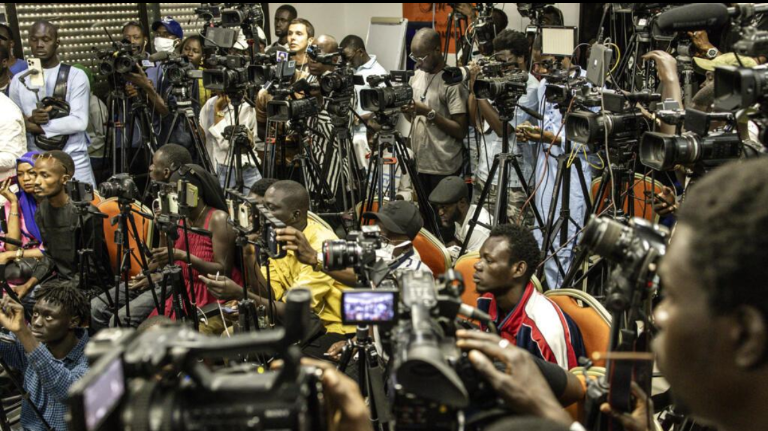
The crackdown on media freedom in Niger has intensified since General Abdourahamane Tiani assumed power in July 2023. Independent journalism, particularly when addressing security issues or government actions, has become increasingly perilous. The environment has forced many reporters into self-censorship or exile, fearing arbitrary arrest or legal repercussions.
High-profile cases like those of Samira Sabou, Ousmane Toudou, and Soumana Maïga underscore the precarious state of the media. Their arrests and subsequent legal battles have created an atmosphere of fear, pushing journalists to avoid sensitive topics entirely. The suspension of the Maison de la presse—a key professional media body—in January 2024 further crippled the industry’s ability to advocate for its rights.
International media organizations have also fallen victim to these restrictions. Prominent outlets have faced temporary bans, signaling a broader strategy to control information flows. These actions have drawn sharp criticism from human rights organizations, which emphasize that national security concerns cannot justify the erosion of fundamental freedoms.
Global rankings reflect the crisis
>The deteriorating conditions for journalists in Niger are starkly reflected in global press freedom rankings. In 2025, the country ranked 83rd out of 180 nations. By 2026, it plummeted to 120th place—a drop of 37 positions in a single year. Reporters Without Borders (RSF) attributes this decline largely to the post-coup political and economic instability, as well as the increasing legal and physical pressures on media workers.
RSF’s report highlights how the 2023 coup served as a catalyst for systemic violations of press freedom. The organization points to shrinking economic opportunities for media outlets and systematic intimidation of journalists as key factors in the country’s worsening ranking. This trend raises urgent questions about the viability of independent journalism in Niger and the government’s commitment to democratic principles.
A win for one, a warning for many
Serge Mathurin Adou’s freedom is undoubtedly a cause for celebration, but it cannot be mistaken for a broader thaw in media repression. While his release offers temporary relief, the structural challenges facing Nigerien journalists remain intact. The lack of transparency surrounding his case—especially the absence of a clear legal justification for his initial arrest and eventual freedom—only deepens concerns about due process and judicial independence.
The international community has repeatedly called for the protection of press freedom as a cornerstone of democracy. However, Niger’s recent actions suggest a deliberate prioritization of security over liberties. This approach not only stifles dissent but also undermines public trust in institutions that should serve as guardians of truth and accountability.
For now, Serge Mathurin Adou can return to his family, but the fight for a free and vibrant press in Niger is far from over. The journey to restore dignity to journalism in the country demands more than isolated releases—it requires systemic change, judicial transparency, and an unwavering commitment to fundamental rights.
The road ahead: balancing security and freedom
Niger stands at a crossroads. The government must recognize that a thriving democracy cannot exist without a free press. While security concerns are valid, they should not be used as a pretext to silence critical voices. The international community, too, must hold Niger accountable, applying pressure to ensure that press freedom is not sacrificed in the name of expediency.
Serge Mathurin Adou’s story is a reminder of the personal cost of repression. Yet, it also serves as a call to action—for journalists, civil society, and global advocates—to redouble efforts in defending the right to information. Without this collective resolve, the momentum generated by his freedom may fade, leaving Niger’s media landscape in an even darker place.