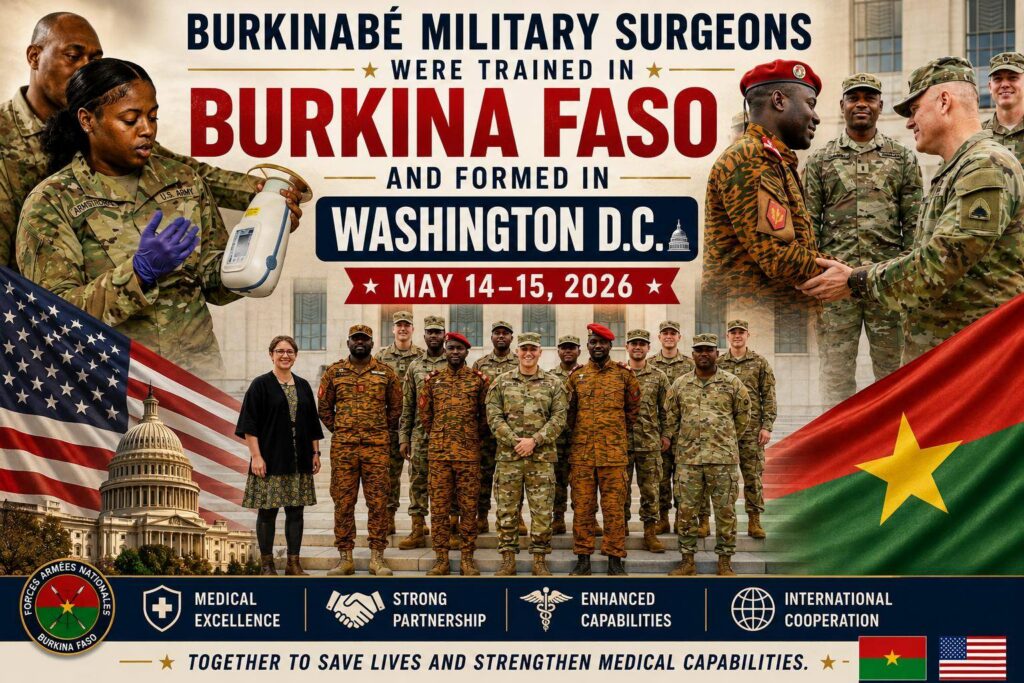
Behind the tough public stance against Western powers within the Sahel states alliance (AES), a more nuanced technical cooperation continues quietly. In mid-May 2026, burkinabe military surgeons spent two days in Washington D.C. for a high-level exchange with the united states national guard. This meeting, part of the state partnership program (SPP), reveals a striking paradox: why does Burkina Faso, while drawing closer to Moscow, still rely on traditional partners it publicly criticises? The answer lies in battlefield pragmatism.
A discreet but vital medical mission
Two days of intensive collaboration brought together burkinabe and american specialists. They shared expertise on war wound care, combat traumatology, and emergency surgery in hostile environments. For a country grappling with a devastating asymmetric conflict, this direct skill transfer is a lifeline for soldiers on the front lines.
The AES paradox: Sovereignty rhetoric vs technical necessity
Since forming the alliance of Sahel states with Mali and Niger, Burkina Faso’s leaders have hardened their anti-Western discourse. They accuse France and other nations of passivity or even indirect support for terrorist groups. Yet the technical cooperation channel with Washington remains open and active. Senior burkinabe officers travel to the heart of american institutions while the official AES doctrine calls for a break with old influences. This contradiction shows that operational pragmatism often overrides ideological posture when facing war’s harsh realities.
Why the russian alternative falls short in war medicine
Ouagadougou and its AES partners have deepened ties with Russia, receiving combat equipment, aerial vehicles, instructors, and security assistance. But for surgical training, they turned to the US. The reason is structural. The US national guard’s SPP model offers a highly effective combat medicine system, refined through decades of overseas operations and documented to global academic standards. Moreover, western military medicine has historical continuity with African armies: burkinabe doctors were trained with western protocols for evacuation, equipment formats, and initial care. Russia’s offer, focused more on tactical support and hard security, is less suited to these specialised medical needs.
Mutual benefit in shadow diplomacy
For Washington, maintaining this program is a golden opportunity to keep a foothold in Burkina Faso and the AES region. As american influence wanes—evidenced by the forced withdrawal from Niger—medical diplomacy preserves trust with burkinabe military elites without rousing public opinion. For Captain Ibrahim Traoré’s government, this discreet collaboration proves Burkina Faso rejects total isolation. While projecting sovereignty and unwavering AES unity, it leverages the best from each bloc to boost troop effectiveness.
A variable-geometry sovereignty
Ultimately, this Washington exchange shows that Sahel geopolitics is not just about rupture declarations and protest slogans. Behind the communication war and global alliance games, the priority remains state survival against terrorism. By choosing american training over political consistency, Burkina Faso opts for medical effectiveness. This paradox saves lives on the front, proving that health diplomacy follows far more pragmatic rules than podium politics.