From rhetoric to reality: navigating economic sovereignty amidst IMF negotiations
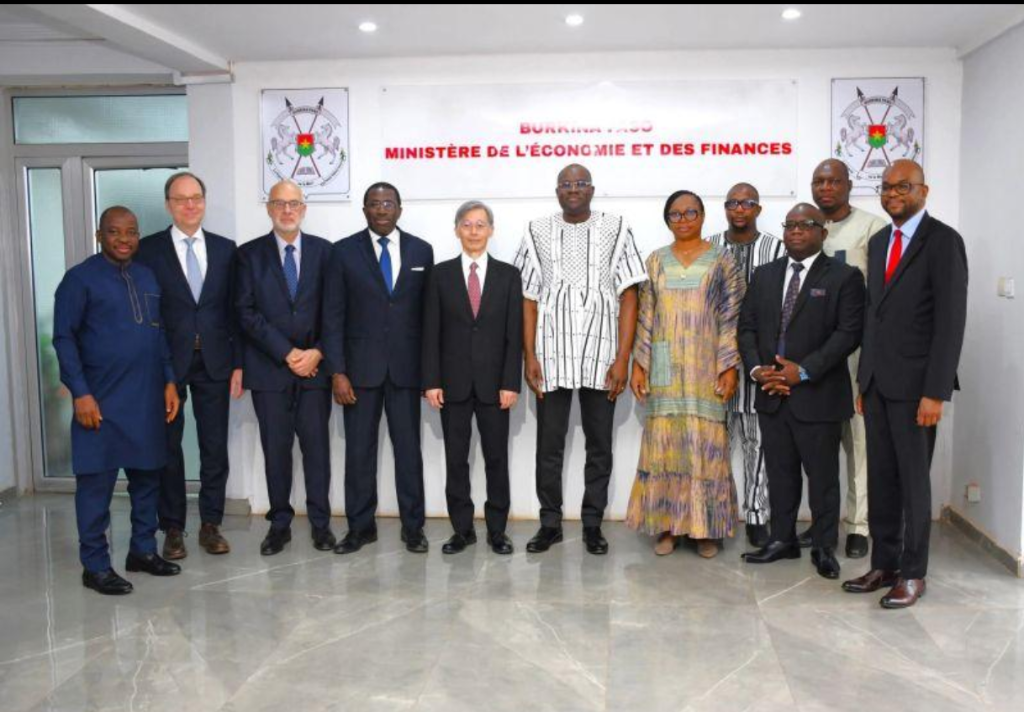
The Burkina Faso government’s bold claims of breaking free from external financial dependencies face a critical test with the pending $87.67 million International Monetary Fund (IMF) funding package. Secured through a technical agreement finalized on November 4, 2026, this potential lifeline arrives just as Ouagadougou reaffirms its commitment to economic self-determination. But can sovereign ambitions coexist with the strict fiscal conditions attached to IMF financing?
The proposed funding—comprising $65.38 million under the Extended Credit Facility (ECF) and $22.29 million under the Resilience and Sustainability Facility (RSF)—hinges on IMF board approval expected by mid-January 2027. While the financial boost could ease public debt pressures, it raises a paradox central to Burkina Faso’s political narrative: how does a nation reconcile its push for economic independence with continued reliance on an institution whose programs demand structural reforms and regular oversight?
Breaking the cycle or reinforcing it? The sovereignty debate intensifies
Since Captain Ibrahim Traoré’s ascent to power, Burkina Faso has framed economic sovereignty as a cornerstone of its national agenda. The emphasis on reclaiming control over natural resources, reducing reliance on traditional partners, and bolstering domestic funding mechanisms has dominated political discourse. Yet the pursuit of IMF financing presents a contradiction—one that forces a reckoning between ideological posturing and pragmatic economic survival.
Critics argue that IMF programs, historically tied to structural adjustment policies, risk perpetuating external dependencies. However, proponents counter that financial cooperation with international institutions doesn’t inherently equate to surrendering autonomy. The challenge lies in negotiating terms that align with national priorities while avoiding the pitfalls of conditional lending.
The fine print: IMF conditions and their hidden costs
The IMF’s involvement extends beyond capital disbursement. Its programs come bundled with macroeconomic benchmarks, including budget deficit limits, tax revenue mobilization targets, and public finance governance reforms. Burkina Faso’s current deficit hovers around 3.3% of GDP—slightly above the West African Economic and Monetary Union (WAEMU) threshold of 3%—prompting negotiations on fiscal tightening measures.
These requirements aren’t inherently incompatible with Burkina Faso’s development goals. However, tensions arise when austerity measures clash with social spending, public investment, or efforts to stabilize living costs. The crux of the matter? Balancing IMF-mandated discipline with the need to fund vital socioeconomic programs without sacrificing growth prospects.
Mining riches as a path to self-sufficiency
Burkina Faso’s gold reserves offer a potential counterbalance to IMF reliance. Rising gold exports have bolstered public revenues, and the government has taken steps to tighten control over the mining sector through new sovereign wealth fund initiatives. Yet, as discussions with the IMF reveal, these resources alone cannot guarantee financial independence. Transparency in revenue management, equitable redistribution, and strategic reinvestment remain critical hurdles.
True economic sovereignty, therefore, demands more than resource control—it requires robust institutional capacity to convert wealth into sustainable development. The challenge for Burkina Faso’s leadership is to demonstrate that IMF financing can serve as a bridge to, rather than a detour from, autonomous growth.
Transparency as the litmus test for political credibility
The $87.67 million IMF package is more than a financial transaction; it’s a litmus test for Burkina Faso’s ability to align its political rhetoric with economic reality. Public trust hinges on clear communication about how these funds will be deployed, the trade-offs involved, and their long-term impact on the national agenda.
By articulating a coherent strategy—one that leverages IMF support without ceding core decision-making powers—the government can reaffirm its commitment to sovereignty. The real victory won’t lie in securing the funds, but in proving they were secured on terms that serve Burkina Faso’s people first.
Where does economic freedom begin?
The IMF debate forces Burkina Faso to confront a fundamental question: Is sovereignty about rejecting external partnerships, or about mastering the terms of engagement? The answer may well determine whether the nation emerges stronger or more constrained from this pivotal moment in its economic journey.