From declarations to action: the test of national sovereignty over gold
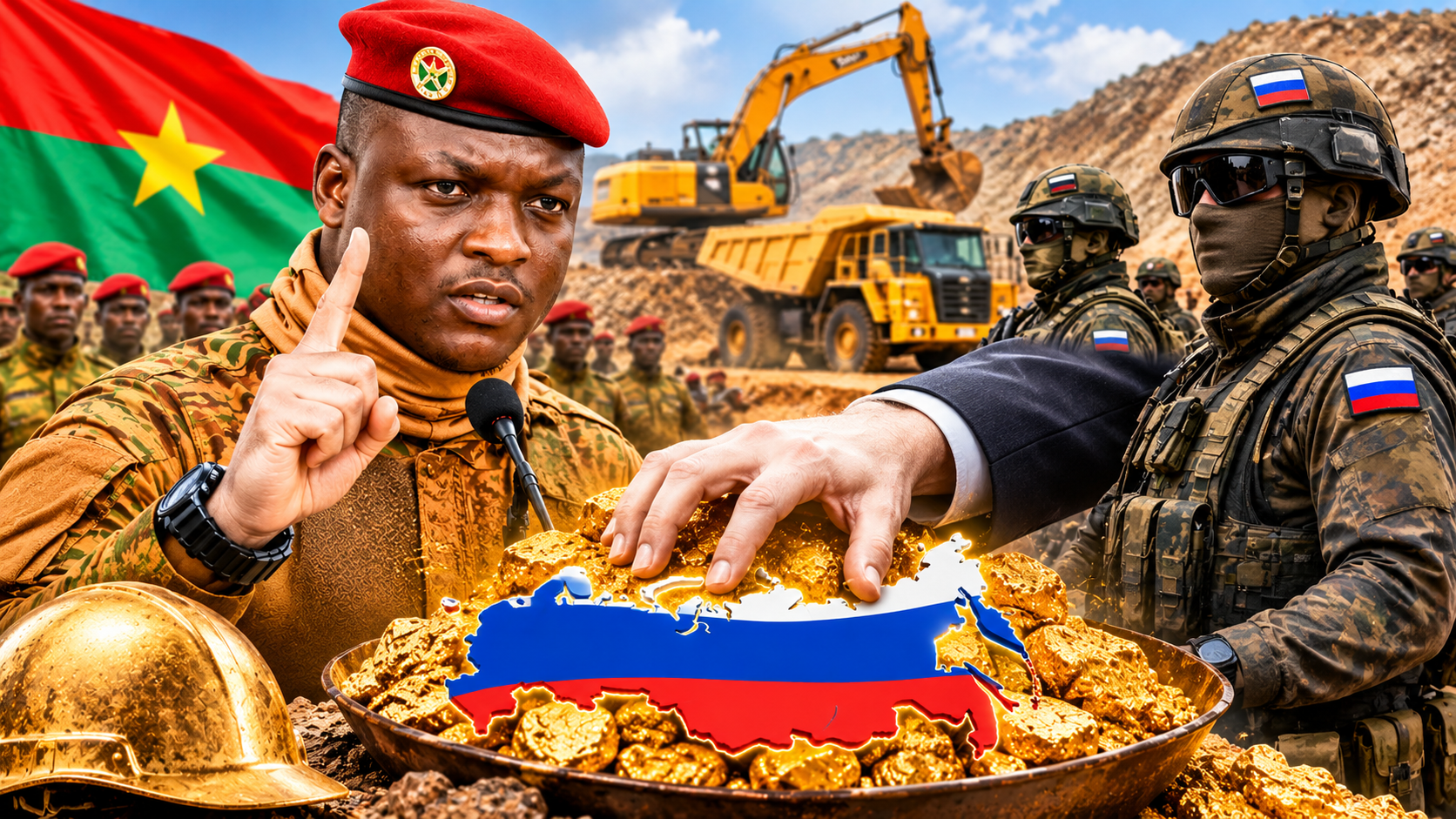
The declaration by Burkina Faso’s transitional leadership that its gold resources now belong 100% to the Burkinabè people has been met with both domestic acclaim and international scrutiny. Yet behind the bold pronouncements of economic liberation lies a growing challenge: the expanding role of Russian security firms in safeguarding gold mining operations across the country. This development is forcing a critical examination of what sovereignty truly means when strategic assets are shielded by foreign actors.
Under the leadership of Captain Ibrahim Traoré, the military junta has positioned the management and control of natural resources as central to its political narrative. Gold, in particular, has been framed as both a symbol of national pride and a pathway to economic independence. But rhetoric alone cannot secure what is extracted from the earth it must be matched by real oversight and decision-making power.
This raises a pivotal question: if foreign security companies are increasingly shaping the operational environment around Burkina Faso’s most valuable gold deposits, how can the state claim full control over its most prized resource?
Russian actors and the shifting sands of mineral security
The government’s strategic shift toward Moscow has been justified as a move to reclaim autonomy from historical partners. However, the emergence of Russian security firms vying for influence within the country’s mining sector introduces a paradox. While Ouagadougou seeks to reassert its authority, the presence of these foreign actors in high-security zones surrounding extraction sites, transport routes, and storage facilities undermines the very sovereignty the regime claims to uphold.
A gold mine is not merely a site of extraction; it is a complex economic and security ecosystem. It involves the safeguarding of infrastructure, the regulation of mineral flows, financial oversight, and operational control. When foreign entities are granted significant responsibilities in these areas, questions must be raised about their mandate, contractual terms, and the extent to which Burkinabè authorities retain final authority.
The risk is not hypothetical. Conflicts of interest, opaque contracting, and blurred lines of command could create conditions where foreign firms influence more than just security they may shape the economic benefits that should flow to the nation and its people.
The gap between nationalistic discourse and operational reality
The junta’s insistence that Burkina Faso’s gold is irrevocably Burkinabè has resonated with citizens weary of historical exploitation. Yet sovereignty cannot be decreed through speeches or regulatory reforms alone. It requires concrete evidence: transparent governance, verifiable control over assets, and the assurance that revenues serve public development.
If Russian security companies are positioned as de facto gatekeepers at strategic mining sites, it is not just a matter of who holds the contract. It is a matter of who ultimately decides how the gold is protected and, by extension, who benefits from its circulation and sale.
This distinction between legal ownership and operational control is critical. A nation may retain formal title to its resources, but if foreign actors dictate security protocols, personnel, and access to facilities, the appearance of sovereignty belies a dependency that weakens the state’s autonomy.
A sovereignty that must be earned, not declared
The ultimate responsibility of the Burkinabè state is not to replace one external patron with another, but to ensure that every partnership regardless of origin serves the national interest, operates under clear oversight, and remains accountable to Burkinabè institutions. The transition toward greater independence cannot be derailed by new forms of foreign involvement, no matter how they are justified.
For the people of Burkina Faso, the stakes are clear. The gold beneath their soil must not be controlled from abroad. It must not be exploited for the benefit of foreign firms or private networks. Above all, it must fund sustainable development and improve living conditions across the country.
Captain Traoré’s assertion that Burkina Faso’s gold is 100% Burkinabè deserves credence but only if it is backed by verifiable action. True sovereignty is not proclaimed; it is demonstrated through control, transparency, and the unshakable primacy of national interest.
Key takeaways for a nation at a crossroads
Control requires more than ownership: Formal title to gold deposits does not equate to operational sovereignty if foreign firms dictate security and logistics.
Transparency is non-negotiable: Citizens and institutions must have full visibility into security contracts, personnel, and financial flows linked to gold mining.
Partnerships must serve the nation first: Strategic alliances should enhance independence, not deepen dependency.
Sovereignty is tested in action: Declarations of national ownership must be matched by real oversight and results.
By Ramatou Soumana — Journalist