The United Nations Security Council has reached a pivotal moment in the longstanding Western Sahara dispute, with a decisive diplomatic clash on October 30, 2026, marking a clear turning point in the trajectory of international efforts to resolve the conflict.
The standoff centered on two competing draft resolutions, both of which failed to secure the necessary support. The first, backed by the United States, sought to fundamentally reshape the UN mission in Western Sahara, while the second, proposed by Russia, aimed to maintain the status quo without modification. Neither achieved the required consensus, leaving the future of the MINURSO peacekeeping operation hanging in the balance.
US proposal seeks to redefine Western Sahara’s political path
The American-backed resolution aimed to extend the mandate of the UN Mission for the Referendum in Western Sahara (MINURSO) until October 31, 2027. However, its most significant provision involved a radical departure from the mission’s historical framework. The draft sought to elevate Morocco’s autonomy plan as the exclusive foundation for negotiations, effectively sidelining other potential outcomes, including independence.
Key elements of the US proposal included:
- Removal of the referendum reference from the mission’s official title, rebranding it as the UN Mission to Western Sahara (MINUSO)
- A phased reduction of the peacekeeping component in favor of a new political mission
- Recognition of Morocco’s autonomy initiative as the sole framework for future talks
Washington argued that this approach would break the decades-long deadlock by providing a clear path forward under Moroccan sovereignty. Critics, however, warned that it risked undermining the principle of self-determination—a cornerstone of UN-led negotiations since the mission’s inception in 1991.
Russia’s veto derails American ambitions
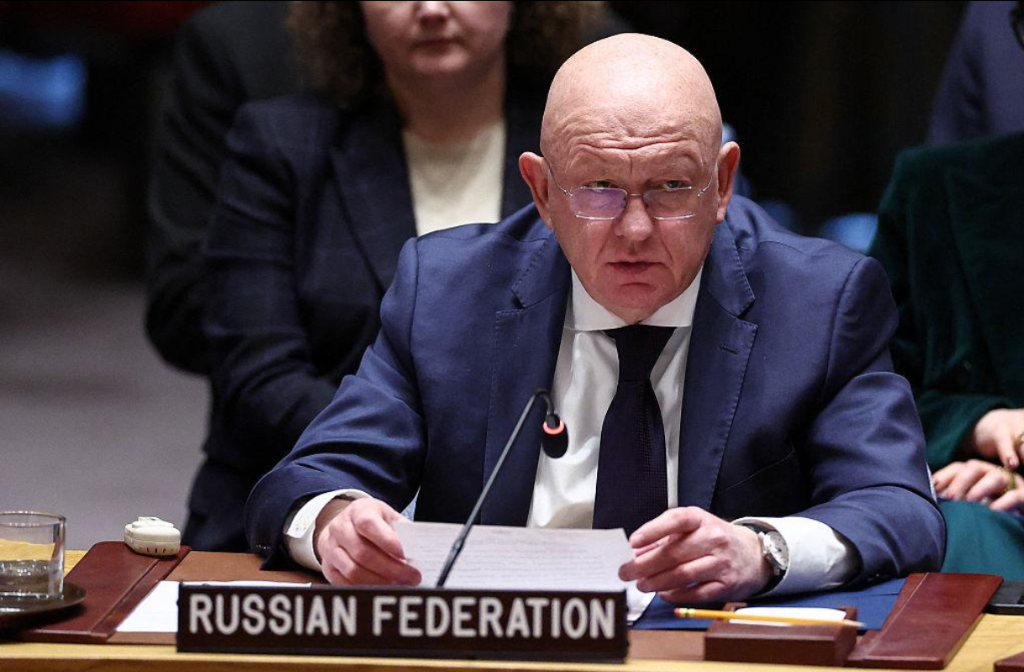
The Security Council vote delivered a stark message: the US proposal failed to secure the necessary majority, falling victim to Russia’s veto power. Despite receiving support from eleven out of fifteen member states, the resolution lacked the critical backing of all five permanent members, whose vetoes determine non-procedural outcomes.
The breakdown of the vote was as follows:
- For: Eleven countries, including key allies of the United States
- Against: Russia
- Abstain: China, Pakistan, and Somalia
Moscow justified its opposition by emphasizing the need to preserve a balanced and inclusive negotiation process, one that adheres strictly to the UN Charter and the principle of self-determination for the Sahrawi people. The Kremlin’s stance underscored its preference for maintaining the status quo rather than endorsing a framework that could be seen as preemptively favoring one party.
Russia’s alternative proposal also collapses amid global divisions
With the American resolution blocked, Russia introduced a far narrower counter-proposal: a simple one-year extension of MINURSO’s mandate without any structural changes. The goal was to avoid a sudden withdrawal of the UN presence, which has been monitoring a decades-long ceasefire in the region.
However, the proposal received only three votes in favor—Russia, China, and Somalia—failing to reach the nine-vote threshold required for adoption. The United States voted against it, while eleven members abstained, signaling deep skepticism about the merit of maintaining the mission in its current form.
The failure of both resolutions exposed a critical reality: the Security Council remains deeply polarized over how to advance a political solution in Western Sahara. Neither Washington nor Moscow could muster sufficient support to impose its vision, leaving the conflict’s future hanging in uncertainty.
The stakes for the Sahrawi people and the principle of self-determination
At the heart of the diplomatic impasse lies the unresolved question of Western Sahara’s political future. The Sahrawi people, represented by the Polisario Front, have long insisted on their right to a referendum on self-determination, with independence as a viable option. The Moroccan autonomy plan, which proposes limited self-rule under Moroccan sovereignty, remains diametrically opposed to this vision.
The US proposal’s emphasis on the autonomy initiative as the only viable path raised concerns among Sahrawi representatives and their international supporters. They argue that sidelining the referendum undermines the very foundation of the 1991 UN settlement plan, which promised a vote to determine the territory’s status.
The MINURSO mission, originally tasked with organizing and conducting a referendum, has operated for over 30 years without fulfilling this core objective. The failure to renew its mandate—either in its current form or under the US blueprint—risks leaving the region without a dedicated UN presence for the first time in decades.
What comes next for Western Sahara?
The collapse of both resolutions on October 30, 2026, marks a significant setback for diplomacy in one of Africa’s most protracted conflicts. The Security Council’s inability to reach a consensus reflects broader geopolitical tensions, particularly the rivalry between Washington and Moscow, both of which wield outsized influence over the council’s decisions.
For the Sahrawi people, the stakes could not be higher. The absence of a renewed UN mandate leaves open critical questions: Will the ceasefire hold? How will humanitarian access be maintained? And, most importantly, will the international community uphold the Sahrawi people’s right to determine their own future?
The turning point reached on October 30 underscores a harsh truth: without a fundamental shift in the positions of key stakeholders, the stalemate in Western Sahara may persist indefinitely. As diplomats regroup to explore new strategies, the Sahrawi people remain caught in a cycle of unresolved aspiration and political inertia.