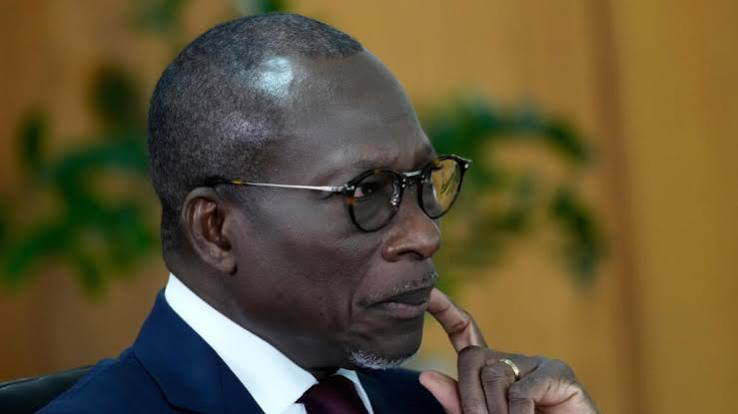
As Benin prepares to review the 2027 finance bill, a striking detail has entered public debate: the president of the Senate will not step before the National Assembly to defend his chamber’s budgetary allocations. This decision, far from a procedural oversight, stems from a deliberate institutional framework that ensures the Senate’s financial autonomy while maintaining rigorous public oversight.
Breaking away from tradition: a calculated shift in budgetary presentation
The National Assembly’s Budget Commission will begin hearings on November 16, 2026, to examine the state’s financial projections for the coming year. While key officials—including the Minister of Economy and Finance Aristide Médénou—are scheduled to address the committee, the Senate’s top official remains absent from the slate. This absence is not accidental, nor does it signal a withdrawal from accountability. Instead, it reflects a long-established system where legislative bodies manage their internal finances before submitting them for national approval.
How the Senate’s budget follows a distinct legal pathway
The Senate’s financial independence is anchored in articles 97, 98, and 99 of its internal regulations. These provisions grant the upper house the authority to draft, adopt, and submit its budget proposal—without bypassing the state’s fiscal oversight. Article 97 enshrines the chamber’s administrative and financial autonomy, while Article 98 outlines the annual process: after the government sets the budgetary framework, the Senate crafts its own financial plan, guided by the input of its president. Once debated and approved by senators, the budget is formally transmitted to the Minister of Finance, where it is merged into the broader state finance bill.
Article 99 serves as the final bridge, stipulating that the Senate president forwards the chamber’s adopted budget to the government. This two-tier process—internal Senate approval followed by national integration—ensures that the institution’s resources remain transparent and subject to public scrutiny, even if its leader does not testify before the Budget Commission.
No exception to scrutiny: how legislative budgets still face review
Contrary to perceptions that the Senate’s financial plan exists outside the national budget, its allocations are fully included in the 2027 finance law. The distinction lies in who presents the numbers. The Senate president’s absence does not imply exemption from oversight; rather, the chamber’s internal governance rules preempt the need for his direct testimony. The same logic applies to the National Assembly, whose president also does not appear before the Budget Commission to explain his institution’s budget. Both chambers follow a parallel procedure: each formulates its financial requests internally, submits them to the government, and then awaits their integration into the state’s broader fiscal framework.
Bicameralism reinforced, not disrupted
The establishment of Benin’s Senate in 2019 did not alter this longstanding budgetary mechanism. According to the upper house’s regulations, the transition to a bicameral system preserved the existing rules governing financial preparation and transmission. The 2027 budget cycle continues to unfold under articles 97 to 99, unchanged in their application. Thus, Patrice Talon’s absence from the National Assembly’s hearings is not a political maneuver but a continuation of a procedural norm that balances institutional autonomy with national fiscal responsibility.
What this means for Benin’s budgetary transparency
The Senate’s budget, though managed independently, remains subject to the same parliamentary and public accountability as any other state expenditure. Once integrated into the government’s draft finance bill, it is presented to—and debated by—the National Assembly in full view of citizens. This dual-layered process ensures that legislative institutions uphold standards of financial integrity while participating in the democratic oversight of the nation’s purse strings.