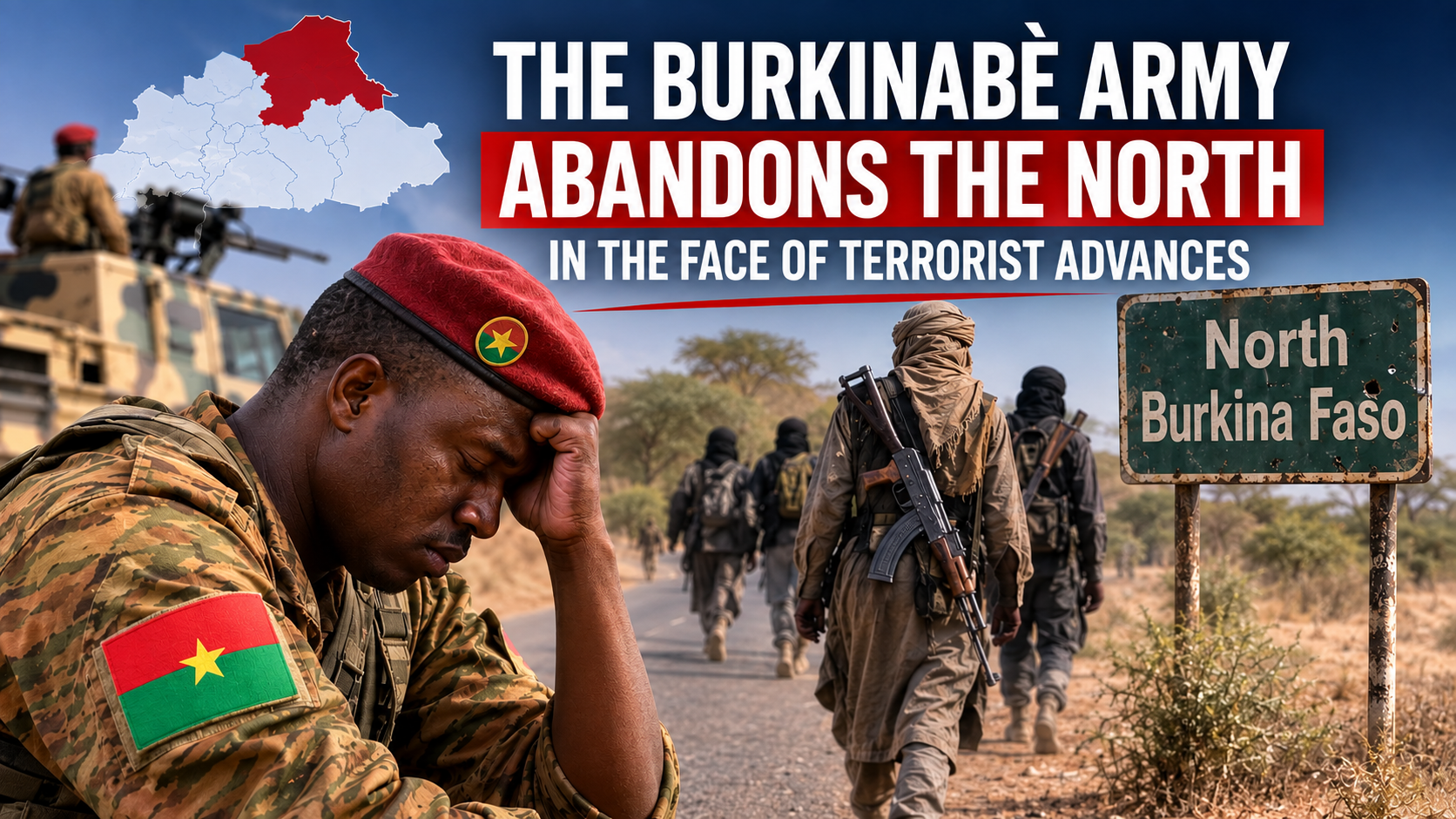
The northern regions of Burkina Faso continue to face severe security challenges despite repeated military offensives and the deployment of significant forces by national authorities. Insurgent groups have shown remarkable adaptability, shifting away from direct confrontations to embrace a protracted strategy of attrition. Their tactics rely heavily on mobility, harassment, and sustained pressure on civilian populations, making it increasingly difficult to assess the true state of the conflict.
An elusive enemy reshaping the battlefield
One of the most pressing challenges for Burkina Faso’s armed forces lies in the fluid nature of their adversaries. Insurgent factions avoid establishing fixed positions, instead operating in small, highly mobile units that are nearly impossible to pinpoint. Following military operations, combatants often disperse into rural areas, only to re-emerge elsewhere, exploiting gaps in security measures.
This fluid approach turns the conflict into a shifting pattern of movements rather than a conventional battle for territory. The destruction of a camp or the temporary recapture of a town does not equate to the permanent elimination of the threat. Instead, the insurgency persists, adapting to new circumstances while maintaining pressure on both civilian life and military operations.
Road networks: the silent barometer of insecurity
The security of major thoroughfares in northern Burkina Faso serves as a critical indicator of the broader conflict. Highways and rural roads remain highly vulnerable to ambushes, improvised explosive devices, and sudden attacks. The repercussions of this instability extend far beyond military concerns.
When travel becomes hazardous, markets slow down, supply chains falter, and communities find themselves increasingly isolated from urban centers. A town may appear relatively secure within its own borders, yet remain critically exposed if its access routes, agricultural zones, and supply networks are under constant threat.
Beyond the battlefield: the challenge of lasting control
The true test for Burkina Faso’s military lies not in the execution of operations but in the ability to hold ground afterward. A successful offensive may reclaim a position, but without a robust administrative, policing, and judicial presence, the risk of insurgent re-infiltration remains high.
Sustained stabilization requires more than just military action. It demands the restoration of public services, the reopening of schools and health centers, the resumption of agricultural activities, and the re-establishment of local governance. Failure to achieve these objectives leaves vacuums that insurgent groups can exploit to rebuild their networks.
The human cost of prolonged instability
Behind the metrics of military operations and territorial gains lies a far more devastating reality: the civilian population enduring daily hardships. Forced displacements, disrupted farming activities, shuttered public services, and crippled trade have pushed communities already struggling with poverty to the brink.
This creates a vicious cycle. Economically and socially weakened populations become more susceptible to coercion by armed factions. Meanwhile, the state’s inability to maintain a consistent presence in these areas further cedes ground to insurgents. The longer this cycle persists, the harder it becomes to break.
The limits of military communication
Official military statements play a role in bolstering troop morale and public confidence. However, they cannot substitute for an honest assessment of ground realities. The number of operations conducted or fighters neutralized does not, on its own, reflect strategic progress.
True indicators of success include the resumption of safe travel, the reopening of key routes, the return of public services, the revival of economic activity, and the state’s ability to assert its authority in recovered zones. Tactical victories may be proclaimed, yet the broader strategic picture often remains grim.
Why a purely military response falls short
Burkina Faso’s crisis has evolved beyond a purely military challenge. While force remains essential against insurgent groups, it cannot single-handedly resolve the conflict. A lasting solution requires a multi-pronged approach: intelligence gathering, securing transportation routes, protecting civilians, restoring administrative functions, reopening social services, aiding displaced populations, and revitalizing local economies.
It is equally vital to prevent security measures from deepening communal divides. In a conflict where misinformation and rumors carry significant weight, trust between communities and state institutions is itself a critical security asset.
The danger of premature victory declarations
The greatest risk lies in mistaking military pressure for an actual resolution. Insurgent groups may suffer losses, temporarily retreat, or face heavy strikes, yet retain the ability to regroup, adapt, and exploit state weaknesses. Their capacity to disperse, alter tactics, and infiltrate areas vacated by security forces allows them to turn tactical setbacks into strategic regrouping phases.
The question is not merely how many positions have been recaptured or how many operations have been launched. It is whether Burkina Faso can permanently secure recovered territories and restore normalcy. Until stabilization efforts match military advances, announcements of victories risk obscuring a harsher truth: a conflict that evolves, spreads, and becomes entrenched over time.
The ultimate benchmark for success will not be the temporary expulsion of insurgent groups but the permanent restoration of security, public authority, and livelihoods for local populations.