
Cameroon: scrutiny and concerns over president biya’s extended european stay
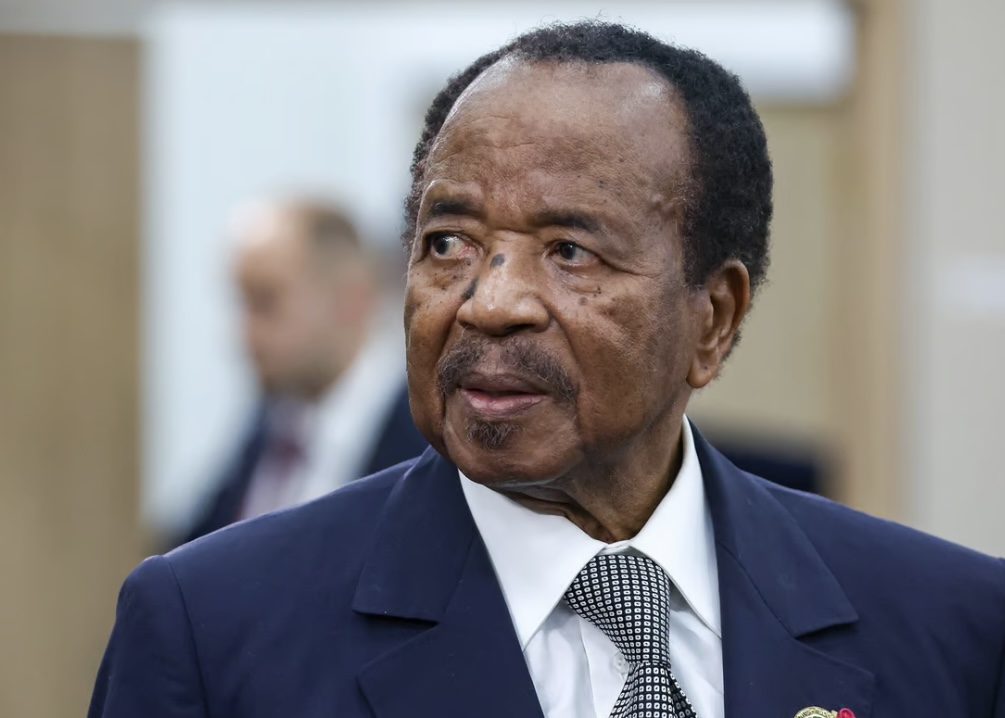
The ruling Cameroon People’s Democratic Movement (RDPC) recently convened a high-level meeting of its principal officials. This gathering occurred forty-five days after President Paul Biya departed for a private European visit, with no official word on his potential return to the nation. While the presidential party asserts that state institutions are operating normally, opposition figures are demanding transparency regarding the exercise of power and the constitutional provisions for an extended presidential absence.
- Politique

Jean Nkuete, Secretary-General of the RDPC’s central committee, initiated an “important working session,” as detailed in a communiqué released on Wednesday. The official statement, however, remained vague, offering no specific agenda items or reasons for the gathering. President Paul Biya, at 93 years old, left Cameroon on June 7. At the time, his civil cabinet described it merely as a “brief private visit to Europe.” Since that initial announcement, no further official communication has provided a potential date for his return to the West African nation.
The prolonged silence surrounding the head of state’s whereabouts has fueled considerable public discourse for several weeks, becoming a significant topic in African politics. The RDPC has actively sought to address these growing concerns. Christophe Mien Zok, the party’s director of propaganda, asserted in an editorial published in L’Action on July 15 that “power is not vacant” and “the Lion has not departed,” directly refuting suggestions of the country operating on “autopilot.” Meanwhile, official presidential communication channels continue to release messages from Paul Biya to various heads of state, including Emmanuel Macron for France’s National Day and the President of Montenegro. Beyond these diplomatic notes, no other public engagements or activities of the president have been disclosed since his departure.
Opposition demands clarity on presidential absence
The President’s extended absence has reignited calls for explanations from various political figures. Member of Parliament Jean-Michel Nintcheu has urged the Constitutional Council to declare a presidential vacancy. The Cameroon Democratic Union (UDC), however, has adopted a nuanced stance. While the party refrains from speculating on President Biya’s personal circumstances, it maintains that the continuity of the state cannot be based on silence or conjecture. In a communiqué released on July 18, the UDC stated that an extended absence from national territory does not, by itself, constitute a power vacuum. Nevertheless, the party deems it legitimate to question the effective execution of presidential duties and the applicable mechanisms in the event of a temporary impediment, a crucial aspect for Africa news and pan-African journalism.
Constitutional ambiguities regarding prolonged presidential absences
Cameroonian law lacks specific provisions defining a maximum duration for the head of state’s absence from the national territory. Several political analysts contend that this situation warrants a thorough institutional review, yet no existing legal text dictates when the Constitutional Council should intervene. The UDC also highlighted that the position of Vice-President, which was reintroduced during the constitutional revision adopted in April, remains unfilled. The party advocates for a reform to clarify the legal framework applicable when the President is absent for an extended period. President Paul Biya, who has held power since 1982, frequently undertakes visits to Europe. However, the current stay, which began on June 7, marks his longest absence from Cameroon since assuming the presidency, with no official indication of his return.
LSI AFRICA
More Stories
Sahel trio’s bid for can 2032 raises security concerns amid ongoing crises
Bénin and Morocco seal 14 landmark deals to boost bilateral trade and growth
Gaskindé: the unanswered questions behind Burkina Faso’s pivotal ambush