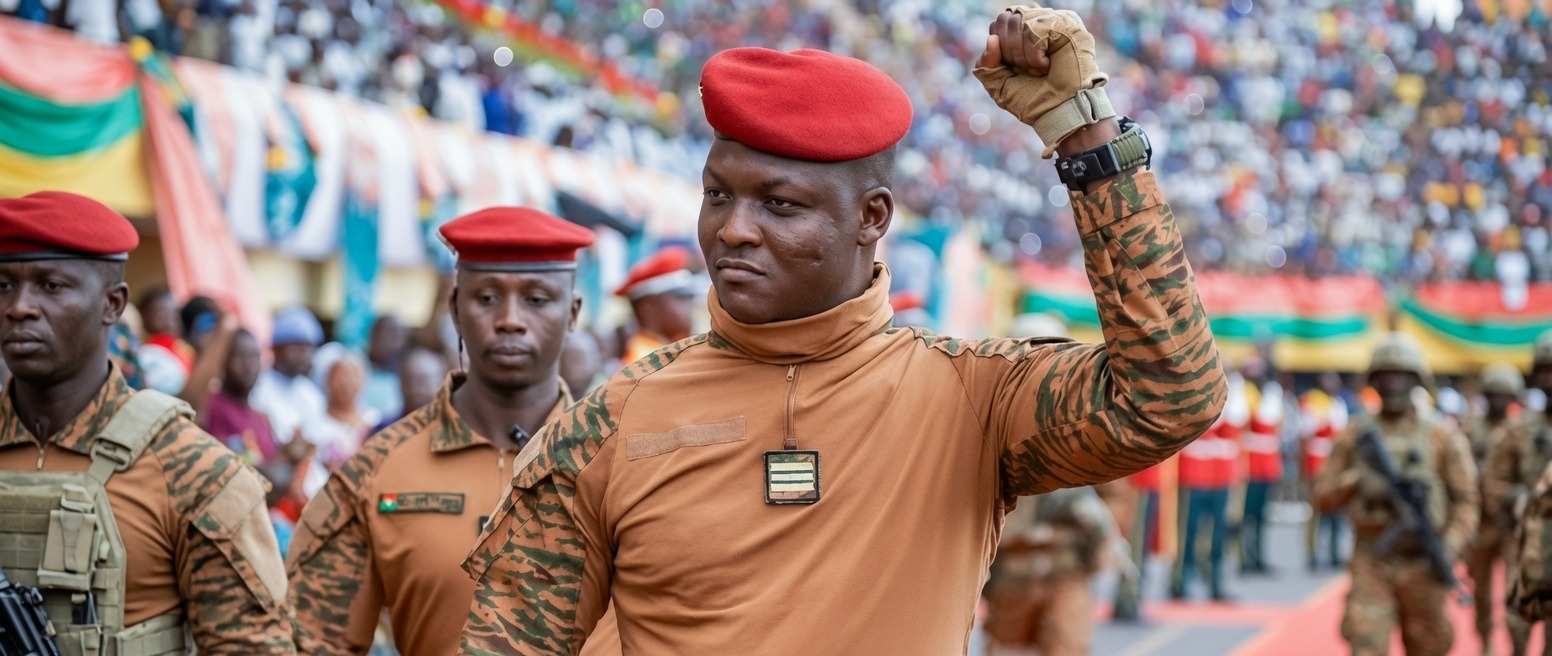
In Ouahigouya, Captain Ibrahim Traoré’s recent address has laid bare a deep structural fracture within Burkina Faso’s transitional leadership. His unfiltered rhetoric—marked by blunt threats and coarse language—exposes not strength, but a profound crisis of confidence in the military apparatus. In governance as in warfare, the overuse of aggressive posturing and relentless intimidation tactics rarely signals dominance; rather, they reveal systemic fragility. A power that publicly vows to crush its own ranks admits, by its very actions, that the cohesion of its junta no longer rests on shared doctrine or strategic unity, but solely on the fear of purge and retaliation.
the paradox of a power held together by fear
By declaring that ‘there is no number one or number two’ in the chain of command, Traoré aims to preempt the rise of internal rivals. Yet this flattening of hierarchy concentrates all strategic risk onto a single figure—his own. By staking his legitimacy exclusively on battlefield experience and immediate tactical victories, he risks repeating a classic error of military-led regimes: a legitimacy that is intensely personal, non-transferable, and dangerously dependent on short-term outcomes. History shows that such arrangements rarely survive the first major setback.
discourse vs. combat reality: a growing disconnect
The hardening of public language does more than unsettle observers—it distorts the priorities of the state. By prioritizing political loyalty over structural military reform, the transition risks suffocating the very command chain it needs to survive. Officers, now consumed by self-preservation and internal monitoring, retreat into cautious conformity rather than bold operational initiative. When loyalty becomes the primary metric of competence, initiative dies—and so does adaptability on the front lines. The result is a widening gap between Ouagadougou’s rhetoric of unyielding resolve and the sobering realities of battlefield performance.
from surveillance to self-sabotage
Ultimately, governance through fear achieves the opposite of its intent. Rather than neutralizing dissent, blanket surveillance and coercive language push dissident voices deeper into the shadows. The annals of Sahelian military regimes are clear: when internal debate is stifled by threats of severe reprisals, opposition does not vanish—it bides its time. The pressure cooker of paranoia and control does not eliminate factions; it merely postpones confrontation until conditions shift—and when they do, the rupture can be sudden and irreversible.