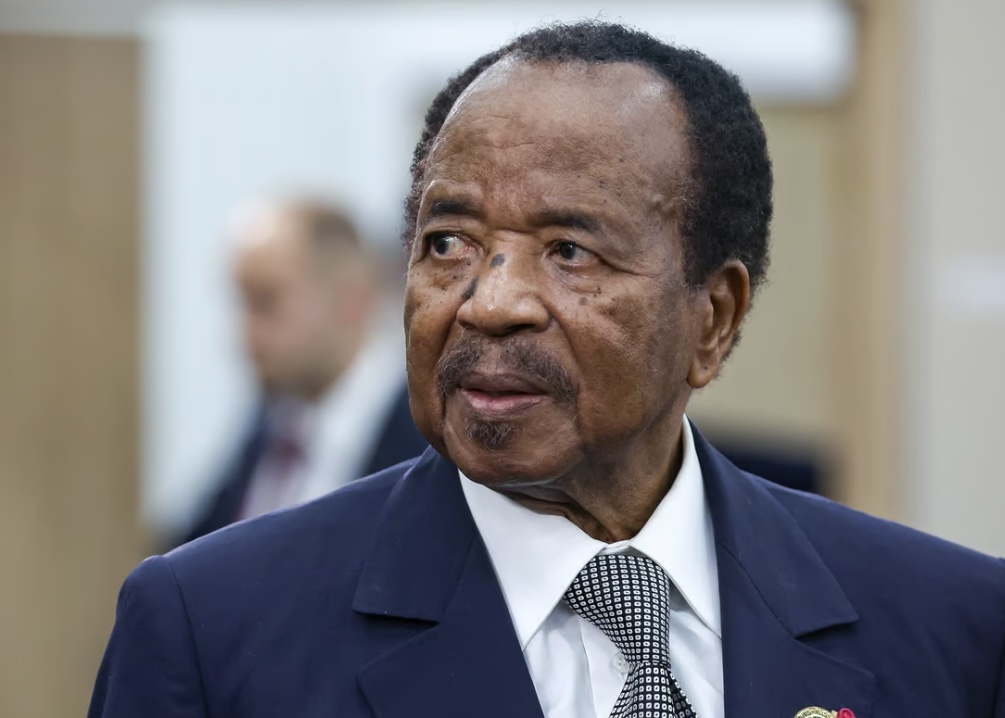
Forty-five days after President Paul Biya left Cameroon for a private visit to Europe, the ruling Rassemblement démocratique du peuple camerounais (RDPC) convened an emergency meeting of its top officials. The gathering, held on a Wednesday, produced no public statement regarding a potential return date for the 93-year-old leader. While the party insists that state institutions continue to function normally, opposition figures are growing increasingly vocal about the need for transparency regarding the exercise of presidential authority during prolonged absences.
Jean Nkuete, Secretary General of the RDPC’s Central Committee, summoned what he described as a « critical working session » in a brief communiqué released the same day. The statement offered no details about the agenda or the reasons behind the meeting. Since departing Cameroon on June 7, officially for a « brief private stay in Europe, » no official communication has confirmed when—or if—he will return. This unprecedented silence has fueled speculation and debate across the country.

The RDPC has attempted to quell concerns, with party propagandist Christophe Mien Zok publishing an editorial on July 15 in L’Action reaffirming that « power is not vacant » and dismissing claims of a country « on autopilot. » The statement, which evoked the nickname « the Lion, » insisted that governance remains uninterrupted. Meanwhile, state media continues to broadcast presidential messages, including greetings to French President Emmanuel Macron on Bastille Day and to the President of Montenegro, though no new public appearances by Biya have been reported since his departure.
opposition voices demand for accountability
Several opposition leaders have seized on the situation to push for clarity. Deputy Jean-Michel Nintcheu has urged the Constitutional Council to declare a vacancy in the presidency. Meanwhile, the Union démocratique du Cameroun (UDC) has taken a more measured stance, avoiding speculation about Biya’s personal circumstances while stressing that the continuity of the state cannot depend on silence or assumptions. In a July 18 statement, the party acknowledged that an extended absence from national territory does not, in itself, constitute a power vacuum—but argued that legitimate questions persist about the effective exercise of presidential duties and the legal mechanisms for handling temporary incapacitation.
gaps in constitutional provisions raise concerns
Cameroon’s legal framework provides no clear timeline for how long a president may remain abroad before triggering institutional review. Analysts note that this ambiguity demands attention, yet no statute specifies when the Constitutional Council should intervene. The UDC has also highlighted another unresolved issue: the vice-presidency, reintroduced during the April constitutional revision, remains unfilled. The party is calling for legal reforms to address scenarios involving prolonged presidential absences, emphasizing the need for precise rules to govern such situations. Biya, who has led Cameroon since 1982, is known for regular trips to Europe, but his current stay—now the longest since taking office—has unfolded without any official indication of his return.