Chad: 150 Klessoum inmates freed under collective sentence relief — what it means for families and local livelihoods
Justice Minister Ndolenodji Alixe Naïmbaye oversaw the release of 150 inmates at Klessoum remand and correction facility, applying a presidential decree on collective sentence relief. The move is already reshaping household finances and community life in N’Djamena.
By Hassan Abderamane
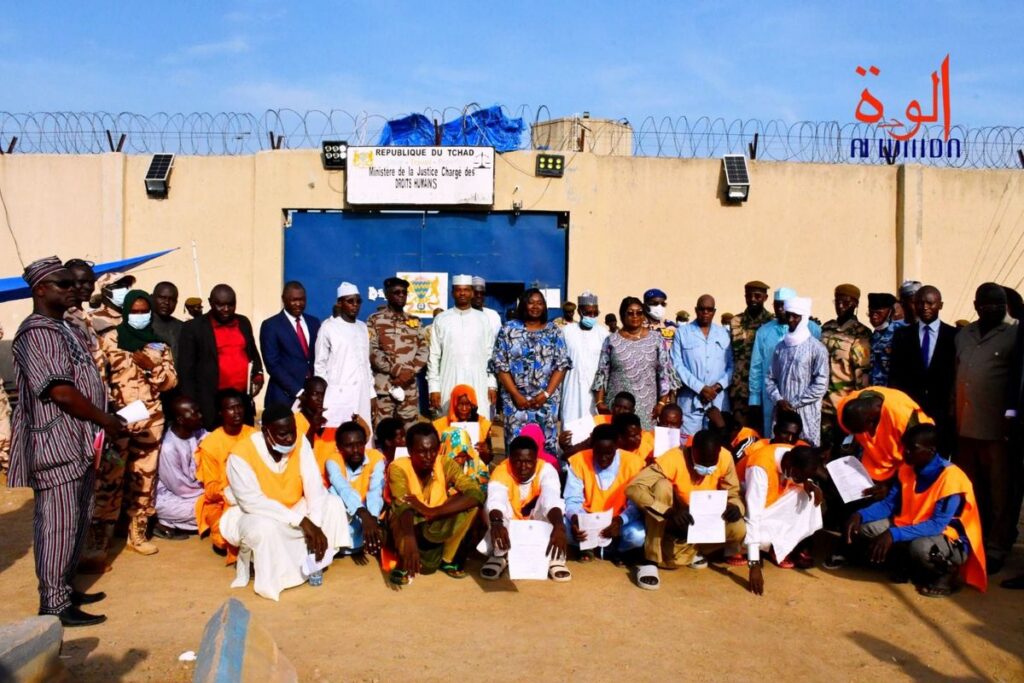
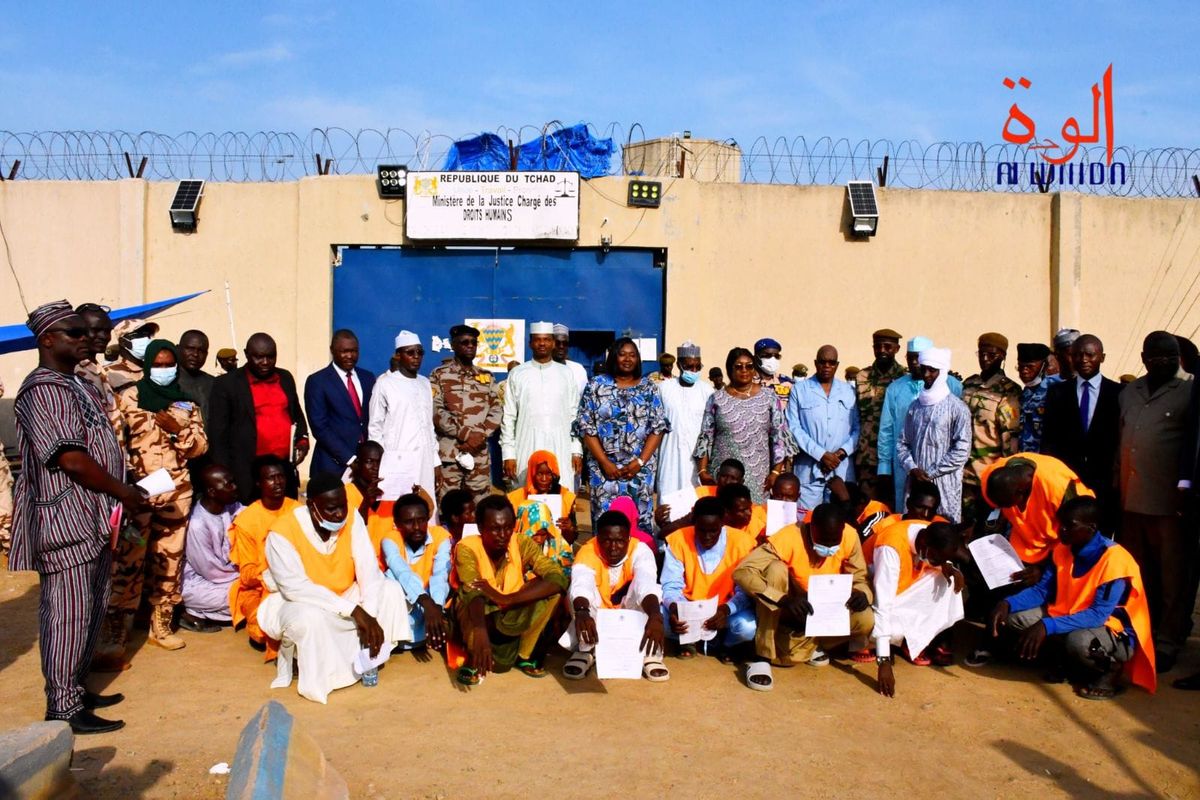
On Wednesday, 16 September 2026, Justice Minister and Keeper of the Seals, Ndolenodji Alixe Naïmbaye, presided over an official collective sentence relief ceremony for inmates at the Klessoum remand and correction facility, carried out under Decree No. 2151/PR/2026. The immediate effect: 150 people walked out of the prison, returning to their neighbourhoods and families.
The ceremony took place inside the facility and drew a full bench of judicial and security officials, including the Public Prosecutor at the N’Djamena High Court, the President of the N’Djamena High Court, the Advocate General at the N’Djamena Court of Appeal, the Secretary General of the Ministry of Justice, senior defence and security officers, and civil society representatives.
In all, 150 detainees regained their freedom under the decree.
In her address, Minister Naïmbaye paid warm tribute to the Head of State, who she said had chosen for reasons of humanity and fairness to extend his clemency to citizens under final, enforceable criminal sentences. For the Marshal of Chad, she said, every citizen deserves competent, swift, accessible and equitable justice.
The justice minister explained that, as an exercise of sovereign magnanimity, pardon is a constitutional prerogative of the presidency. It is often used by the President of the Republic on various occasions to benefit thousands of convicts, either by fully remitting their sentences or substituting lighter ones. In that tradition of concern for compatriots in conflict with the law, Marshal Mahamat Idriss Deby Itno, President of the Republic and Head of State, acting as father of the nation, signed Decree No. 2151/2026 of 14 August 2026 on collective sentence relief.
She welcomed the act, describing it as a gesture steeped in humanism and compassion. The execution of the decree, she said, is more than a single event — it is a high point in which some definitively convicted citizens benefit from a partial, phased reduction in the length of their custodial sentences, or even outright release.
The immediate application of the legal scale set by the regulatory text results in the automatic release of 150 detainees whose remaining sentences are now fully served. That translates into 150 households regaining a breadwinner, a caregiver or a parent — a direct effect on family income and stability in the Chadian capital.
Naïmbaye stressed that the decision meets core requirements of public justice policy and prison administration on several fronts. On one hand, it reflects a stated commitment to more humane detention conditions and a pragmatic adjustment of how sentences are served; on the other, it amounts to targeted but constructive clemency. For local commerce, the return of working-age individuals to the labour pool can ease pressure on extended families that have carried the cost of incarceration.
She also made clear that the measure applies exclusively to the criminal penalty of imprisonment and cannot erase the rights of the State, civil parties or third parties. Outstanding civil claims, fines and other obligations are therefore unaffected.
Speaking for the government, she reaffirmed the determination of the ministry she leads to press ahead with modernising judicial institutions and consolidating the rule of law, with the support of partners whose constant commitment she also acknowledged.
It is worth recalling that during the ceremony, release certificates were handed to the now-former detainees who benefited from the pardon under Decree No. 2151/PR/2026. The moment was marked by joy and emotion, and the event closed with a group photo to capture the milestone.



More Stories
Niger’s youth answer the FPL call: the real consequences for families, farms and businesses
Kidal water lifelines destroyed: 43 dead and an entire pastoral economy on the brink
Benin’s sovereign rating jumps to AA-: real-world consequences for businesses and households