CNSA’s political prisoner review may ease democratic talks in DRC
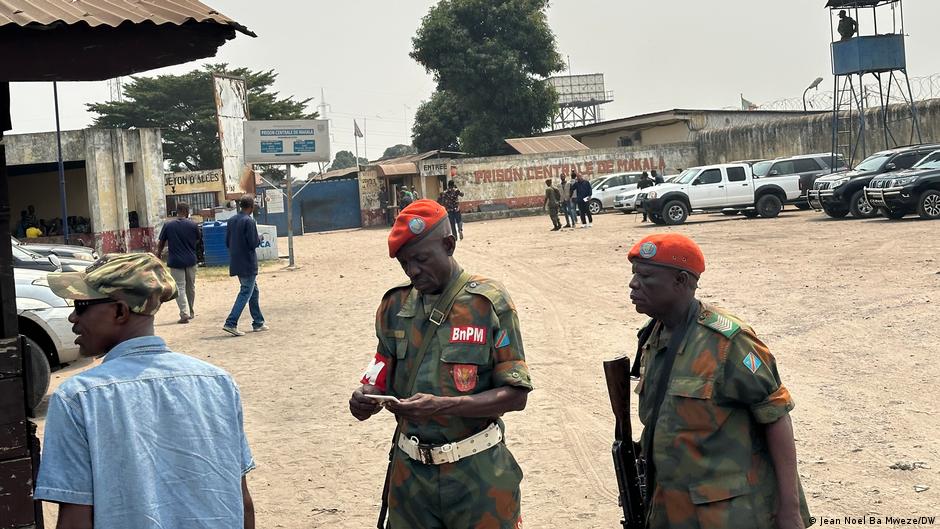
August 12, 2026Just one week after launching its nationwide audit of political and opinion prisoners, the National Council for Monitoring the Agreement and Electoral Process (CNSA) in the Democratic Republic of the Congo has emphasized that every detainee meeting the criteria will be considered. The council underscores a fundamental principle: justice must be blind.
The initiative forms part of broader confidence-building measures that the CNSA views as essential before the country’s long-awaited inclusive dialogue can take place. The council is compiling a definitive list to submit to President Félix Tshisekedi, enabling him to take decisive action ahead of formal negotiations between Congolese stakeholders.
Justice must be blind
Guided by strict criteria, the CNSA is meticulously reviewing case files to identify individuals eligible for amnesty or early release. Among those whose names are circulating in political circles are Aubin Minaku and Emmanuel Ramazani Shadary—respectively the vice president and permanent secretary of the People’s Party for Reconstruction and Democracy (PPRD), the former ruling party of President Joseph Kabila. Both could appear on the CNSA’s final list.
Joseph Olenghankoy, CNSA president, stressed the urgency of adhering to legal timelines. “Within 48 hours of arrest, every detainee must be brought before a judge. Yet reports indicate that some have languished in custody for nearly six months without due process.” He added, “This is a clear violation of the law. Justice is not selective. Our duty is to present these concerns to the highest authority so that these individuals can be freed, creating an environment conducive to constructive dialogue among all Congolese.”
PPRD welcomes the initiative
The initiative has been warmly received by the PPRD, the political family of Aubin Minaku and Emmanuel Ramazani Shadary. Lucain Kasongo, a senior PPRD cadre, stated, “If this CNSA initiative leads to the release of our detained comrades—Aubin Minaku, Emmanuel Ramazani Shadary, Dunia Kilanga, Parole Kamizelo, and many others—we can only applaud it. Any effort that advances their freedom deserves our full support.”
Days earlier, Justicia ASBL, a prominent human rights organization, submitted a list of nearly one hundred individuals it considers political or opinion prisoners to the Minister of Justice.
Death sentences complicate reconciliation efforts
The CNSA’s initiative also casts a spotlight on high-profile death row cases, including that of former president Joseph Kabila and Corneille Nangaa, coordinator of the M23 rebel faction. Timothée Mbuya, coordinator of Justicia ASBL, argues that these sentences must be overturned to restore public trust. “A bold political decision is needed to annul the convictions of Joseph Kabila, Corneille Nangaa, and others. Such measures are crucial to fostering the political trust required for an inclusive national dialogue.”
As calls for inclusive dialogue intensify across the DRC, the CNSA’s prisoner review could mark a turning point—but only if it translates into concrete releases and systemic reforms.