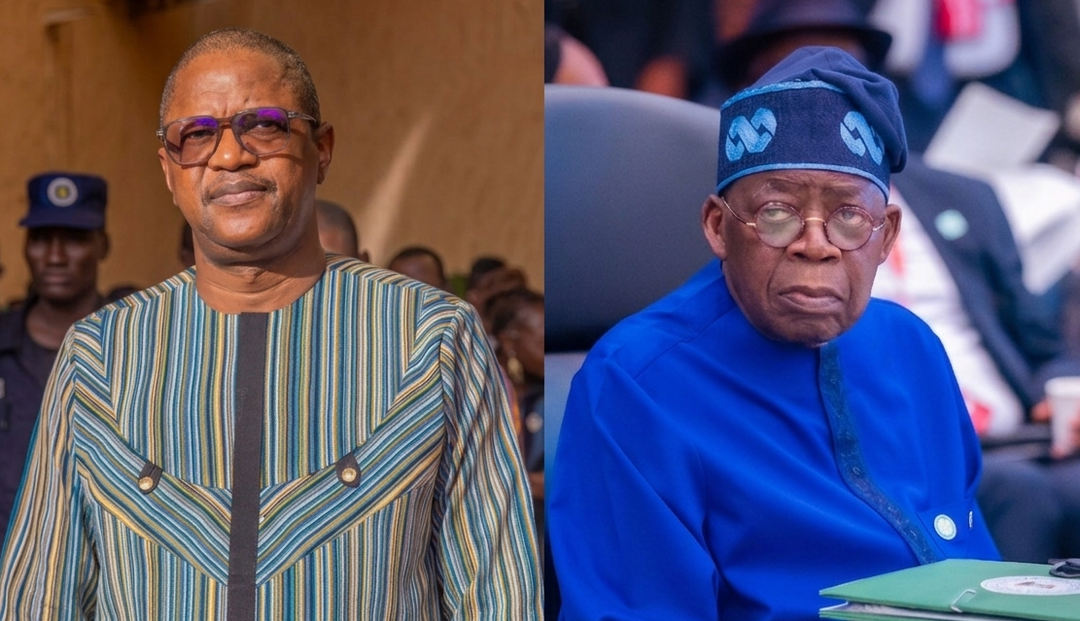
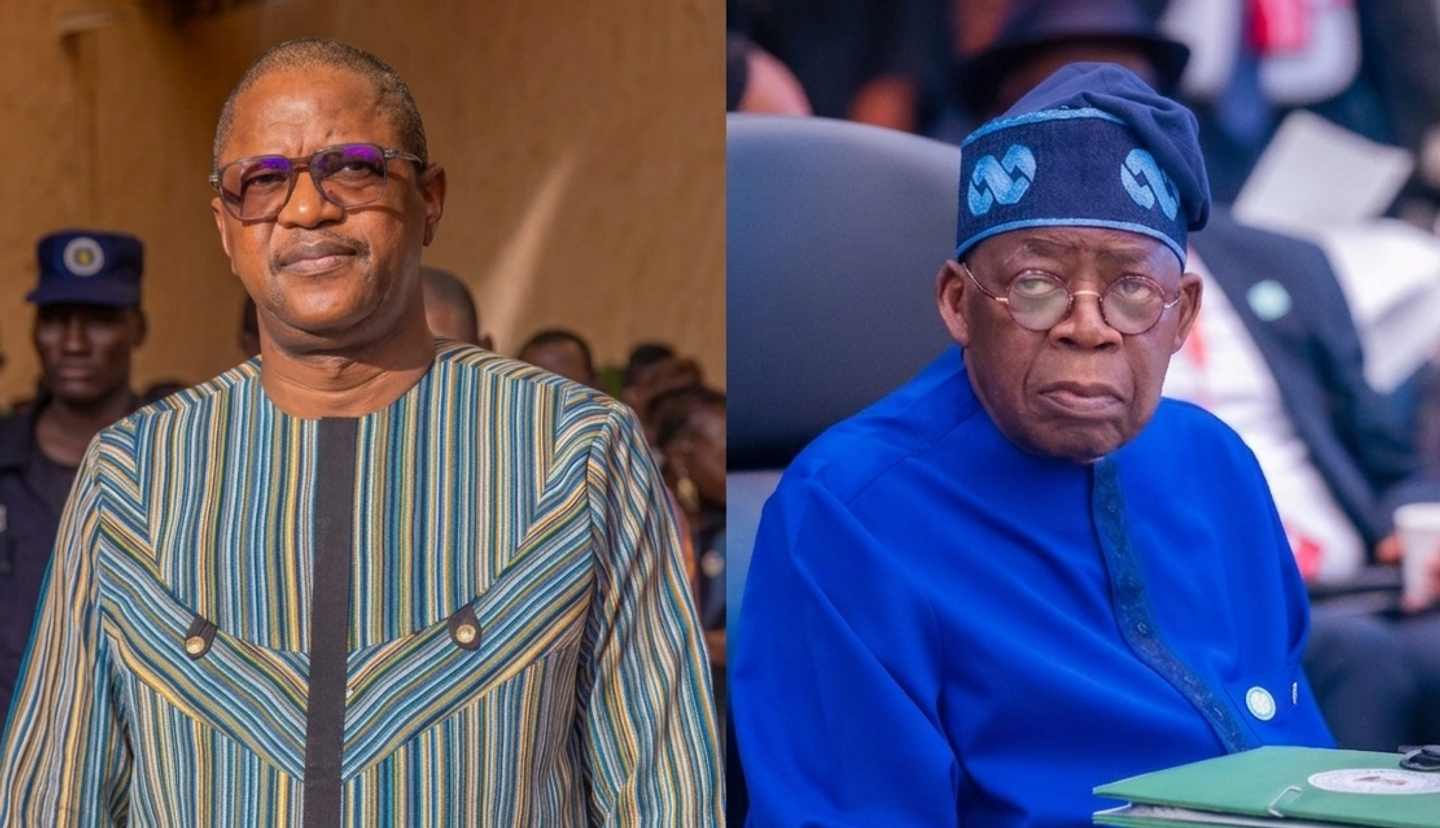
Burkina Faso’s Foreign Minister, Karamoko Jean Marie Traoré, held an urgent meeting on Thursday with Nigeria’s Chargé d’Affaires in Ouagadougou. The gathering followed President Bola Ahmed Tinubu’s controversial remarks on the security situation in the Sahel region, as confirmed by diplomatic sources on Friday.
The meeting included representatives from Mali and Niger’s embassies, underscoring the unified stance of the three Alliance of Sahel States (AES) member nations.
On July 30, during an engagement with Nigerian traditional leaders, President Tinubu attributed the surge in abductions and terrorist attacks in Nigeria to what he described as the “collapse” of security in neighboring Sahel countries. This claim was reiterated in a statement by Burkina Faso’s Foreign Ministry.
“Some of them (terrorists) are not Nigerians. You see, the insecurity problem in Mali, Burkina Faso and Niger is only worsening our challenges,” the Nigerian leader told the gathering, according to official accounts.
Reacting sharply, Traoré criticized Tinubu’s remarks as an oversimplification that “ignores the immense sacrifices” made daily by Burkina Faso, Mali and Niger’s defense and security forces, as well as their populations, in combating terrorism.
“This is a hasty, oversimplified and surprising analysis that reveals a troubling bias from Nigeria’s highest authority,” Traoré stated. “We expected a more accurate portrayal of the security context rather than shifting blame to neighboring countries. Such statements risk fueling misunderstandings and frustrations among peoples bound by history, geography and brotherhood.”
He emphasized that Tinubu’s comments disregard the sacrifices of Nigeria’s military in the fight against Boko Haram, noting that terrorist threats did not exist in AES countries when Nigeria began its counter-terrorism efforts.
Traoré also highlighted that while connections exist between Boko Haram and some Sahel-based terrorist groups, AES countries have consistently avoided public accusations against Nigeria. Instead, they have prioritized cooperation and shared responsibility in addressing the crisis.
“Burkina Faso, Mali, Niger and Nigeria face a common enemy,” he asserted. “The successes of AES member states’ defense and security forces benefit the entire subregion—including Nigeria—by reducing the operational capacity and mobility of terrorist groups.”
In closing, Traoré urged Nigerian authorities to adopt unifying and solidarity-driven rhetoric, warning against statements that could deepen divisions or misunderstandings among neighboring peoples.
In response, Nigeria’s Chargé d’Affaires acknowledged receiving the message and pledged to relay it faithfully to authorities in Abuja, as confirmed by Burkina Faso’s Foreign Ministry.
By Ramatou Soumana — Reporter