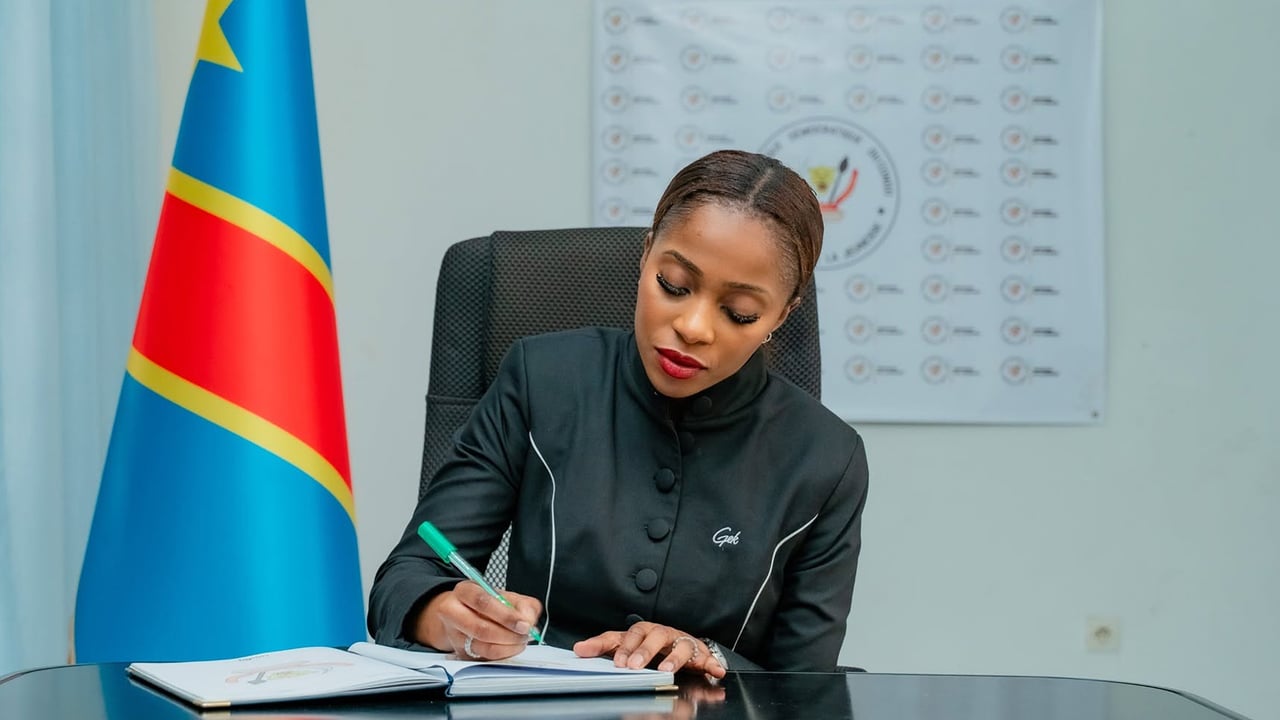
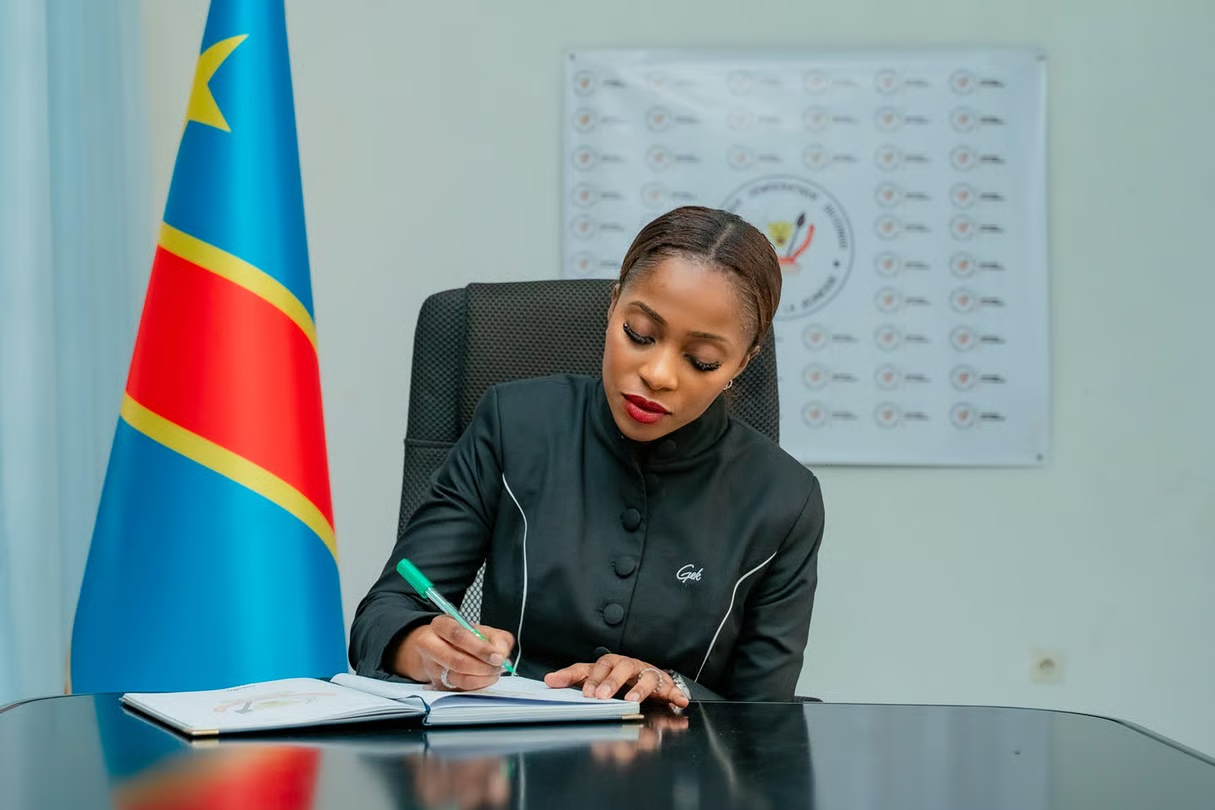
Kinshasa — In the corridors of power in Kinshasa, the voice of Grâce Kutino, Minister of Youth and Patriotic Awakening, has become a focal point in the ongoing constitutional debate. Her recent remarks, delivered with unwavering conviction, have sparked intense discussions about whether she is echoing official government positions or expressing personal views.
Constitutional debate takes center stage in the DRC
As the Democratic Republic of the Congo navigates a critical phase in its political evolution, the constitutional debate has intensified. Political observers and citizens alike are closely examining every statement made by key figures, particularly those in the executive branch. Grâce Kutino’s interventions have drawn particular attention due to her prominent role and the ambiguity surrounding her statements.
Analyzing her words: a matter of interpretation
The minister’s choice of phrasing—“Oui, je le veux” (“Yes, I want it”)—has been interpreted by some as a clear endorsement of proposed constitutional changes. Others argue that her words were merely a reflection of her personal stance, leaving room for debate about the government’s official position.
In a political climate where clarity is essential, Kutino’s comments have fueled speculation. Political analysts suggest that her remarks may either align with the government’s strategy or represent an independent perspective, adding layers of complexity to an already intricate debate.
Public reaction and political implications
The public’s response to Grâce Kutino’s statements has been mixed. Supporters view her words as a bold affirmation of national progress, while critics question whether she is overstepping her ministerial role. The debate has transcended political circles, becoming a topic of conversation across social media platforms and public forums.
The ambiguity surrounding her remarks has also raised concerns about transparency. Citizens are demanding clearer communication from the government to distinguish between official policy and individual opinions. This demand for clarity underscores the importance of cohesive messaging in shaping public trust.
What’s next for the constitutional process?
With the constitutional debate in full swing, all eyes are on Kinshasa to see how the government will address the questions raised by Grâce Kutino’s statements. Will her words be seen as a definitive government stance, or will they be dismissed as personal opinions? The outcome of this discussion could have far-reaching implications for the country’s political future.
As the debate continues, the role of key figures like Grâce Kutino remains pivotal. Their statements not only shape public perception but also influence the trajectory of constitutional reforms in the DRC.