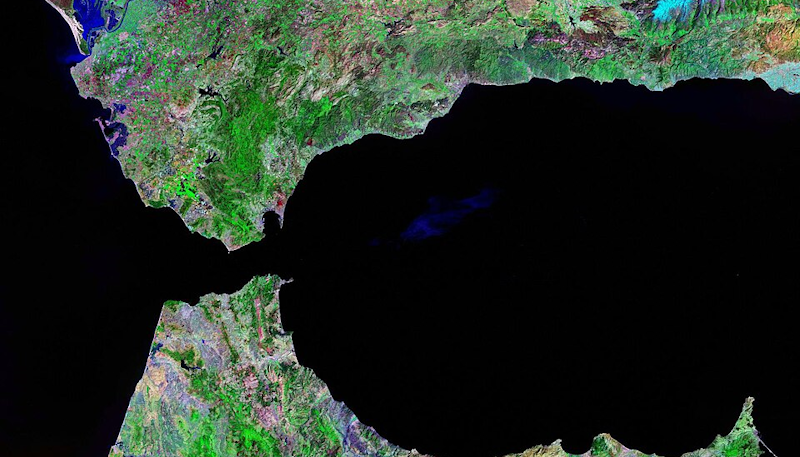
Recent diplomatic exchanges signal a marked shift in United States-Morocco relations, particularly regarding two longstanding territorial disputes: Ceuta and Melilla and the Western Sahara. While Washington previously maintained a neutral stance on the North African enclaves, emerging signals suggest a more accommodating approach toward Rabat’s claims.
This development follows a flurry of high-level interactions between the two governments, covering economic cooperation, regional security, and political alignment. The timing coincides with a sharp migration crisis in Ceuta, where tens of thousands crossed into the Spanish territory within 24 hours, overwhelming local authorities and triggering regional concern.
Analysts view these moves as part of a broader Moroccan strategy to secure sustained American backing across multiple fronts. The shift in Washington’s posture—especially on Ceuta and Melilla—could reshape the strategic landscape of the western Mediterranean and introduce new uncertainties in Euro-Atlantic relations.
The Western Sahara: A cornerstone of Moroccan diplomacy
In 2020, the United States became the first major Western power to recognize Morocco’s sovereignty over the Western Sahara, in exchange for Rabat’s normalization of ties with Israel. This diplomatic breakthrough was hailed as a turning point in a decades-old conflict between Morocco and the Polisario Front.
Six years later, Rabat is working to consolidate this advantage. Notable symbolic gestures include the renaming of a major highway in the Western Sahara—now dubbed the “Donald J. Trump Highway”—a clear nod to the former U.S. administration that first endorsed Morocco’s position.
“The goal is to ensure that Washington continues to support the Moroccan autonomy plan, especially as international negotiations on Western Sahara enter a critical phase,” said a regional analyst. For Morocco, maintaining American backing is essential to securing a favorable outcome in the conflict.
Economic incentives behind the strategic alliance
Beyond geopolitics, economic cooperation is playing a pivotal role in deepening U.S.-Morocco ties. In late July, the U.S. ambassador to Morocco visited Laâyoune, the capital of the Western Sahara, to finalize a landmark agreement. The deal paves the way for an American-funded facility to produce hydrogen and ammonia, reflecting Washington’s growing interest in securing lucrative energy and industrial contracts.
“This project underscores the Trump administration’s focus on investments that benefit American companies,” the analyst noted. The evolving partnership now rests on four pillars: political support for Morocco, economic opportunities for U.S. firms, regional security cooperation, and strategic alignment on Israel.
Congress turns focus to the Polisario Front
Another development has raised eyebrows among supporters of the Polisario Front. Two U.S. lawmakers recently introduced a bill proposing to review the possibility of designating the movement as a foreign terrorist organization. The proposal also calls for an investigation into alleged ties between the Polisario and Iran.
This initiative aligns with Washington’s broader campaign to counter Iranian influence in North Africa and the Middle East. While no concrete evidence links the Polisario to Iran or Hezbollah, Moroccan diplomats are leveraging the current anti-Iran sentiment in Congress to reframe the Western Sahara conflict in a way that resonates with U.S. priorities.
“Rabat is attempting to link its dispute with the Polisario to broader regional conflicts involving Israel,” the analyst explained. “By framing the issue through a security lens, Morocco hopes to gain more traction in Washington.”
Ceuta and Melilla: A new front in U.S.-Morocco relations
The most striking shift concerns the status of Ceuta and Melilla—Spanish territories long considered non-negotiable by Madrid. Recent statements from U.S. officials suggest a subtle but significant departure from this position.
“Washington has signaled, albeit indirectly, that it no longer views Ceuta and Melilla as indisputably Spanish territory,” the analyst said. “This represents a shift that could embolden Morocco’s territorial claims and strain relations between the U.S. and Spain.”
For decades, Morocco has asserted sovereignty over the two enclaves, while Spain maintains they are integral parts of its national territory. An American endorsement of Rabat’s position would mark a dramatic departure from decades of U.S. policy and could reopen a dormant territorial dispute.
Ceuta’s migration surge: A deliberate pressure tactic?
The timing of the recent migration crisis in Ceuta has intensified speculation about Morocco’s role. Within a single day, nearly 50,000 migrants crossed the border, overwhelming Spanish security forces and drawing condemnation from the European Union.
While some analysts argue the influx was spontaneous, others suggest it was facilitated—and then politically exploited—by Moroccan authorities. The crisis served as a stark reminder to Madrid that the status of Ceuta remains a live issue in Rabat’s foreign policy calculus.Spain’s strategic dilemma: Navigating a shifting alliance
Faced with this evolving reality, Spanish Prime Minister Pedro Sánchez traveled to Algeria—the Polisario’s main regional ally—to strengthen bilateral ties, particularly in energy. While the move may raise eyebrows in Rabat, analysts note it does not fundamentally alter Spain’s support for Morocco’s autonomy plan for Western Sahara.
The Ceuta crisis, however, reflects a different dynamic: a lingering territorial dispute that predates current diplomatic tensions. For Spain, the challenge is clear: if the United States were to formally side with Morocco on Ceuta and Melilla, the country’s strategic security architecture—built on NATO and transatlantic alliances—could face unprecedented strain.
Uncertainty ahead: Could Ceuta and Melilla be renegotiated?
The evolving U.S.-Morocco partnership raises pressing questions about the future of the two enclaves. While a sudden crisis is unlikely, the current trajectory introduces the possibility of a future political renegotiation of their status.
“The sovereignty of Ceuta and Melilla could eventually be reopened for discussion,” the analyst warned. “This is not imminent, but the groundwork is being laid for a long-term shift in how the issue is perceived.”
A new power equation in North Africa
Behind the diplomatic maneuvering, a new power dynamic is taking shape in North Africa. Morocco is leveraging its strategic partnership with the U.S. to advance its claims on both Western Sahara and the northern enclaves. Washington, in turn, appears to prioritize its economic and security interests, while Spain grapples with a less predictable transatlantic ally.
For Rabat, the moment presents an opportunity to consolidate its regional influence. For Madrid, it signals a strategic challenge unlike any in recent memory. The convergence of the Western Sahara and Ceuta disputes under the umbrella of U.S.-Morocco relations could redefine the geopolitical map of the western Mediterranean—and test the resilience of long-standing alliances.