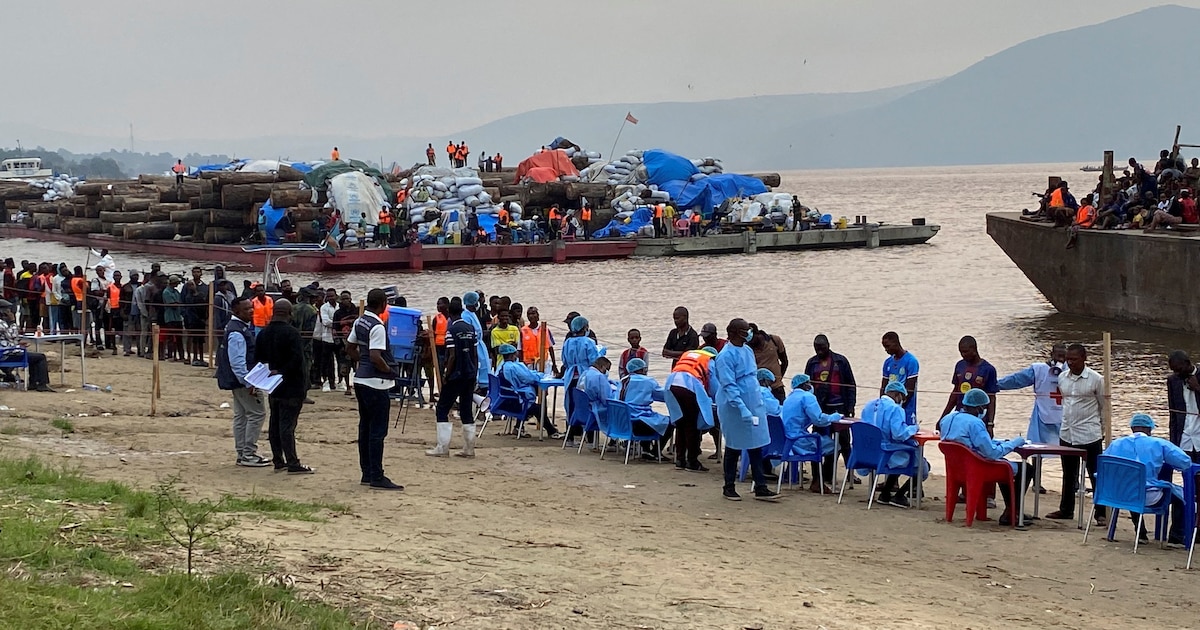
Ebola continues to surge unchecked in the Democratic Republic of Congo (DRC), defying all containment efforts. Recent assessments confirm the situation remains dire, with transmission rates showing no signs of decline. Officials reported on August 5th that the outbreak, now the second-deadliest in history, has claimed at least 1,850 lives out of nearly 4,000 confirmed cases—a staggering fatality rate exceeding 40%. This outbreak’s rapid escalation marks it as the most aggressive of its kind, surpassing even the devastating 2018–2020 epidemic in both speed and severity.
Bundibugyo strain drives unprecedented devastation
The virus responsible, the Bundibugyo ebolavirus, has proven far deadlier than previous outbreaks of the same strain. According to Africa CDC data, this flare-up has already caused more fatalities in a fraction of the time compared to earlier occurrences. During the 2018–2020 outbreak in the DRC, it took over ten months to reach a similar death toll. “We cannot claim full control over this epidemic at this stage,” admitted Africa CDC Director General Jean Kaseya in late July, underscoring the gravity of the crisis.
A region torn apart by violence hampers response efforts
The eastern DRC, particularly the Ituri province—ground zero for the outbreak—has become a battleground for armed groups, including Uganda-based ADF militants and local militias. These clashes, fueled by competition for land, minerals, and influence, have displaced millions, creating dire humanitarian conditions. The neighboring North Kivu province faces its own challenges, with large areas under the control of the M23 rebel group, a proxy force linked to neighboring Rwanda, following clashes with Congolese forces over a year ago.
Beyond the security crisis, weak epidemiological surveillance and insufficient diagnostic capacity at the outbreak’s onset allowed the virus to spread undetected. Contact tracing—a critical tool in halting transmission—has fallen critically short. Médecins Sans Frontières reports that in Bunia, the outbreak’s epicenter, 90% of admitted patients were not part of any tracked contact network. Across Ituri, only 59% of contacts have been monitored, far below the Africa CDC’s recommended coverage. For every confirmed urban case, approximately 40 contacts should be traced, but current efforts reach only 13% of the target—17,500 out of a projected 134,400. Compounding the issue, one in five tracked individuals fails to receive regular follow-ups due to staffing shortages or violence. Shockingly, 60% of fatalities occurred in communities rather than healthcare facilities, highlighting the breakdown in containment measures.
Scientific progress offers limited hope amid delays
Amid the crisis, researchers are racing to develop solutions. Oxford University launched the first clinical trial for a Bundibugyo ebolavirus vaccine this month, with a small group of volunteers receiving doses to assess safety. The Coalition for Epidemic Preparedness Innovations (CEPI) is also funding a separate vaccine candidate developed by Singapore’s Hilleman Laboratories, aiming for rapid production and testing in the DRC.
In the absence of a tailored vaccine, Africa CDC announced plans to deploy the existing Zaïre strain vaccine—despite its different variant—after evidence showed it prevents severe illness and death in vaccinated individuals. Additionally, over 40 patients are participating in early trials combining multiple treatments. Jean Kaseya also proposed expanding the use of remdesivir, an antiviral drug, citing Uganda’s success in curbing a related outbreak. “Uganda’s 10% fatality rate is largely due to widespread remdesivir use for patients and contacts,” Kaseya noted. Health authorities warn this outbreak could soon surpass the West Africa epidemic of 2014–2016—the deadliest on record with over 11,000 fatalities.
International aid arrives too late to reverse the tide
The delayed global response has further exacerbated the crisis. Early in 2025, USAID’s decades-long medical and health assistance to the DRC was abruptly halted, leaving the country vulnerable. It wasn’t until August 5th that the U.S. State Department announced a $242 million pledge, bringing total American aid for Ebola response to $512 million. While this funding will finally enable the WHO and Africa CDC to implement a six-month response plan costed at $518 million, critics argue it falls far short of past humanitarian investments. The U.S. remains the largest contributor to the Ebola response, outpacing other donors like the European Union.