
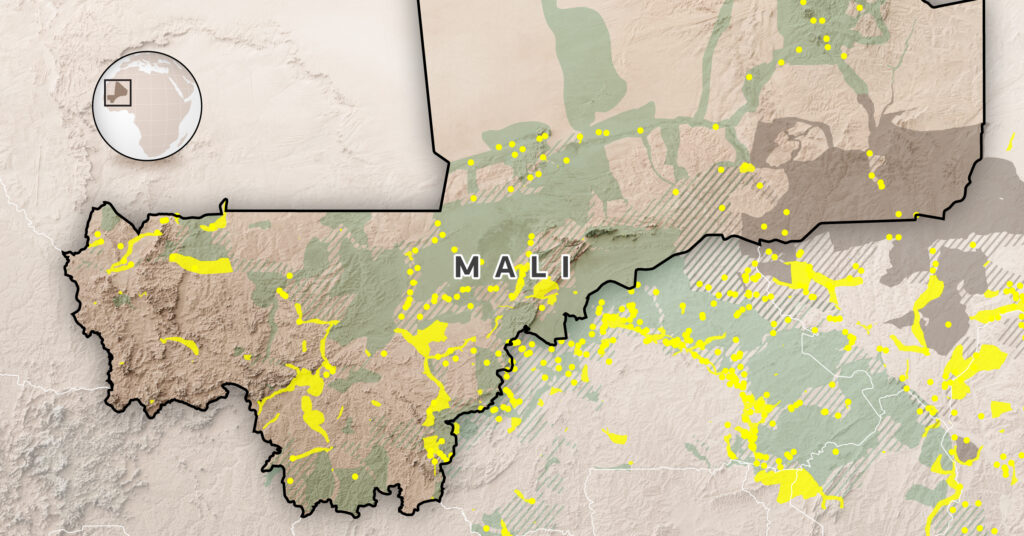
escalating militant violence threatens west africa’s stability
Coordinated assaults on April 25 by Islamist factions and separatist groups across Mali exposed the expanding influence of militant networks in West Africa. The attacks, which targeted military installations and urban centers including the capital Bamako, marked a significant escalation in the region’s security crisis.
militant groups extend their reach
Despite international interventions since 2013, including deployments by French, U.S., UN, and Russian forces, militant groups such as JNIM (linked to al Qaeda) and ISSP (affiliated with the Islamic State) have continued to gain ground. These factions have not only strengthened their presence in Mali but have also extended operations into neighboring Burkina Faso and Niger, while forming alliances with militants in northern Nigeria.
Their operational footprint now spans over 3,000 kilometers—from western Mali near Senegal through Nigeria to Chad. This vast territory underscores the growing threat these groups pose to regional stability and economic security.
key militant factions and their leaders
-
JNIM (Jama’at Nusrat al-Islam wal-Muslimin)
- Leader: Iyad Ag Ghaly
- Background: A veteran of Tuareg rebellions in the 1980s and 1990s, Ag Ghaly emerged as a key figure in Mali’s desert north. By 2012, he led the Ansar Dine group, advocating for Islamic law in northern Mali. In 2017, he consolidated several Islamist factions under JNIM.
- Status: Wanted by the International Criminal Court for alleged war crimes.
-
Azawad Liberation Front (FLA)
- Leader: Bilal Ag Cherif
- Background: A longtime figure in the Tuareg separatist movement, Ag Cherif led a 2012 uprising to establish an independent state in northern Mali. Though initially allied with Islamist factions, the FLA later signed a peace deal with the government in 2015, which collapsed after a military takeover.
- Recent Actions: The group has recently re-aligned with Islamist militants, contributing to the April 25 offensive.
-
ISSP (Islamic State – Sahel Province)
- Leader: Abu al-Bara al-Sahrawi
- Background: ISSP originated from Islamist factions that seized northern Mali in 2012. It now operates along the borders of Mali, Burkina Faso, and Niger, governing some areas and competing with JNIM.
- Conflict: The group has clashed hundreds of times with rival factions since 2019, resulting in over 2,100 deaths, according to ACLED data.
-
Africa Corps (Russian-backed forces)
- Background: Following the withdrawal of Wagner Group mercenaries in 2025, Russia shifted its military support to Africa Corps, a Kremlin-controlled paramilitary force. Most of its members were former Wagner fighters.
- Current Role: Approximately 2,500 Russian troops are deployed across 20 bases in Mali, though hundreds have withdrawn from northern bases following the April 25 attacks.
military government under pressure
The Mali military government, led by Assimi Goita since 2021, faces mounting challenges. Goita, who rose to power through two successful coups, has delayed elections, citing the need to secure the country first. Following the April attacks, he vowed to “neutralize” those responsible, though the situation remains volatile.
economic and humanitarian consequences
The spread of militant violence has disrupted critical industries, including mining operations for gold, lithium, and uranium. Major mines in Mali, Burkina Faso, and Niger are increasingly at risk, threatening regional economic stability. Additionally, over four million people have been displaced by the conflict, exacerbating humanitarian crises.
UN Secretary-General António Guterres warned in November that terrorism in the Sahel is evolving into a global threat, with militant groups forming progressive links beyond Africa. He emphasized the need for enhanced regional cooperation to counter this growing menace.
regional spillover and future risks
As Islamist factions consolidate control in rural areas, they have expanded their influence into countries like Benin, Togo, Ghana, and Ivory Coast. The long-standing insurgency in northeastern Nigeria has transformed into the Islamic State’s most dangerous affiliate in Africa, linking up with other jihadist groups across the Sahel.
Experts caution that if these groups shift their focus from consolidating regional power to broader strategic goals, they could pose a significant threat to Europe and the United States.
More Stories
Mali honors former defence minister Sadio Camara with state funeral
Rising militant attacks in Mali expose junta security failures
Niger’s strategic pivot to russian fertilizer aid amid sovereignty debates