
On Thursday, Mali observed a state funeral for the country’s former defence minister, General Sadio Camara. This event served as a profound moment of national mourning while highlighting a critical juncture for the political stability of Mali and the broader security framework of the Sahel region.
General Sadio Camara lost his life during a massive, coordinated strike over the weekend. The assault, executed by jihadist insurgents alongside Tuareg allies, targeted several military installations and is being described as the most significant security breach in the last decade.
Following a 48-hour period of national tribute, the funeral was televised across the nation. The ceremony was attended by the head of the junta, Assimi Goïta, and several top-tier military commanders. During the military-style procession, Camara’s casket was wrapped in the national flag, accompanied by large-scale portraits of the late general.
Historically, Camara was a cornerstone of the Malian military hierarchy. He was instrumental in pivoting the nation’s security strategy toward Russia, establishing Moscow as a key ally following the coup that installed the current military administration.
Consequences for security and governance
The passing of Sadio Camara represents more than just a loss for the Malian state; it is a strategic blow that may alter the internal dynamics of the junta and its international partnerships.
The sudden removal of such a dominant figure could trigger shifts in the internal power structure of the ruling government. Observers suggest that this battlefield setback, involving both the Malian army and Russian-affiliated personnel, might lead to several critical developments:
- Internal friction within the governing junta
- A potential review of the strategic partnership with Moscow
- Adjustments in military cooperation with the Russian Armed Forces
- Changes in the operational focus of the Alliance of Sahel States
These shifts have implications far beyond Bamako. Mali’s transition from French influence toward a Russian alliance has redefined security protocols across the Sahel, particularly in regions where separatist movements and insurgencies persist:
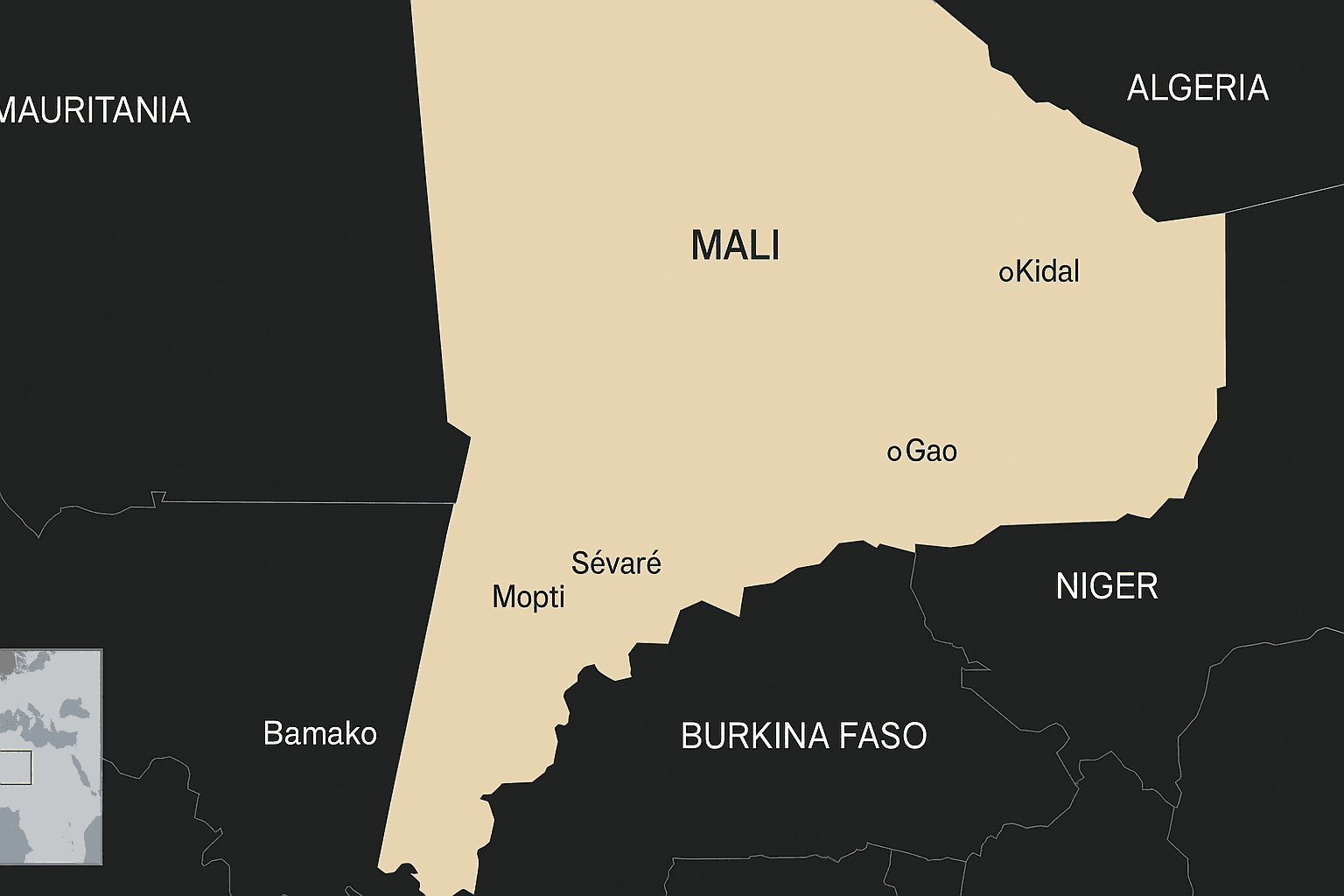
- Gao
- Mopti
- Sévaré
- Kidal
- Other vital strategic sectors
The recent surge in violence demonstrates the persistent capabilities of groups like Jama’at Nasr al-Islam wal-Muslimin and various Azawad-linked factions. The involvement of the Azawad Liberation Front has reignited anxieties regarding northern separatism, specifically concerning Kidal and the broader Azawad territory.
The military trajectory of Sadio Camara
Born in 1979 in the town of Kati, Camara met his end in the same garrison city when a vehicle-borne improvised explosive device (VBIED) detonated at his home on Saturday. The choice of target was highly symbolic, as Kati is a historic epicenter of military influence and power near Bamako.
Kati is not merely a birthplace; it is a politically charged military hub where officers have traditionally launched movements that reshape Malian governance. Camara’s rise within this environment explains his deep-seated influence and why his death there resonates so strongly within the armed forces.
During the late 2000s, he served as a field officer in northern Mali during a period of escalating rebellions. After graduating from the military academy, his career included specialized training in Russia, a factor that likely influenced his later preference for Moscow as a defense ally.
Camara gained national prominence in August 2020. He was one of the five core colonels who appeared on television to announce the ousting of President Ibrahim Boubacar Keita. The group justified the coup by claiming Keita’s administration, supported by France, had failed to protect the country from militant threats.
From the 2020 coup to the Russian partnership
In the wake of the takeover, the new leadership moved to replace French military support and United Nations peacekeepers with Russian security assets. Camara was the primary architect of this geopolitical realignment, which fundamentally changed Mali’s international standing.
He held the position of defence minister through two consecutive military-led governments, maintaining his role after the second power shift in May 2021 that solidified Assimi Goïta’s leadership. His death occurs at a time of mounting pressure, with challenges ranging from deteriorating security to internal command disputes and the ongoing struggle for control over regions like Azawad and Kidal.
While the state funeral and military parades suggest a sense of continuity, the underlying political landscape remains volatile. The loss of Sadio Camara could be a transformative moment for Bamako’s defense doctrine and the future of its alliances across the Sahel, from Gao to Sévaré.
More Stories
Is Chad truly heading towards political appeasement?
Bradley Barcola will adapt faster than Florian Wirtz at Liverpool, says Jermaine Pennant
Togo eyes nuclear power to secure future energy sovereignty