coordinated militant attacks in Mali challenge junta authority
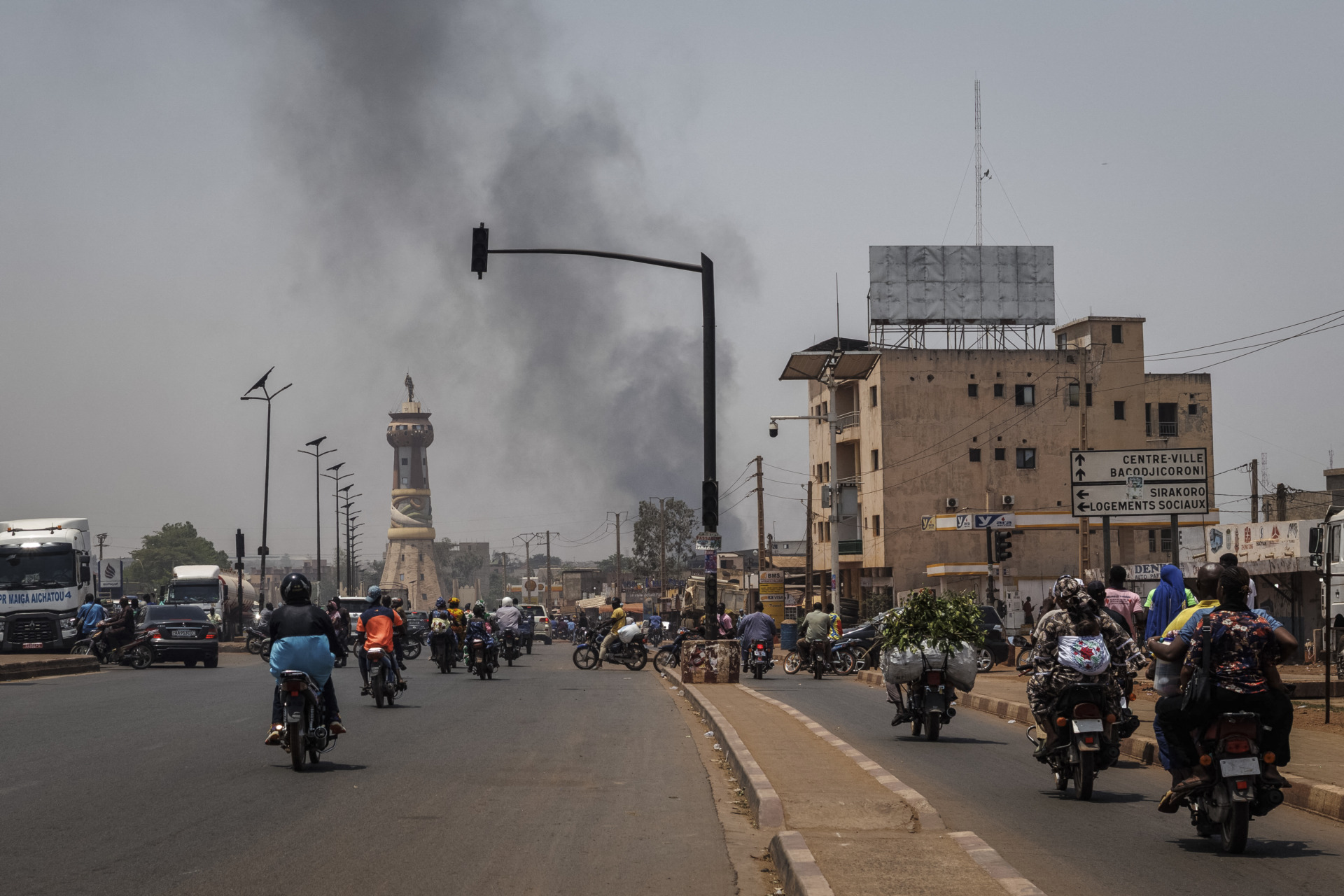
in the early hours of april 25, simultaneous explosions and gunfire erupted near kati, a strategic military town 15 kilometers northwest of Bamako. within hours, coordinated attacks by the jihadist group for the support of islam and muslims (jnim) and the tuareg separatist front de libération de l’azaouad (fla) had spread across Mali, targeting key locations including Kidal, Gao, and kita. by april 26, defense minister sadio camara was declared dead from injuries sustained during the assault on his residence, while rumors swirled about the possible death or severe injury of intelligence chief modibo koné. despite official claims of control, the attacks laid bare the stark divide between junta rhetoric and ground reality.
the offensive represents the most direct threat to assimi goïta’s leadership since his 2020 coup, occurring at a time when the military regime’s credibility was already eroding. jnim’s months-long blockade of landlocked Mali—implemented last september—has crippled fuel and food imports from Senegal and Côte d’Ivoire, forcing nationwide school closures and economic paralysis. recent concessions, including the disputed release of over 100 jnim prisoners, failed to restore stability, underscoring the junta’s inability to secure even temporary relief.
a coalition of convenience: jihadists and separatists
the alliance between jnim and the fla mirrors a similar coalition in 2012, when jihadist factions and tuareg separatists briefly united to overthrow malian forces in the north. that coalition, forged from returning libyan fighters and al-qaeda in the islamic Maghreb (aqim) affiliates, ultimately fractured as jihadists turned on their tuareg partners. today’s alliance appears tactical rather than strategic, with both groups exploiting the junta’s weaknesses to undermine state authority. while their long-term goals diverge, their short-term coordination signals a shared intent to expose the malian state’s vulnerabilities.
for jnim, the offensive is part of a broader strategy of attrition, designed to exhaust the junta’s resources and erode public confidence in its rule. the group’s growing capabilities—now extending to drone warfare and economic sabotage—have transformed it into a multifaceted threat that transcends traditional battlefield limitations.
Russia’s shifting role in malian security
general camara, the slain defense minister, was the architect of Mali’s pivot to Moscow, overseeing the deployment of the Wagner group in 2021. this move facilitated the expulsion of french troops in 2022 and the withdrawal of the un peacekeeping mission in 2023. however, the rebranding of Wagner as africa corps under russian defense ministry control has shifted the group’s mandate from combat operations to advisory and training roles. with personnel diverted to Ukraine, africa corps’ operational capacity has plummeted, contributing to the humiliating withdrawal from Kidal in the wake of the april 25 offensive.
the contrast between Wagner’s frontline combat role and africa corps’ current limitations highlights a critical failure of the junta’s russian partnership. what once promised to bolster malian security now appears increasingly hollow, leaving the regime vulnerable and its legitimacy further diminished.
regional implications and the future of junta-led security
the alliance of Sahel states (AES)—comprising Mali, Burkina Faso, and Niger—has marketed itself as a viable alternative to western security partnerships. yet the recent attacks in Mali have exposed the fragility of this model. the AES juntas, which expelled western partners and withdrew from ECOWAS, now preside over a security environment more precarious than the one they inherited. the failure to stabilize Mali risks emboldening dissent within their own ranks, as seen in the foiled coup attempt in Bamako last august.
with goïta’s grip on power increasingly tenuous, the junta’s reliance on russian support may no longer provide the insurance it once promised. the recent offensive has forced a reckoning: can the junta adapt, or will it face further internal fractures and external pressure?
u.s. leverage and the minerals-for-security equation
for nearly a decade, Mali served as the epicenter of u.s. counterterrorism efforts in the Sahel. successive coups triggered the suspension of most western aid, but recent signals suggest a potential shift in u.s. policy. treasury sanctions on senior malian officials were lifted in february, and discussions are underway to explore intelligence-sharing, drone overflight permissions, and access to critical minerals like lithium and gold. the recent offensive may accelerate these negotiations, offering Washington new leverage to re-engage with the junta.
the parallels with the democratic republic of the Congo’s minerals-for-security deal with the u.s. are striking. as the junta’s russian partnership falters, Washington may find itself in a position to shape Mali’s future—if it can navigate the complex web of regional alliances and internal divisions.