The UEFA’s Bold Stand Against FIFA’s Privatization Plans
The football world is witnessing an unprecedented institutional crisis after the UEFA, representing 55 European football associations, announced an immediate and indefinite boycott of all FIFA-organized tournaments. This historic decision follows FIFA’s controversial proposal to open the ownership and commercial rights of major competitions, including the World Cup, to private investment funds—a move seen as a direct threat to the sport’s integrity.
A Breakdown in Relations Between Nyon and Zurich
The announcement marks a dramatic escalation in long-simmering tensions between European football’s governing body and its global counterpart. In a decisive move, the UEFA’s member federations voted unanimously to suspend their participation in FIFA competitions until the privatization plans are scrapped. From France to Germany, Spain to England, and Italy to the Netherlands, Europe’s football powerhouses have rallied behind this stance, signaling a united front against what they describe as the commodification of the world’s most prestigious sporting event.
The crux of the disagreement lies in FIFA’s push to bring in external investors to manage and profit from the World Cup and other flagship tournaments. Critics argue that this shift would prioritize financial returns over the sport’s traditional values, introducing a profit-driven governance model that could reshape football’s future.
The World Cup Under Threat: A Heritage at Risk
In its official statement, the UEFA vehemently rejected the idea of treating the World Cup as an investment opportunity. The tournament, built over generations by players, national teams, and fans worldwide, is not a commodity to be sold to the highest bidder. The European body condemned FIFA’s approach as opaque and intimidating, accusing the Zurich-based organization of imposing an ultimatum on federations: comply with the changes or face disciplinary action.
The potential consequences of this shift are far-reaching. Introducing private investors would impose relentless financial demands, including regular profit distributions, which could lead to overloaded schedules, player burnout, and a loss of sporting fairness. Decisions about tournament structure, player welfare, and competition integrity would no longer be guided by sporting merit but by financial imperatives—posing an existential threat to football’s soul.
Global Ramifications of Europe’s Withdrawal
The boycott sends shockwaves through the football landscape. A World Cup without Europe’s elite teams would lose much of its prestige, weakening the tournament’s global appeal. Economically, the impact could be devastating, as Europe accounts for the largest share of broadcasting rights and sponsorship revenue. The absence of top European stars and clubs would likely deter broadcasters and sponsors, risking the financial viability of FIFA’s competitions.
Beyond the World Cup, the standoff risks derailing international football’s calendar. Issues such as player release for national teams, coordination between club and country competitions, and fixture scheduling remain unresolved, leaving the future of global football in limbo.
A Political Standoff with Unpredictable Outcomes
This clash is the culmination of years of friction between the UEFA and FIFA, from disputes over World Cup frequency to disagreements on financial revenue distribution. The European body has now set strict conditions for any resolution: FIFA must abandon its privatization plans and provide legally binding assurances to prevent future commercialization of the World Cup.
The ball is now in FIFA’s court. The organization faces a stark choice: backtrack on its commercial ambitions or proceed with a fragmented football world, risking the devaluation of its premier competitions. The outcome will determine whether football remains a sport governed by passion and tradition or succumbs to the pressures of global finance.
Defending Football’s Core Values
By taking this stand, the UEFA positions itself as a guardian against the commercialization of elite sports. The move raises a critical question: how far can football go in pursuit of profit before losing its essence? The coming days will be decisive, with global football’s future hanging in the balance. One thing is certain—the power struggle has begun, and the sport’s landscape may never be the same.
More Stories
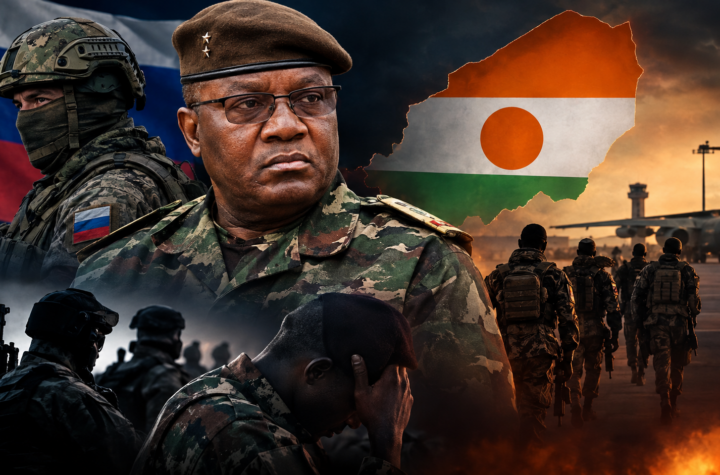
Niger’s August crisis: how Tiani’s reliance on Russia exposed deeper fractures in the military
Burkina Faso’s military push raises urgent questions amid mass displacement crisis
Behind the three-day delay: what really delayed Senegal’s 2026 revised budget bill