“Le chaos sécuritaire favorise un projet géopolitique”
The government of the Democratic Republic of Congo recently announced a protocol signed with the Democratic Forces for the Liberation of Rwanda (FDLR), aimed at the disarmament, demobilization, and cantonment of these Rwandan rebels operating in eastern DRC. However, Rwanda has swiftly rejected this initiative, labeling it a “dilatory maneuver.” For decades, the DRC and Rwanda have been at odds over the FDLR, a group whose members are accused of involvement in the 1994 Rwandan genocide. Kigali consistently views the FDLR as a significant threat, an argument it employs to justify the deployment of its army in eastern DRC, where they operate alongside the AFC-M23 rebels.
Last year, agreements forged in Washington stipulated that Rwanda would withdraw its forces, while Kinshasa committed to neutralizing the FDLR. The stark contrast between these two neighboring nations today begs for an explanation.
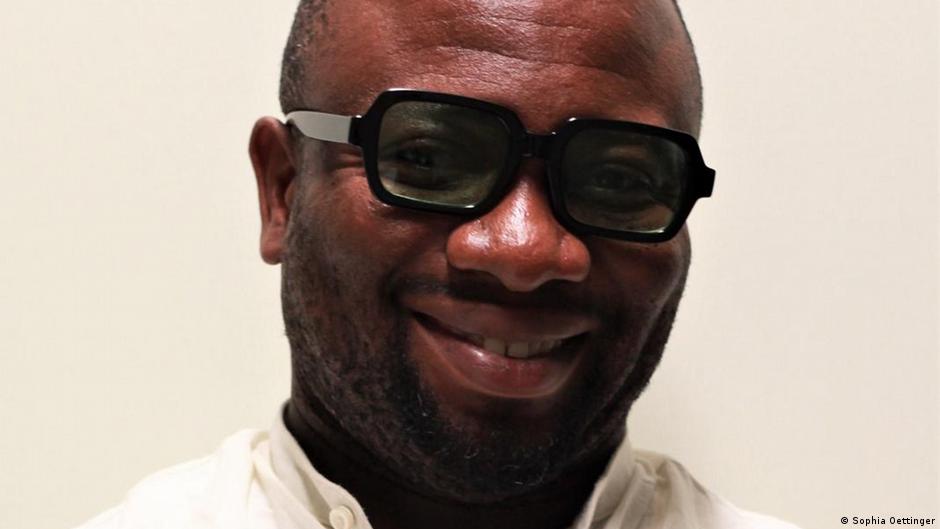
The researcher Josaphat Musamba, a doctoral candidate at the University of Ghent in Belgium, offers his insights:
Josaphat Musamba states that Kigali has dismissed the sensitization process and rejected the formula of persuasion. He believes Kigali is acting in bad faith. What is its ultimate goal? Despite its military presence in operational zones, Musamba suggests that the current status quo in eastern Congo benefits Kigali, which aims to solidify its position. Rwanda’s geostrategic ambitions in eastern Congo remain opaque.
What is the true nature of the FDLR’s presence in eastern DRC, and what underpins their continued existence on Congolese territory?
Musamba asserts that while Kigali and the AFC/M23 claim the FDLR are an integral part of the FARDC (Congolese armed forces), empirical evidence contradicts this. He finds it surprising that the allies, AFC/M23 and RDF (Rwanda’s official army), appear incapable of fully neutralizing the FDLR within their areas of operation. For Musamba, the security chaos deliberately established in eastern Congo serves a broader geopolitical agenda for Kigali. By contributing to the fragmentation of administrative entities in eastern Congo, Kigali is actively extending its influence across this vital region. This ongoing dynamic is a key focus in current African politics, highlighting the complex interplay of regional powers.
Kigali argues that the protocol between Kinshasa and the FDLR fails to meet the requirements of the Washington accord, offering no guarantees for the dismantling or neutralization of the FDLR. Is it possible for the FDLR to disappear entirely, paving the way for lasting peace between Rwanda and the DRC?
Musamba contends that Rwanda’s argument lacks factual basis. The DRC has opted for persuasion over military confrontation with the FDLR, an approach tailored to the specific context. In his view, Kinshasa’s strategy is pragmatic; it cannot afford to open a second or third front with the FDLR while simultaneously containing the RDF and M23. He believes that dialogue could indeed lead to the disappearance of the FDLR as an armed group. However, he distinguishes this from the FDLR as an ideology of resistance against the Kigali regime, which he clarifies is not genocidal, contrary to claims by Rwandans and the M23. This ideological struggle, a crucial aspect of Africa news, suggests a more enduring challenge to regional stability.


More Stories
Behind the Bambali agro-industrial park launch: what Sonko and Mané’s vision reveals about Senegal’s rural transformation
Senegal’s upcoming local elections: what is Diomaye Faye hiding about the 2027 vote?
Senegal’s shadow budget: why unchecked special funds drain public trust and budgets