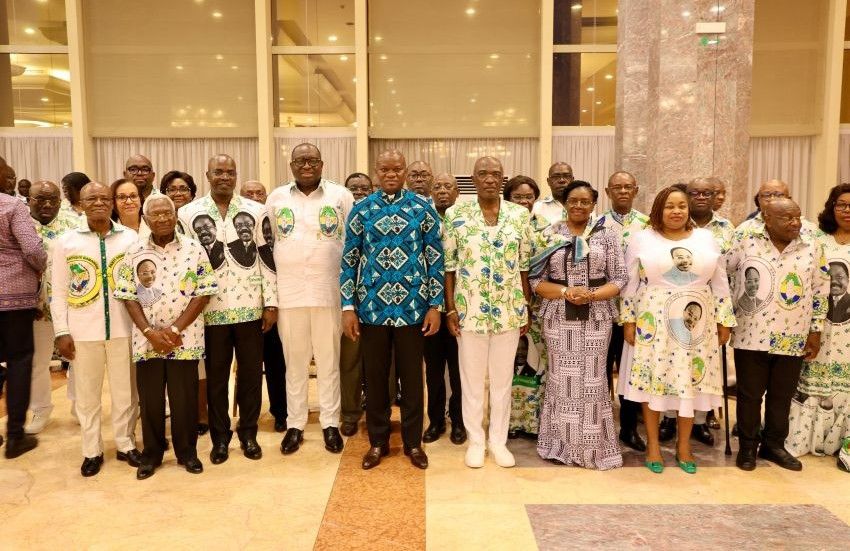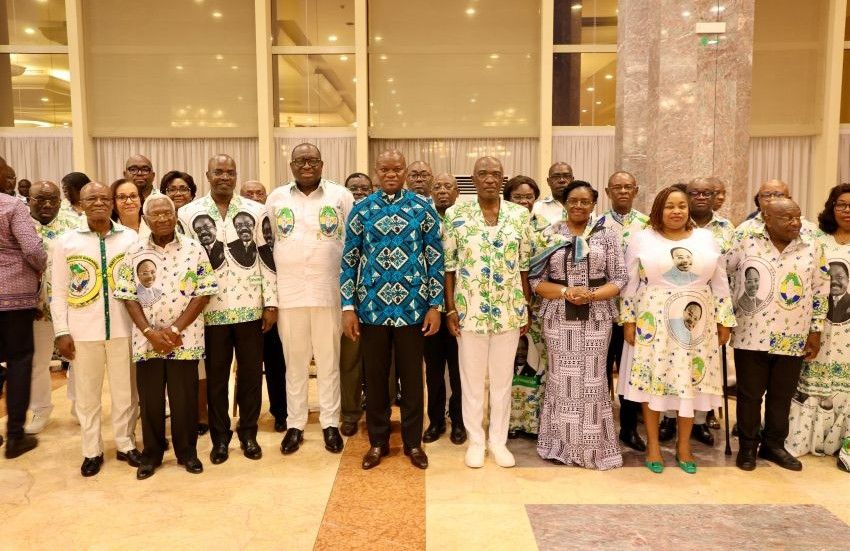
Libreville, October 31, 2026 — Three years after losing power following a decades-long grip on Gabonese politics, the Gabonese Democratic Party (PDG) returned to the Presidential Palace in a pivotal meeting. Yet beneath the formalities of a presidential audience and the imposing delegation led by Blaise Louembé, a pressing question lingers: can a party fractured by competing visions truly reunite? The stakes are high as Gabon’s political landscape continues to shift in the wake of last year’s transition.
Public debate erupts as PDG leadership seeks unity ahead of crucial congress
The PDG’s meeting with President Brice Clotaire Oligui Nguema on October 30 came at a critical juncture, just weeks before a landmark party congress. With internal divisions deepening between factions loyal to Blaise Louembé and those still aligned with Ali Bongo Ondimba, the gathering at the Presidential Palace took on symbolic weight far beyond routine political courtesy.
The party, which once held uninterrupted power for over half a century under Omar Bongo Ondimba’s leadership, now faces existential questions about its future. Two competing interpretations of its legacy have emerged, one led by Louembé and another by supporters of the former president, Ali Bongo. Despite sharing a common origin, these factions remain divided over governance, direction, and relations with the transitional government. As the party attempts to redefine its role in Gabon’s new political order, the risk of fragmentation grows.
Louembé emphasizes the weight of history amid political fractures
Speaking before the head of state, Blaise Louembé framed the PDG’s current challenges within Gabon’s recent upheavals. He referenced the tensions that arose after the National Inclusive Dialogue, during which calls were made to suspend or dissolve political parties—with the PDG particularly targeted. Louembé acknowledged the transition government’s choice to prioritize dialogue and national reconstruction, stating, “Since the Transition began, we have supported the President of the Republic, the Head of State, and today we reaffirm our position.”
His remarks underscore a strategic effort by Louembé’s faction to align the PDG with the transitional leadership. Yet this gesture does little to resolve internal disputes over the legitimacy of the party’s current leadership and the preparation of its upcoming congress. A faction loyal to Ali Bongo Ondimba continues to challenge the process, demanding reunification and questioning the transparency of the congress’s organization. The presidential audience, while significant, does not signal an internal reconciliation already achieved.
Oligui Nguema urges the PDG to prioritize national cohesion
President Oligui Nguema responded with a message centered on peace, dialogue, and national unity—a theme he connected to the legacy of Omar Bongo Ondimba. Reflecting on his personal relationship with the late former president, from 2003 until his passing, Oligui emphasized values of simplicity, tolerance, and dialogue. “Gabon does not need division. Gabon needs to live together,” he declared, urging party leaders to place national interest above partisan strife.
Beyond political unity, the head of state addressed the issue of seized assets linked to alleged corruption. He proposed redirecting a portion of funds recovered from such assets—often tied to foreign legal proceedings—to Gabonese citizens, particularly youth, rather than allowing all proceeds to flow to foreign states like France. This stance introduces a powerful discourse on sovereignty and justice, framing the debate over asset recovery within a broader struggle for national dignity.
A November congress will test the PDG’s survival
The October 30 meeting also focused on preparations for the PDG’s 13th Ordinary Congress, scheduled for November 27–29. While President Oligui Nguema expressed readiness to support the process, institutional backing alone cannot resolve the party’s deep-seated divisions. The congress must do more than formalize a leadership structure—it must forge a shared vision capable of uniting rival factions.
The PDG’s survival hinges on its ability to move beyond symbolic appeals to Omar Bongo’s legacy and instead articulate a clear, inclusive path forward. With Gabon’s political environment fundamentally transformed since August 2023, the party’s future success will depend not on reciting history, but on crafting a compelling vision for the nation’s next chapter. Whether it can bridge its internal rifts in time to present a unified front remains the defining question of this critical moment.