
Gabon harnesses science to boost food security and cut imports
Libreville — In a bold move to secure its food future, Gabon is turning to science as the cornerstone of its economic strategy.
The country is racing to slash its heavy reliance on food imports and phase out foreign poultry by 2027. But this battle is not being fought in crowded markets or at bustling ports—it is unfolding in the experimental fields of the Centre national de la recherche scientifique et technologique (CENAREST) in Kougouleu.
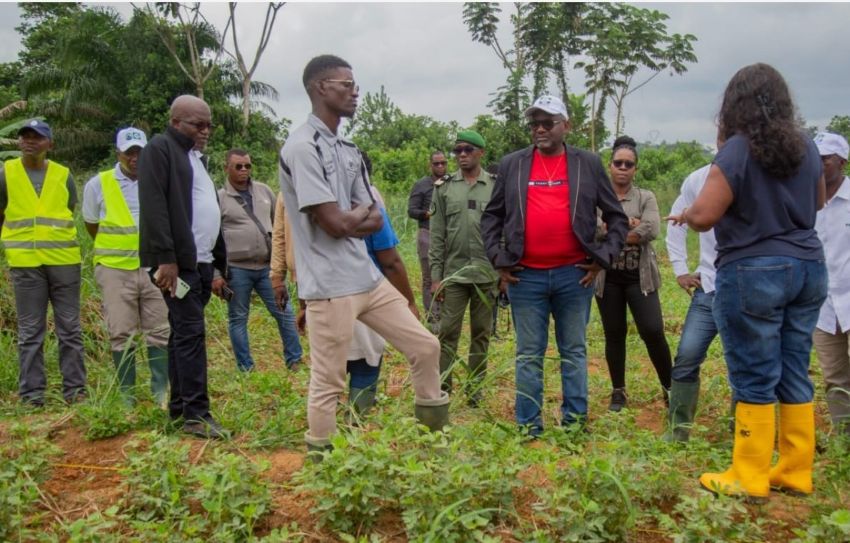
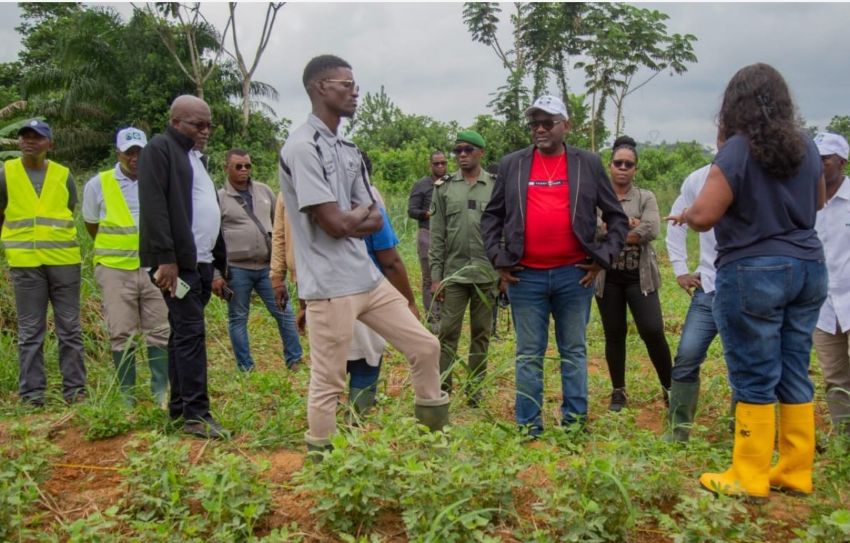
The visit by Charles Edgar Mombo, Minister of Higher Education, Scientific Research and Government Spokesperson, to these fields was more than a routine inspection. It highlighted a new direction where research is no longer just about discovery—it is about driving economic transformation and national sovereignty.
With food imports still draining a significant portion of the national budget, Gabon is recognizing that producing its own feed ingredients—especially for poultry—is as vital as managing its mineral and energy resources.
Research as a driver of self-sufficiency
The government’s goal is clear: build a robust local poultry sector that meets national demand while steadily reducing reliance on imports.
At the heart of this plan is animal feed—specifically maize and soybeans, the backbone of industrial poultry diets. As long as these inputs are largely imported, the industry’s resilience remains fragile.
Researchers at CENAREST are tackling this challenge head-on. They are testing 11 maize varieties under Gabon’s unique soil and climate conditions to identify the best-performing seeds for local cultivation.
The stakes go beyond simple crop yields. The team is selecting varieties that can consistently produce high volumes to sustain a growing national poultry industry.
Meanwhile, 11 soybean varieties have been introduced through partnerships with research centers in Malawi. Additional trials are underway in the Nyanga province, particularly in Tchibanga, to assess performance across different ecosystems.
This shift marks a turning point. Research, once seen as a distant academic pursuit, is now a key player in national development.
A vision for an integrated agricultural sector
The government’s strategy is built on a clear principle: produce feed inputs locally to cut production costs and boost the competitiveness of Gabonese farmers.
This approach mirrors a broader trend across Africa, where rising food import bills have exposed vulnerabilities in many economies. International institutions have long warned that over-reliance on imports is a major risk to continental food security.
Gabon, however, is well-positioned to lead by example. Its fertile land, abundant water resources, and favorable climate make it ideal for growing a variety of crops.
Minister Mombo’s visit underscored the progress already made. He praised the dedication of researchers and emphasized how the national higher education system is aligning with the strategic priorities set by President Brice Clotaire Oligui Nguema.
Beyond agriculture, this is a political statement: science is no longer confined to labs—it is now a direct contributor to national priorities.
Building food sovereignty one experiment at a time
The early results are promising, but major challenges remain.
Scientists stress the need to expand experimental plots to improve trial quality and increase production volumes. Translating research into industrial-scale farming is often the most difficult phase.
Funding remains a critical hurdle. Modernizing agriculture requires heavy investment, modern infrastructure, accessible financing, and better-organized value chains.
Yet, for the first time in years, Gabon appears to be connecting research, agriculture, industry, and economic sovereignty into a unified strategy.
The minister’s visit to Kougouleu symbolizes a paradigm shift. Under the new vision, food independence will not come solely from policy or investment—it will be forged in laboratories, research centers, and through scientific innovation.
If targets are met by 2027, Gabon could prove that in Africa, food sovereignty is built as much by researchers as by farmers—a quiet but potentially transformative shift for the country’s economic future.



More Stories
Is Chad truly heading towards political appeasement?
Bradley Barcola will adapt faster than Florian Wirtz at Liverpool, says Jermaine Pennant
Togo eyes nuclear power to secure future energy sovereignty