
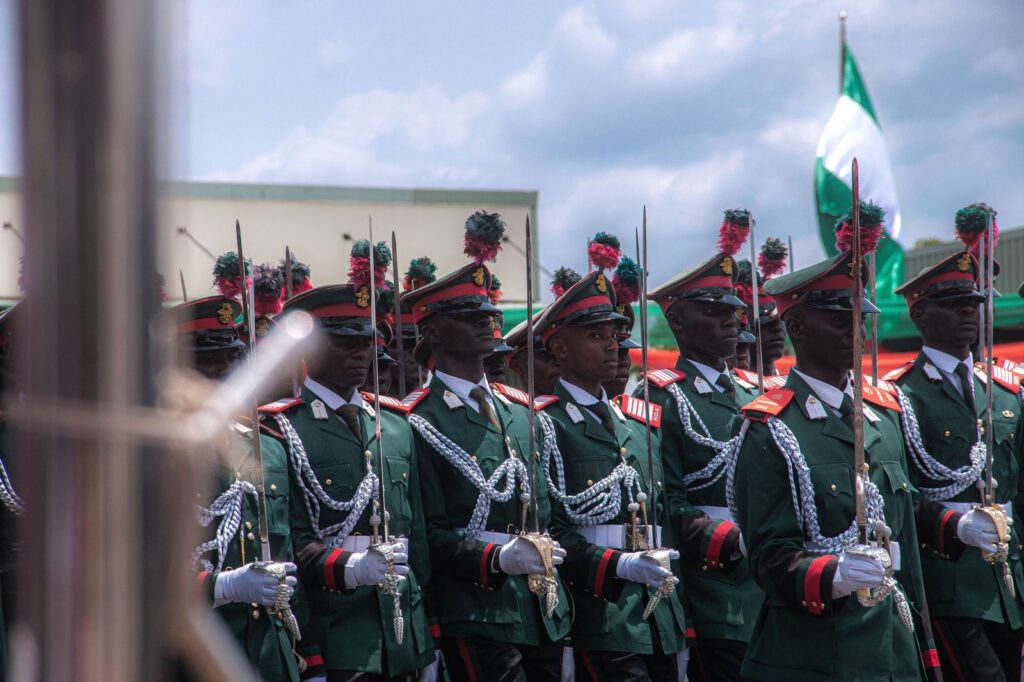
Gabon’s defense budget is set to reach a significant milestone in 2026. On June 11, the Minister of State, Minister of National Defense, Brigitte Onkanowa, presented a proposed allocation of 377.68 billion FCFA to the National Assembly’s Finance, Budget, and Public Accounting Commission. This substantial funding, integrated into the rectified finance bill (PLFR) for 2026, is championed within a dynamic landscape of political transition and evolving security challenges across Central Africa. The primary objective is to bolster the capabilities of the Gabonese armed forces across their entire operational spectrum.
This crucial budgetary decision emerges as Libreville endeavors to redefine its military posture following the change of regime in August 2023. The transitional authorities, nearing the completion of their institutional cycle, have explicitly made the modernization of the defense forces a cornerstone of their sovereign policy. According to the ministry, the proposed sum reflects a clear commitment to aligning resources with the essential missions entrusted to the national army.
Strategic allocation for key operational priorities
Addressing parliamentarians, Brigitte Onkanowa meticulously outlined the ministry’s major undertakings. The Minister of State underscored the imperative to consolidate existing strengths while simultaneously preparing for an increase in the operational capacity of units throughout the national territory. Specifically, the financing aims to enhance military living conditions, advance ongoing equipment programs, and maintain sections of the defense apparatus that are showing signs of age.
The presentation emphasized the direct correlation between the pledges made by President Brice Clotaire Oligui Nguema and the ministry’s financial trajectory. The Gabonese executive views security as intrinsically linked to economic sovereignty, particularly within a sub-regional environment characterized by persistent security tensions in the Gulf of Guinea and ongoing migratory and fishing pressures on its territorial waters.
Driving capacity modernization and improving welfare
The credits earmarked for 2026 are designed to accelerate several key capability programs, encompassing the acquisition of new materials and the comprehensive upgrade of military infrastructure across the nation. The Minister of State highlighted the critical importance of a sustained effort directed towards barracks, health support services, and individual equipment – areas that troops have long identified as deficient. Practically, the challenge lies in translating this significant budgetary allocation into tangible operational gains, ensuring no resources are dispersed on non-priority projects.
The human element also occupies a central position within the strategic framework presented. Issues such as pay, social welfare coverage, and professional training are championed as vital levers for both retaining personnel and enhancing professionalization. Brigitte Onkanowa reiterated the State’s profound responsibility towards its active service members and veterans, aligning fully with the directives issued by the Presidency of the Republic.
A political statement during institutional consolidation
Beyond the impressive figure, the 377.68 billion FCFA allocation carries significant political weight. It unequivocally confirms that defense remains a paramount sovereign priority for the Gabonese authorities, particularly in a nation where the military institution played a decisive role during the recent transition. Maintaining such a high level of budgetary commitment to the armed forces is consistent with a broader strategy of state consolidation and the proactive prevention of security vulnerabilities at the nation’s borders.
The question of execution, however, persists. Deputies from the Finance Commission have, during previous budgetary cycles, frequently highlighted disparities between authorized commitments and actual payments within certain sovereign ministries. The Ministry of Defense’s capacity to effectively absorb this substantial allocation, to manage procurement within stipulated timelines, and to provide transparent accountability for the utilization of these credits will be closely scrutinized throughout the 2026 fiscal year. For Libreville, the stakes extend far beyond mere budgetary arithmetic: it is about demonstrating that a considerable financial investment can yield measurable improvements in the operational readiness and posture of the Gabonese armed forces.


More Stories
Is Chad truly heading towards political appeasement?
Bradley Barcola will adapt faster than Florian Wirtz at Liverpool, says Jermaine Pennant
Togo eyes nuclear power to secure future energy sovereignty